How Hot Should a Grill Be for Steak
You’ve seasoned your cut, fired up the grill, and you’re ready to cook. But one mistake can ruin everything: how hot should a grill be for steak? The answer is 450°F to 550°F. This high-heat zone triggers the Maillard reaction, locks in juices, and creates the deep, flavorful crust that separates a great steak from a mediocre one. Without enough heat, you’ll steam the meat instead of searing it, leaving you with a gray, dry result.
In this guide, you’ll learn the exact grill temperatures for every doneness level, how to use the reverse sear method, why steak thickness matters, and how to avoid the most common grilling mistakes. Whether you use gas, charcoal, or a pellet grill, mastering temperature is the key to steak perfection.
Set the Right Grill Temperature for Searing
Target 450°F to 550°F for the Perfect Crust
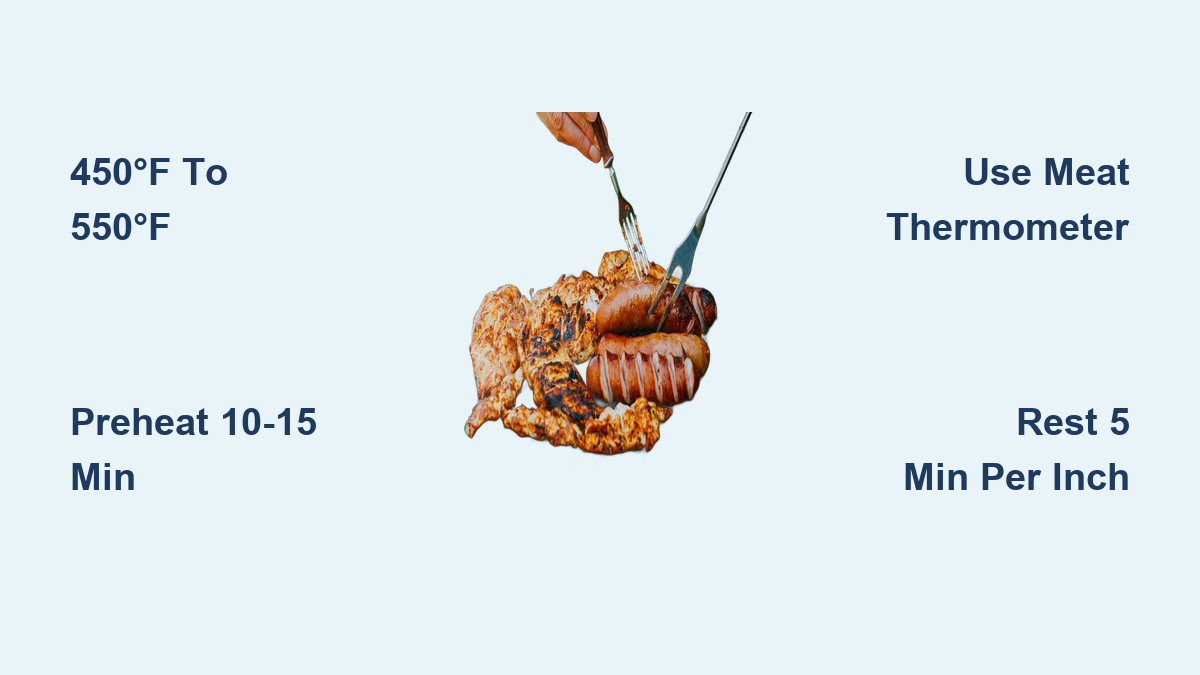
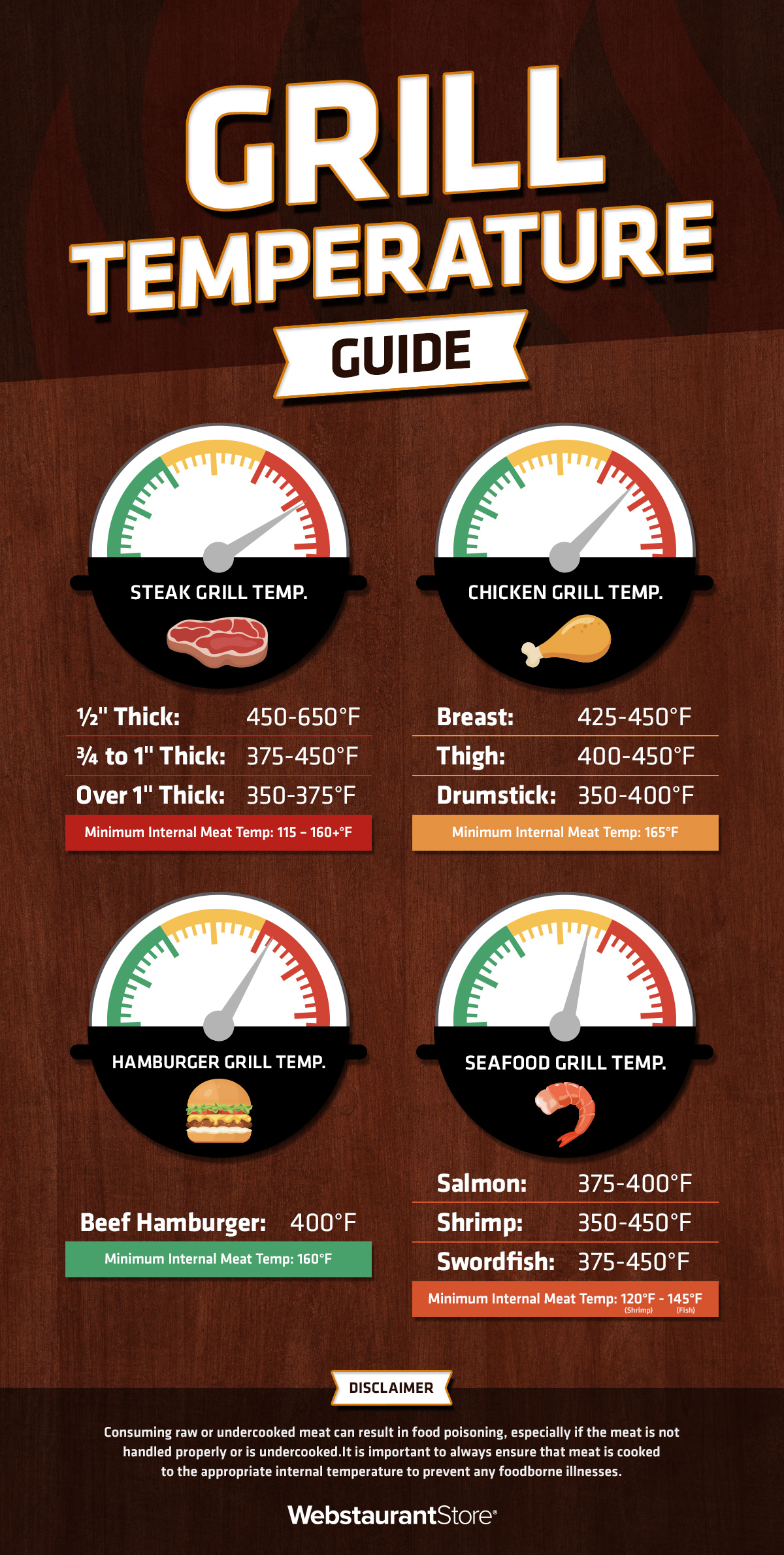
For a flawless sear, your grill must reach 450°F to 550°F. This range is essential for the Maillard reaction, the chemical process that creates rich flavor and golden-brown color. Below 450°F, your steak will steam rather than sear, resulting in a dull, dry exterior. Above 550°F, the outside burns before the inside cooks properly. Stay within this zone for ribeye, strip, or filet mignon.
Build a Two-Zone Fire for Better Control
A two-zone setup gives you total control over the cooking process.
- High-heat zone (450°F+): Used for searing the steak.
- Cooler zone (225°F–325°F): Used for indirect cooking or finishing thick cuts.
Sear over direct heat first, then move the steak to the cooler side to gently raise the internal temperature. This prevents overcooked edges and gives you flexibility with timing.
Preheat for 10 to 15 Minutes
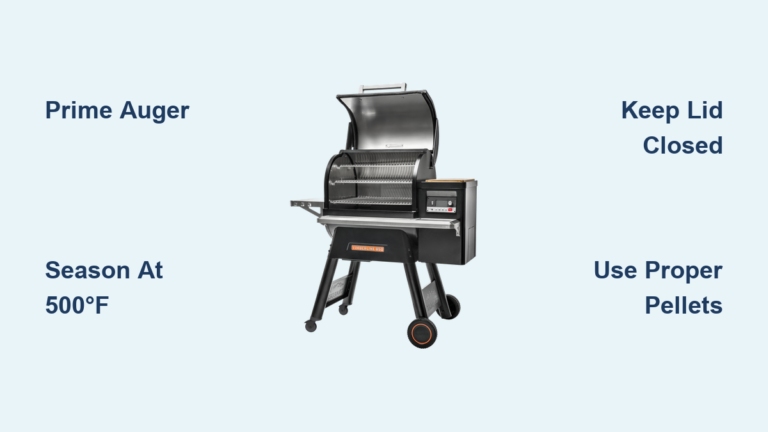
Always preheat your grill with the lid closed for 10 to 15 minutes before cooking. This stabilizes the temperature, ensures even heat distribution, and prevents sticking. Use a grill surface thermometer to verify accuracy, since lid dials are often unreliable. Cold grates cause sticking and poor searing.
Match Internal Temperature to Your Desired Doneness

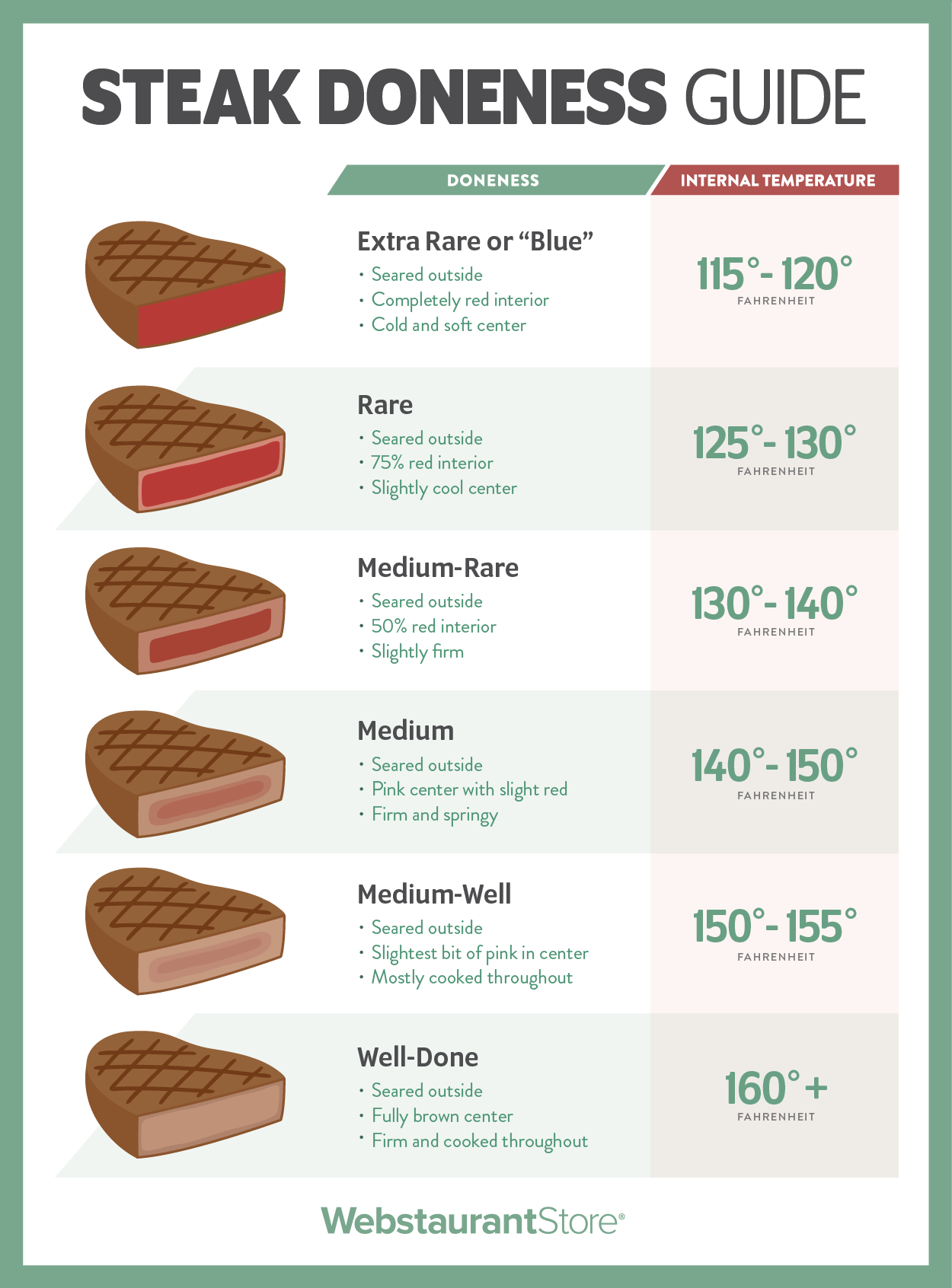
Rare: Pull at 115–120°F
For rare steak, remove the meat when the internal temperature hits 115–120°F. It will rise to 120–125°F during resting. The center stays cool, bright red, and very soft. At 450°F, a 1-inch steak needs about 3–4 minutes per side.
Pro tip: Use the touch test. Rare feels like pressing the tip of your nose: very soft with no resistance.
Medium Rare: Pull at 125°F
Medium rare (130–135°F) is the chef’s standard. Pull the steak at 125°F, and it will climb to target during rest. The center is warm pink, juicy, and slightly firm. At this temperature, intramuscular fat melts, boosting flavor and tenderness.
At 450°F, a 1-inch cut requires 5–7 minutes per side. The touch test feels like pressing the base of your thumb when your hand is open.
Medium: Pull at 135–140°F
For medium steak, aim for an internal temperature of 140–145°F, pulling at 135–140°F. The center is warm pink with more firmness. It balances doneness and moisture, though it’s less juicy than medium rare.
Cook 7–8 minutes per side at high heat. The touch test resembles the tip of your nose: firm but yielding.
Medium-Well: Pull at 145–150°F
Target 150–155°F internally, pulling at 145–150°F. The center is light pink with a firm texture and reduced juiciness. This level is often overcooked by accident, so use a thermometer to avoid dryness.
At 450°F, cook 8–9 minutes per side. The touch test feels like pressing just below your nose: firm.
Well-Done: Pull at 155°F or Higher
For well-done steak (160°F+), pull at 155°F or above. The steak is fully gray, very firm, and often dry. This level isn’t recommended for premium cuts but works for personal food-safety preferences.
Cook 10+ minutes per side, depending on thickness. The touch test feels like your forehead: hard with no give.
Choose the Best Cooking Method for Your Cut
Direct Heat Works for 1-Inch Steaks
Direct heat is ideal for 1-inch thick cuts like standard ribeye or strip steak.
- Preheat the grill to 450°F with the lid closed for 15 minutes.
- Place the steak directly over the flames.
- Flip occasionally until the internal temperature is 5–10°F below your target doneness.
- Rest immediately.
This method is fast, simple, and effective for thin cuts.
Reverse Sear for Thick Cuts
The reverse sear method is perfect for 1.5 to 2-inch steaks, ensuring even doneness and a perfect crust.
- Set the grill to 225°F (or up to 325°F for faster cooking).
- Cook the steak indirectly until the internal temperature reaches 110–115°F (takes 45–60 minutes).
- Crank the heat to 450°F or higher.
- Sear 1–2 minutes per side to build the crust.
- Pull at 5–10°F below your final target, then rest.
This technique delivers edge-to-edge pink with no gray band and maximum juiciness.
Use the 3-3-3 Rule for Thin Steaks
For steaks under 1 inch, follow the 3-3-3 rule:
- Sear 3 minutes per side over high heat.
- Reduce heat or move to a cooler zone.
- Cook 3 more minutes per side.
This prevents overcooking while building flavor.
Pick the Right Steak Thickness

Choose Cuts 1.5 to 2 Inches Thick
Optimal steaks are 1.5 to 2 inches thick. Thin grocery-store cuts (½” to 1″) cook too quickly, making it hard to sear without overcooking. Thick cuts give you control over crust development, heat penetration, and even internal doneness. Ask your butcher for thick-cut ribeye, strip, or filet.
Never Press the Steak
Never press down on the steak with a spatula. This squeezes out juices and leads to dry meat. Let the heat do the work. Pressing doesn’t speed up cooking and only harms texture.
Season and Prepare the Steak Properly
Oil and Season Before Grilling
Season with salt, pepper, garlic, rosemary, or bold spices like paprika and chili powder. Oil the steak itself, not just the grates. This helps seasoning stick and prevents sticking. Use olive or avocado oil for their high smoke points.
Bring Steak to Room Temperature
Take the steak out of the fridge 30–60 minutes before grilling. Cold meat cooks unevenly, searing the outside while leaving the center raw. Room-temperature steak heats more uniformly.
Rest the Steak Before Cutting
Rest 5 Minutes Per Inch
Resting is critical for keeping steak juicy. Wait 5 minutes per inch of thickness:
- 1-inch steak → 5 minutes
- 2-inch steak → 10 minutes
Loosely tent with foil. This allows muscle fibers to relax and reabsorb juices. Cutting too soon drains flavor onto the plate.
Use the Right Thermometer
- Thick cuts: Use a wireless leave-in thermometer to monitor temperature without opening the lid.
- Thin cuts: Use an instant-read thermometer at the end.
Insert the probe into the thickest part, avoiding bone or fat for an accurate reading.
Avoid Common Grilling Mistakes
Don’t Trust Time or Color
Color and cooking time are unreliable. Wind, steak thickness, and grill type all affect results. Always use a thermometer. It’s the only way to guarantee accurate doneness.
Fix Sticking Grates
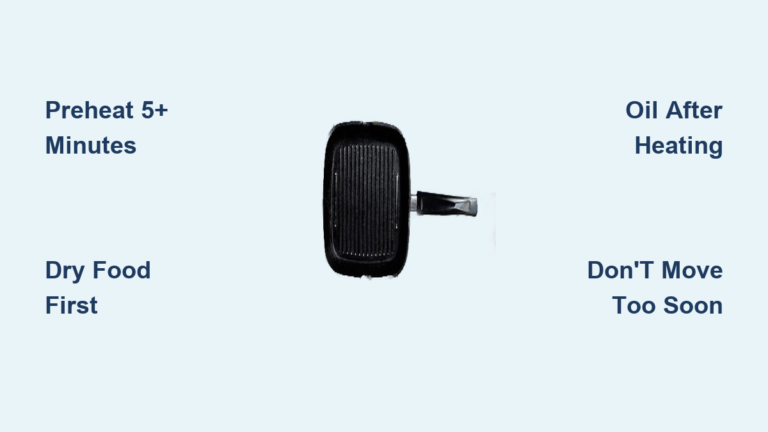
Sticking happens when grates aren’t hot enough or are dirty.
- Preheat for 10–15 minutes.
- Scrub grates clean.
- Oil the grates or the steak before placing it down.
A hot, clean, oiled surface prevents adhesion.
Adjust for Weather and Grill Type
Cold or windy weather slows heat buildup. Charcoal grills often run hotter than gas. Pellet grills offer precision but need time to stabilize. Monitor actual temperatures, not just settings, and adapt as needed.
Quick Reference: Key Grilling Temperatures
| Goal | Temperature or Time |
|---|---|
| Searing Temp | 450°F – 550°F |
| Reverse Sear Low | 225°F – 325°F |
| Preheat Time | 10–15 minutes |
| Pull Temp (Rare) | 115–120°F |
| Pull Temp (Medium Rare) | 125°F |
| Pull Temp (Medium) | 135–140°F |
| Resting Time | 5 mins per inch |
| Ideal Thickness | 1.5 – 2 inches |
| Critical Reaction | Maillard (>450°F) |
Frequently Asked Questions About Grilling Steak
What is the best grill temperature for steak?
The best grill temperature for steak is 450°F to 550°F. This range triggers the Maillard reaction, which creates a flavorful crust and seals in juices. Below 450°F, the steak will steam instead of sear.
How long should I preheat my grill before cooking steak?
Preheat your grill for 10 to 15 minutes with the lid closed. This stabilizes the temperature and prevents sticking. Always verify with a grill surface thermometer, since lid gauges can be inaccurate.
What internal temperature should I pull steak at for medium rare?
Pull your steak at 125°F for medium rare. The internal temperature will rise to 130–135°F during resting. This is the chef-preferred doneness for maximum juiciness and flavor.
How thick should a steak be for grilling?
The ideal steak thickness is 1.5 to 2 inches. This allows enough time to develop a crust without overcooking the center. Thin cuts under 1 inch cook too quickly for proper searing.
How long should steak rest after grilling?
Rest steak for 5 minutes per inch of thickness. A 1-inch steak rests for 5 minutes, while a 2-inch steak rests for 10 minutes. Resting allows juices to redistribute throughout the meat.
Can I use the reverse sear method on a gas grill?
Yes. Set one burner to low (225°F–325°F) for indirect cooking and another to high (450°F+) for searing. Cook the steak slowly on the cool side first, then sear over direct heat to finish.
Final Thoughts on Grilling the Perfect Steak
The perfect grilled steak starts with heat and ends with patience. Set your grill to 450°F–550°F, use a reliable thermometer, choose thick cuts, and never skip resting. Whether you sear directly or use the reverse sear method, the result should be juicy, flavorful, and cooked exactly to your preference.
Now grab your tongs, fire up the grill, and put these techniques to work. Your best steak is just minutes away.