How Pellet Grills Work: A Simple Guide
You push a button, dial in 225°F, and walk away. Hours later, you lift the lid to find fall-off-the-bone ribs with deep, smoky flavor and a perfect bark. No babysitting a fire, no guessing when to add more charcoal. That is the everyday reality of cooking on a pellet grill. But how does a pellet grill work in a way that delivers this “set-it and forget-it” magic? The answer lies in a clever marriage of hardwood fuel, electric automation, and forced-air convection.
In this guide, you will learn exactly what happens from the moment you flip the switch to the moment you pull your food off the grates. We will break down every moving part, explain how the digital brain keeps temperatures steady, explore why hardwood pellets matter, and show you why this appliance has reshaped backyard cooking for beginners and pitmasters alike.
Core Components of a Pellet Grill

Every pellet grill runs on the same four-part foundation: automated fuel delivery, electric ignition, forced-air combustion, and digital temperature control. Once you understand how these pieces interact, the whole system clicks into place.
The Hopper Stores the Fuel
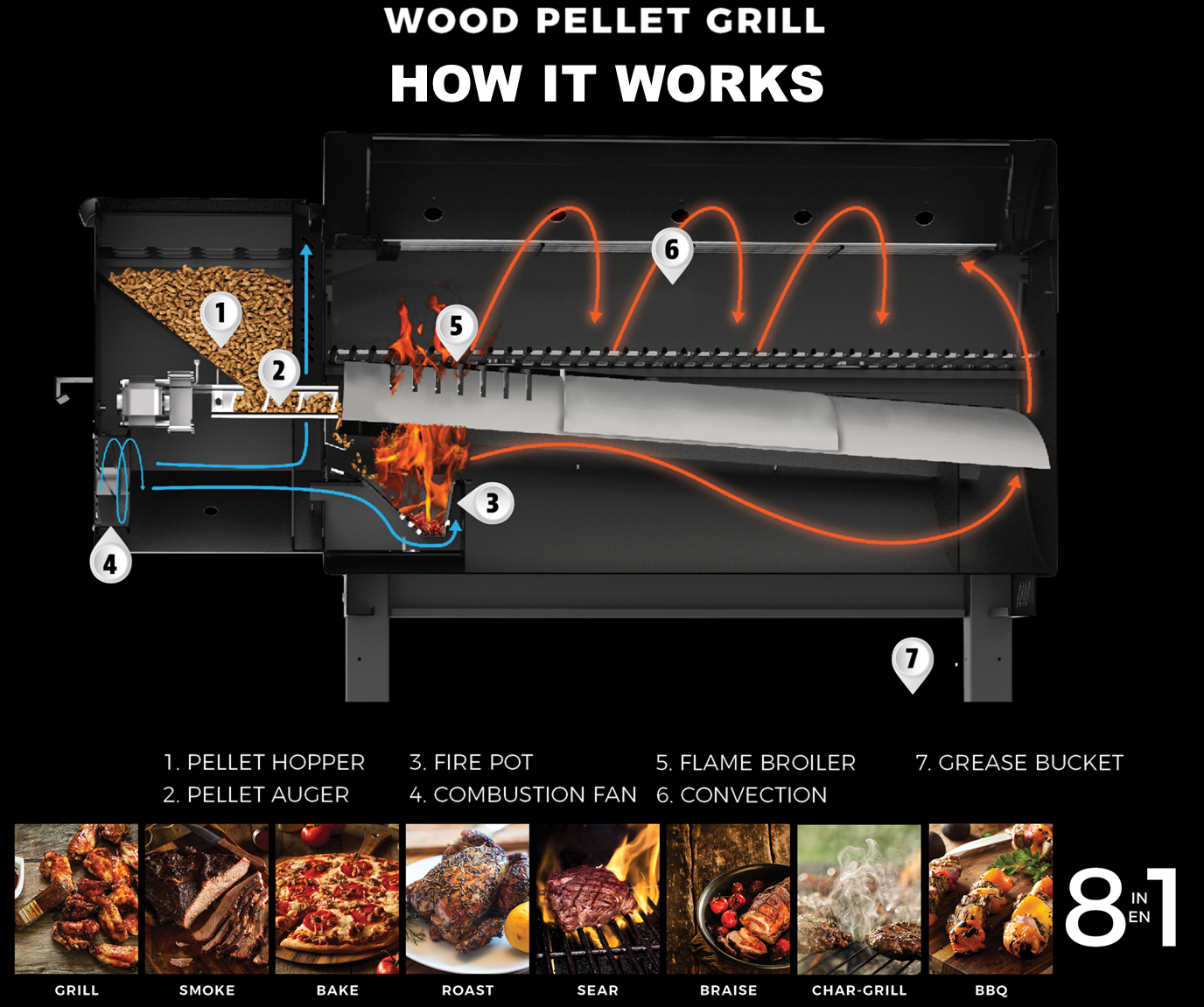
The hopper is the large bin, usually mounted on the side or top of the grill, that holds your hardwood pellets. Think of it as the gas tank for your cooker. Most hoppers hold between 10 and 20 pounds of pellets, which translates to several hours of uninterrupted cooking.
You pour in your chosen wood flavor, snap the lid shut, and the system handles the rest. Keeping that lid sealed is critical, because moisture is the enemy of smooth operation.
Pro Tip: Always store extra pellets in a dry container. A single rainstorm can ruin an entire bag and jam your auger.
The Auger Delivers Pellets Automatically
Inside the grill, an electric motor turns a heavy-duty spiral screw called the auger. When you set your cooking temperature, the controller tells the auger how fast to spin. Faster spinning drops more pellets into the fire pot. Slower spinning meters fuel for low-and-slow smoking.
This precise fuel delivery is what makes steady temperatures possible. The auger only feeds what the fire needs, nothing more.
Warning: Never run the auger with an empty hopper. Dry-firing the motor can burn it out in minutes.
The Fire Pot Ignites the Pellets
At the end of the auger tube sits the fire pot, a small steel cup where combustion actually happens. When you start the grill, an electric heating element called the HotRod igniter glows red-hot and lights the pellets within a few minutes.
Once the fire catches, the HotRod shuts off. The burning pellets sustain themselves from that point on, fed by a steady trickle from the auger and oxygen from the combustion fan.
Visual Cue: A healthy fire burns with a steady blue-orange flame. Thick black smoke means wet pellets or restricted airflow.
The Combustion Fan Feeds the Fire
A small but powerful fan forces oxygen into the fire pot. Without it, the pellets would smolder and produce acrid smoke. With it, the fire burns hot and clean, and the same fan pushes that heat and smoke throughout the cooking chamber.
This forced-air design is what separates a pellet grill from a traditional offset smoker. You get consistent heat without constantly adjusting dampers.
The Digital Control System Explained
Pellet grills are often called “wood-burning convection ovens” because they use smart electronics to manage combustion. That automation is what frees you from the grill.
The Controller Sets the Target Temperature
The digital controller is your interface with the system. Most grills feature a simple dial or touchscreen where you select your desired temperature, typically anywhere from 180°F to 500°F, with premium models reaching 600°F or higher.
Once you set the number, the controller monitors the internal temperature through a built-in probe and adjusts the auger and fan in real time. Want to smoke at 225°F? The system trickles pellets. Want to sear at 500°F? It floods the fire pot with fuel.
Time Estimate: Most grills reach target temperature within 10 to 15 minutes from a cold start.
PID Technology Maintains Precision
Higher-end grills use PID (Proportional-Integral-Derivative) controllers that make micro-adjustments to hold temperature within 1°F of your set point. Basic controllers may fluctuate by 20°F or more, which is still better than most charcoal setups.
Advanced systems like Yoder’s ACS Controller or Traeger’s WiFIRE take things further. They learn your cooking environment and anticipate changes. Open the lid to flip a brisket? The system senses the temperature drop and increases pellet feed before the meat even cools.
Pro Tip: Wi-Fi-enabled models let you monitor and adjust temperatures from your phone. You can check on a 14-hour cook from the grocery store.
How Airflow Creates Convection Cooking
Pellet grills do not just burn wood. They cook with moving air, and that circulation is the secret to even results.
Forced Air Distributes Heat Evenly
The combustion fan pulls oxygen through the fire pot and pushes the resulting hot, smoky air around the cooking chamber. This convection effect wraps heat around your food from all sides, eliminating the hot spots you find on cheap gas grills.
Because heat moves constantly, there is no need to rotate food or rearrange racks. A whole chicken on the top rack cooks just as evenly as burgers on the bottom.
Common Mistake: A clogged fan or dirty fire pot chokes airflow. If you notice uneven cooking or weak smoke, check these components first.
Thin Blue Smoke Means Clean Combustion
During normal operation, your grill should produce thin, blue-gray smoke. This indicates complete combustion and clean flavor. Thick white smoke usually means moisture in your fuel. Thick black smoke points to restricted airflow or poor-quality pellets.
Visual Cue: If you see billowing white clouds, stop the cook and diagnose the problem before your food absorbs bitter flavors.
Hardwood Pellets: The Fuel That Defines the Flavor

The flavor in pellet grilling comes entirely from the fuel. Understanding pellets helps you get the most from your grill.
Pellets Are Made From Pure Sawdust
Hardwood pellets are manufactured from one ingredient: sawdust waste from lumber mills. Under intense heat and pressure, the natural lignin in the wood binds the particles into dense, uniform cylinders. No glues, no fillers, no chemicals.
This purity produces a remarkably clean burn. Pellets generate less than 1% ash by volume, meaning a full 40-pound bag leaves behind only about half a cup of ash. Cleanup is fast and easy compared to charcoal.
Warning: Avoid non-food-grade pellets. Industrial heating pellets can contain binders or softwoods that release harmful chemicals when burned.
Different Woods Create Different Flavors
Pellet choice is your flavor dial. Here are the most common profiles:
- Fruit woods (apple, cherry): Mild and sweet. Perfect for poultry, and fish.
- Hardwoods (hickory, oak, mesquite): Bold and savory. Ideal for beef, ribs, and game.
- Blends: Balanced combinations for versatile everyday cooking.
Pro Tip: Match the wood intensity to the meat. Cherry for turkey, hickory for bacon, mesquite for brisket.
Consumption Rates Vary by Temperature
Pellet usage scales directly with heat output:
- Low and slow (225°F to 275°F): 0.5 to 2 pounds per hour
- High heat (450°F and up): 4 or more pounds per hour
A 20-pound bag lasts 20 to 25 hours at 275°F but only about 5 hours at searing temperatures. Always keep extra pellets on hand for long cooks.
Planning Tip: Running out of pellets mid-cook is a disaster. Fill the hopper before every long smoke.
Cooking Versatility: Six Techniques in One Grill
Pellet grills are marketed as 6-in-1 or 5-in-1 appliances because they truly replace multiple cookers.
Smoking with Real Wood Flavor
This is the primary function. At low temperatures, the grill produces steady smoke that slowly breaks down tough cuts like brisket and ribs. Unlike gas grills that offer heat without smoke, pellet grills deliver authentic wood-fired flavor with full automation.
Time Estimate: A whole brisket takes 10 to 14 hours at 225°F.
Grilling at High Temperatures
Crank the dial to 450°F or 500°F and your pellet grill becomes a high-heat griller. Burgers, chicken breasts, and vegetables cook quickly with a subtle smoky edge. While not as intense as a charcoal sear, modern models produce excellent browning and grill marks.
Baking and Roasting Outdoors
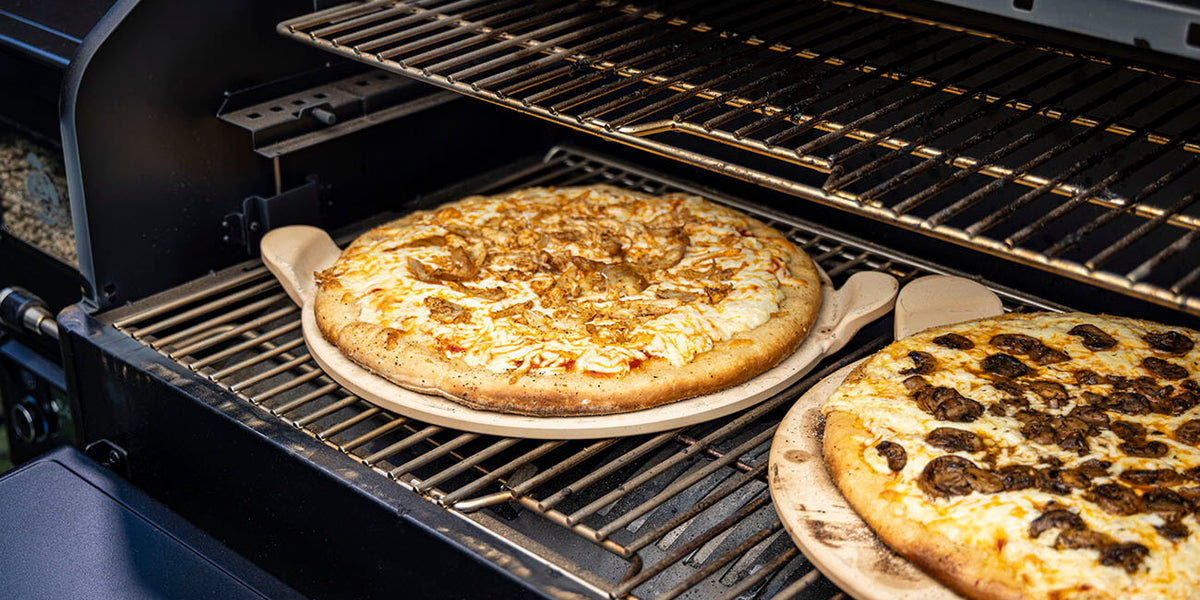
The even, oven-like heat makes pellet grills ideal for baking pizza, casseroles, and even desserts. Set the temperature to 350°F or 400°F, and the grill acts like a convection oven. Whole chickens, mac and cheese, and peach cobbler all come out perfectly.
Pro Tip: Use a pizza stone for crisp, restaurant-quality crusts.
Searing Requires Special Features
Standard pellet grills cook with indirect heat, so achieving a hard sear takes extra effort. Some models solve this with features like Pit Boss’s SearZone, a slide-out plate that exposes food directly to the flames. Others offer high-temp modes exceeding 600°F.
Workaround: For a hard sear on standard models, finish steaks in a cast-iron skillet over the grates.
Electrical Requirements and Power Needs
Despite burning wood, pellet grills cannot operate without electricity.
Three Components Need Power
The auger motor, combustion fan, and digital controller all run on electricity. The HotRod igniter draws a brief surge at startup but shuts off once the fire is established.
Most grills use 300 to 500 watts during ignition, then drop to 50 to 150 watts during steady operation. This is modest compared to electric ovens or space heaters.
Power Outages Stop the Cook
If the power goes out, the auger stops, the fan quits, and the fire eventually dies. Even a brief blackout can ruin a long smoke.
Solution: Use a portable power station or generator for off-grid cooking. Make sure it can handle the initial surge, which can reach 1,000 watts on some models.
Safety Note: Never use a pellet grill indoors or in enclosed spaces. Combustion produces carbon monoxide, which can be deadly in unventilated areas.
Weather Resistance and Outdoor Use
Pellet grills are built for outdoor cooking, but they have limits.
Cooking in Rain and Snow
You can safely use your grill in light rain or snow. The electronics are sealed, and the fire pot is protected from direct water exposure.
However, avoid:
- Sprinklers or direct water spray
- Tropical storms or heavy downpours
- Leaning the grill against a wet exterior wall
Rule of Thumb: If falling water hits the grill at an angle less than 60° from vertical, it is likely safe. Anything more direct risks electrical damage.
Protecting Pellets from Moisture
Wet pellets are the number one cause of auger jams. Always:
- Keep the hopper lid closed during operation
- Store pellets in a dry location
- Use a heavy-duty, all-weather cover when the grill is idle
Pro Tip: Place a food-grade desiccant pack inside the hopper for long-term storage to absorb any ambient moisture.
Maintenance for Long-Term Performance
With basic care, a quality pellet grill can last a decade or longer.
Clean Ash Weekly
Pellets produce minimal ash, but it still needs removal. Let the grill cool completely, then vacuum the fire pot and burn grate.
Frequency: After every 3 to 5 cooks, or weekly with regular use.
Empty the Drip Tray Regularly
Grease accumulates in the drip tray and grease pan. If left too long, it can pool and cause flare-ups, even though the design prevents most direct flames.
Frequency: After every cook, or every 4 to 6 hours of continuous use.
Deep Clean Every Few Months
Remove the grates, clean the heat baffle, inspect the auger tube, and wipe down the interior. Check the fan for dust buildup that can restrict airflow.
Time Estimate: Plan for 30 to 60 minutes of deep cleaning every 3 months.
Brand Differences Worth Knowing

Not all pellet grills are identical. Major brands offer distinct strengths.
Traeger Pioneered the Category
Traeger invented the pellet grill in 1987 in Oregon. The brand is known for reliable performance, WiFIRE app control, a wide pellet selection, and the iconic “set-it and forget-it” branding.
Pit Boss Offers Value and Searing
Pit Boss is popular for large cooking surfaces, the patented SearZone plate for direct-flame searing, a 5-year warranty, and lower price points.
Yoder Smokers Builds for Professionals
Yoder produces premium, competition-grade grills with heavy-gauge steel construction, the adaptive ACS Controller, fast temperature recovery, and handmade American craftsmanship.
Pitts & Spitts Focuses on Craftsmanship
Pitts & Spitts makes the only pellet grills built in Texas. Their models feature fully welded barrels, stainless steel roll-top lids, a 10-year barrel warranty, and a quick-clean pellet chute.
Limitations to Keep in Mind
Pellet grills excel in many areas, but they are not perfect for every situation.
Requires Electricity
No power means no cook. This limits portability unless you bring a generator or power station.
Searing Can Be Limited
Without a SearZone or high-temp mode, achieving a restaurant-quality crust is difficult on standard models.
Flavor Differs from Traditional Smokers
The smoke from compressed pellets is milder than the heavy smoke from an offset smoker burning wood chunks. Purists may notice the difference.
More Parts Can Fail
Unlike a simple charcoal kettle with no electronics, pellet grills have motors, fans, and controllers that can malfunction. Warranties typically cover these components, but repairs are part of ownership.
Frequently Asked Questions About Pellet Grills
What is the difference between a pellet grill and a smoker?
A pellet grill is an automated smoker that uses electricity to feed wood pellets and control temperature. Traditional smokers require manual fuel management and constant airflow adjustments. Pellet grills offer the same wood-fired flavor with far less effort.
Do pellet grills need electricity to work?
Yes. Pellet grills require electricity to power the auger, fan, and digital controller. Without power, the fuel delivery system stops and the fire eventually dies.
How long does a 20-pound bag of pellets last?
At smoking temperatures around 275°F, a 20-pound bag lasts 20 to 25 hours. At high grilling temperatures above 450°F, the same bag lasts only about 5 hours.
Can you sear a steak on a pellet grill?
Standard models cook with indirect heat, which limits searing. However, grills with a SearZone plate or high-temp modes exceeding 600°F can produce a strong sear. You can also finish steaks in a cast-iron skillet on the grates.
Are pellet grills safe in the rain?
Yes, you can use a pellet grill in light rain or snow. Avoid direct water spray, heavy downpours, and tropical storms. Always keep the hopper lid closed to prevent pellets from getting wet.
How often should you clean a pellet grill?
Vacuum the fire pot after every 3 to 5 cooks. Empty the drip tray after every cook. Deep clean the interior, grates, and fan every 3 months for optimal performance.
Key Takeaways for Understanding Pellet Grill Operation
A pellet grill works by combining natural hardwood fuel with automated feeding, electric ignition, forced-air combustion, and digital temperature control. The hopper stores pellets, the auger meters them into the fire pot, the HotRod ignites them, and the fan circulates heat and smoke throughout the chamber. A digital controller, often enhanced with PID technology, adjusts fuel and airflow in real time to hold your target temperature within a few degrees.
This system delivers consistent, flavorful results across smoking, grilling, baking, and roasting, all with minimal effort. While pellet grills require electricity and regular maintenance, their versatility, automation, and rich wood-fired taste make them a top choice for modern outdoor cooking.
Your next step is simple: choose a quality model, stock up on food-grade hardwood pellets, and run your first low-and-slow cook. Once you experience the convenience and flavor, you will understand why pellet grills have transformed backyard barbecue.