How to Clean Cast Iron Grill Grates
A well-maintained cast iron grill grate delivers unbeatable sear marks and smoky flavor, but a neglected one turns into a sticky, rusty mess. The challenge of how to clean cast iron grill grates stops being a chore once you understand the right techniques for your specific grate type. With consistent care, your grates can perform like new for decades.
This guide breaks down everything from quick post-cook wipe-downs to heavy-duty rust removal. You’ll learn which methods work for raw cast iron versus porcelain-enameled grates, how to season properly, and which common myths to ignore.
Pre-Cleaning Safety and Prep
Heat and Handling Risks
Cast iron retains heat aggressively and stays hot long after you turn off the grill. Always wear oven mitts when handling warm grates, and wait until they are warm to the touch but no longer steaming before cleaning. Cast iron is safe up to 650°F, but rushing the cool-down invites serious burns.
Inspect Your Tools First
Check your grill brush for loose bristles before every use. Metal bristles can break off, lodge in the grate, and end up in your food. Replace brushes annually. For porcelain-enameled grates, skip wire brushes with sharp edges since they can chip the glass-like coating.
Preheat for Easier Cleaning
For routine cleaning, preheat the grill to 500–550°F for 10–15 minutes before brushing. This carbonizes stuck-on food and makes debris lift away easily. Rotate the grate one-third of the way every 3 minutes during preheating to reduce hot spots, which are common in cast iron.
Post-Grill Cleaning for All Grate Types
Wipe While Warm
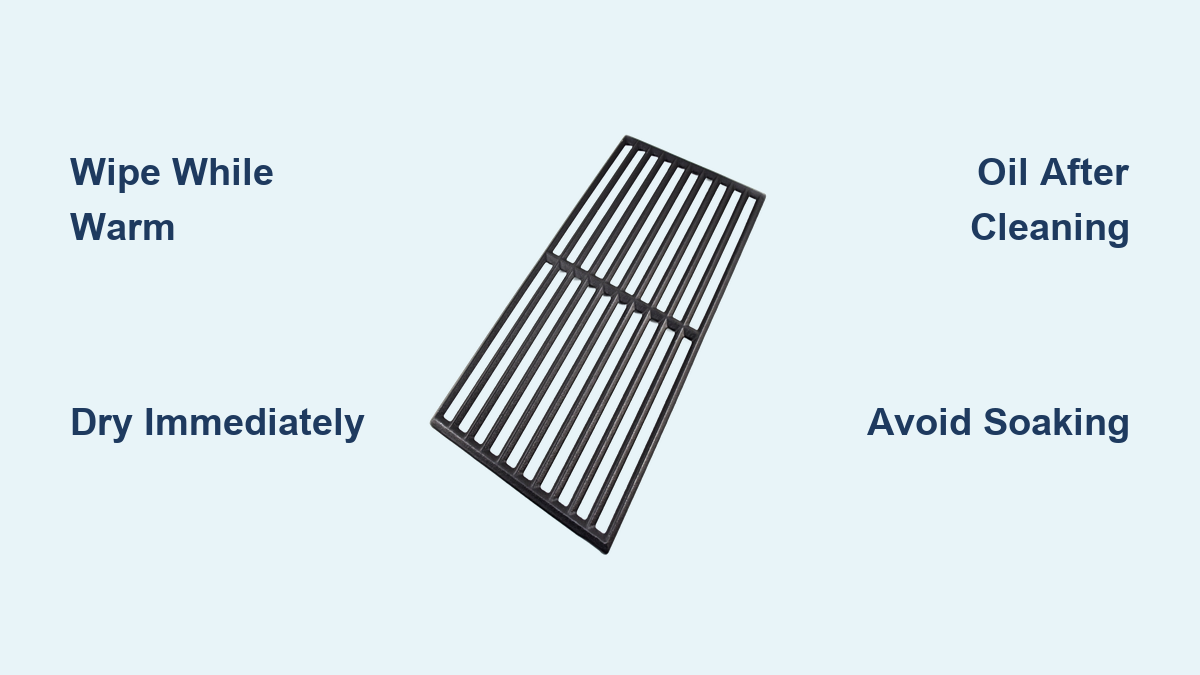
As soon as you finish cooking, grab a paper towel or soft brush and wipe the grate while it is still warm. This prevents carbon buildup and keeps deep cleaning rare. Never soak grates or leave them wet, since moisture is the primary trigger for rust.
Brush With the Right Tool
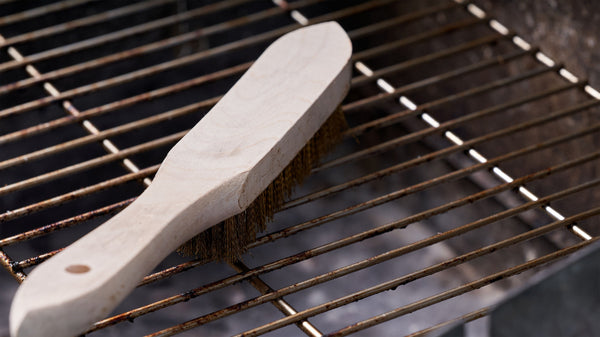
Use a stainless steel bristle brush for raw cast iron, scrubbing in one direction with firm pressure. For porcelain-enameled grates, switch to a nylon brush to protect the coating while still removing residue effectively.
Dry Immediately
After wiping, dry the grate completely with a clean kitchen towel. Any lingering moisture can start rusting raw cast iron within hours. Never store grates damp.
Cleaning Raw Cast Iron Grates
Oil After Every Use
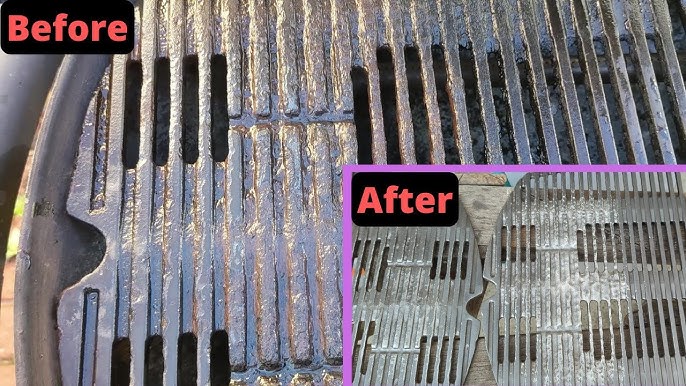
After cleaning and drying, apply a thin layer of high-heat oil like avocado, peanut, or canola while the grate is still warm. Spread it with a paper towel, then wipe off the excess so no pools remain. This microscopic layer protects against rust and maintains the seasoning.
How Often to Re-Season
Full re-seasoning in the oven is only needed 2–3 times per year if you dry and oil after each use. Re-season sooner if the surface looks dull gray or food starts sticking excessively. A shiny, black surface means your seasoning is intact.
The Dish Soap Myth
Modern dish soap won’t strip seasoned cast iron. A quick wash with mild soap is safe for heavily soiled grates. The real enemy is soaking, not soap. Prolonged water exposure causes rust, so rinse quickly, dry immediately, and re-oil.
Cleaning Porcelain-Enameled Cast Iron
No Seasoning Needed
Porcelain-enameled grates have a glass-like coating that never requires seasoning. Do not apply oil to build a non-stick layer, since the enamel already prevents food from interacting with the iron.
Clean Like Stainless Steel
Use warm soapy water and a nylon scrub pad or soft sponge. Avoid steel wool or abrasive cleaners, which scratch and dull the enamel. For stuck-on bits, a plastic scraper works safely.
Handle Chipping Risks
The enamel is durable but can chip if struck with metal tools or dropped. Once chipped, exposed iron underneath can rust. Clean the area and apply a drop of high-heat paint, or replace the grate to prevent the damage from spreading.
Remove Rust From Raw Cast Iron
Why Rust Happens
Rust forms when bare iron meets moisture, even briefly from humidity or a damp towel. The good news: surface rust is fixable. Only discard grates if rust has caused deep pitting or compromised structural integrity.
Charcoal-Lemon Paste Method
This natural method lifts rust using acidity and gentle abrasion.
You’ll need:
– Lump charcoal (not briquettes)
– Fresh lemon
– Fine steel wool (000 grade)
– High-heat oil
Steps:
1. Crush charcoal into fine powder and strain out large chunks.
2. Mix with lemon juice to form a paste.
3. Apply to rusted areas and scrub with steel wool.
4. Rinse thoroughly and dry immediately.
5. Season with oil and heat to re-protect the surface.
Burn Off Rust and Re-Season on the Grill
Fast Thermal Restoration
For light rust or carbon buildup, use your grill’s heat to restore the grate without removing it.
Steps:
1. Knock off loose rust with a wire brush.
2. Hose off debris; grates can be wet.
3. Place wet grates on a hot grill (500°F+). Water evaporates in minutes.
4. Once dry, apply a thin coat of avocado or canola oil.
5. Heat for 20 minutes to polymerize the oil.
6. Repeat if the surface looks patchy.
This method saves time and skips the oven entirely.
Strip Heavy Buildup With Oven Cleaner
For Severe Carbon or Rust
When natural methods fail, chemical stripping removes all buildup, but it also strips seasoning. Only use on raw cast iron, never on porcelain-enameled grates.
You’ll need:
– Yellow-top oven cleaner (like Easy-Off Heavy Duty)
– Heavy-duty plastic bag
– Dish soap and sponge
– High-heat oil for re-seasoning
Steps:
1. Spray oven cleaner liberally over the grate.
2. Place in a sealed plastic bag and let sit 24 hours.
3. Remove and wash with hot soapy water. A dishwasher cycle is acceptable here.
4. Rinse thoroughly so no chemical residue remains.
5. Dry completely and re-season in the oven at 400°F for 1 hour.
Warning: Work outdoors or in a ventilated area. Wear gloves and eye protection.
Tackle Stubborn Grease With Baking Soda
Non-Strip Deep Clean
For baked-on grease without removing all seasoning, use a baking soda paste.
Mix:
– 1 cup baking soda
– 1/3 cup water
Steps:
1. Apply paste to dirty areas and let sit overnight.
2. Scrub with a nylon brush; never use steel wool.
3. Rinse and dry completely.
4. Lightly re-oil and heat for 10 minutes to refresh seasoning.
This method preserves existing layers while lifting grime.
Season Cast Iron Grates Properly

Initial Seasoning (New or Stripped Grates)
A strong seasoning layer prevents rust and creates a natural non-stick surface.
Steps:
1. Wash in warm, soapy water to remove factory oils.
2. Dry completely using a towel and heat if needed.
3. Wipe the entire surface with vegetable or flaxseed oil.
4. Wipe off excess so the surface looks dry, not shiny.
5. Place in a preheated 400°F oven for 1 hour.
6. Turn off the oven and let cool inside.
Repeat 2–3 times for a durable base layer.
Maintenance Seasoning
You can’t over-season cast iron. More layers mean better performance. Re-season when the surface looks dull or gray, when food sticks more than usual, or after using oven cleaner. Both the grill method and oven method work.
Avoid Common Cast Iron Myths
“Soap Ruins Cast Iron”
False. Modern dish soaps are mild and won’t harm a well-seasoned surface. The real enemy is soaking, not soap.
“Metal Utensils Damage the Pan”
Mostly false. Cast iron is tough, and metal tongs won’t harm the iron. However, metal can scratch porcelain enamel or disrupt a delicate seasoning layer over time. Use silicone or wood for daily care.
“Cast Iron Heats Evenly”
False. Cast iron holds heat well but develops hot spots. Preheat fully and rotate grates or food for even cooking.
“Black Flakes Mean It’s Ruined”
False. Flakes are usually carbonized food, not seasoning or metal. Clean thoroughly and re-oil.
Store Grates to Prevent Rust
Keep Them Dry
Store in a dry, indoor location. Avoid damp garages or leaving grates under grills exposed to rain.
Prevent Moisture Trapping
If stacking grates, place a paper towel or cloth between them. This allows airflow and prevents condensation buildup.
Long-Term Storage Tip
For seasonal storage, coat the surface with a light layer of oil and cover loosely. Check monthly for moisture or rust.
When to Replace Cast Iron Grates
Cast iron is nearly indestructible, but some damage is irreparable:
– Cracks or holes in the metal
– Severe warping that prevents stable placement
– Deep pitting from rust that compromises structural integrity
Porcelain-enameled grates should be replaced if:
– Large chips expose the iron
– Coating is peeling or cracked
Minor surface rust or carbon is always fixable.
Frequently Asked Questions About Cleaning Cast Iron Grill Grates
Can you use soap on cast iron grill grates?
Yes. Modern dish soap is safe for seasoned cast iron and won’t strip the polymerized oil layer. Just avoid soaking, since prolonged water exposure causes rust. Rinse quickly, dry immediately, and apply a light coat of oil.
How do you remove rust from cast iron grill grates?
For light rust, scrub with a paste made from crushed lump charcoal and lemon juice using fine steel wool. For faster results, place wet grates on a hot grill (500°F+) to evaporate moisture, then oil and heat for 20 minutes. Heavy rust may require oven cleaner and full re-seasoning.
How often should you season cast iron grill grates?
If you dry and oil after every use, full re-seasoning in the oven is only needed 2–3 times per year. Re-season sooner if the surface looks dull gray or food starts sticking. A shiny, black surface means the seasoning is intact.
What’s the difference between raw and porcelain-enameled cast iron grates?
Raw cast iron requires regular seasoning with oil to prevent rust and create a non-stick surface. Porcelain-enameled grates have a glass-like coating that never needs seasoning. Clean enamel grates with nylon brushes and mild soap; avoid abrasives that can chip the coating.
Can you put cast iron grill grates in the dishwasher?
Only when stripping all seasoning intentionally, such as after using oven cleaner. The dishwasher’s prolonged water exposure and harsh detergents will strip the polymerized oil layer, leaving bare iron that rusts instantly.
Why does food stick to my cast iron grill grates?
Sticking usually means the seasoning has worn thin. The surface should look shiny and black. If it appears dull gray or dry, clean the grates and apply a fresh seasoning layer. New grates also stick more until they’re broken in through repeated use.
Key Takeaways for Cleaning Cast Iron Grill Grates
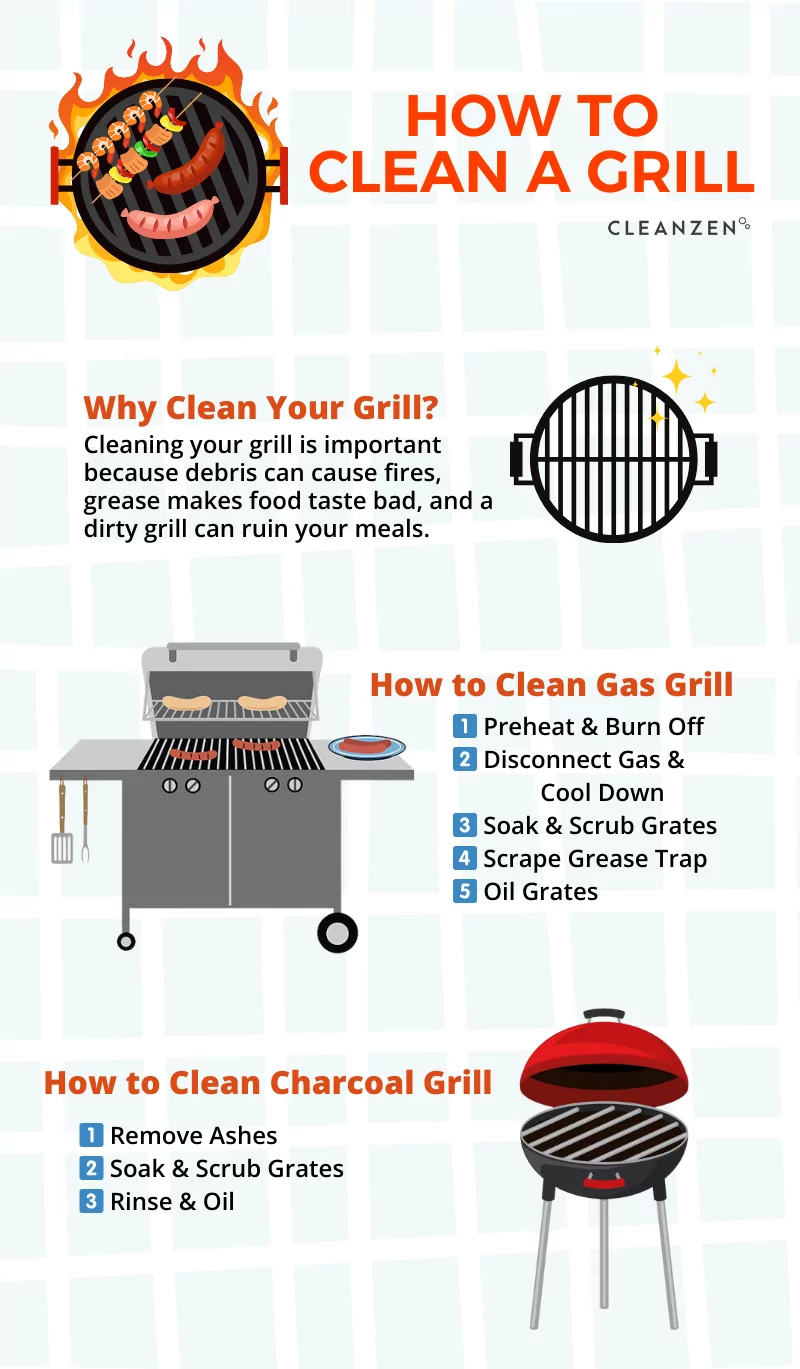
Learning how to clean cast iron grill grates comes down to three habits: clean immediately after cooking, dry thoroughly, and oil raw iron. A 2-minute wipe-down after grilling prevents hours of scrubbing later and keeps rust from forming.
Match your method to your grate type. Raw cast iron benefits from seasoning and oil; porcelain-enameled grates need gentle cleaning and no oil. For rust, start with natural methods like charcoal-lemon paste before reaching for chemical strippers.
Pick one day this week to inspect your grates. If they look dull or show early rust, try the thermal re-seasoning method on your grill. Twenty minutes of heat and oil can reset your grates and restore their non-stick performance for the rest of the season.