
How to Grill Trout: Quick Steps
Grilling trout is one of the fastest ways to turn a simple freshwater fish into a restaurant-worthy meal. With the right heat, timing, and prep, you get crispy, smoky skin and tender, flaky flesh in under 20 minutes. Whether you’re working with a whole rainbow trout or delicate fillets, the method matters more than the recipe. This guide walks you through everything you need to know about how to grill trout without sticking, drying out, or undercooking. You’ll learn how to pick fresh fish, set up your grill, season for maximum flavor, and tell exactly when it’s done.
Pick the Best Trout for Grilling

Rainbow, Lake, and Wild Varieties
Rainbow trout is the most beginner-friendly option. It has mild, nutty flesh, tender texture, and cooks evenly at high heat. Farm-raised versions are widely available, though wild-caught rainbows offer deeper flavor. Most rainbow trout range from 1 to 5 pounds.
Lake trout is larger, leaner, and has thicker skin that holds up well on the grill. It’s best grilled as fillets or butterflied. Because wild lake trout can carry higher fat-soluble contaminants, trim the white belly fat before cooking.
Wild varieties like brook, cutthroat, and Arctic char shine when grilled whole at single-serving sizes. Their richer flavor pairs perfectly with smoke and char.
Spot a Truly Fresh Fish
Use these four checks before buying:
- Shiny, slippery skin signals freshness. Dull or dry skin means the fish is past prime.
- Clear, bulging eyes indicate quality. Cloudy eyes mean age.
- No fishy smell. Fresh trout smells like clean water or nothing at all.
- Cold storage. Fish should sit on ice, even in the display case.
If the trout isn’t already cleaned, ask your vendor to gut it and remove the gills. Gills left in place create a bitter off-taste during cooking.
Prepare Trout for the Grill
Clean, Scale, and Dry
Most store-bought trout arrive pre-gutted, but always double-check the cavity. Remove any remaining innards and pull out the gills. Scaling is optional for small trout under 1.5 pounds, but larger lake trout benefit from it. Scrape gently from tail to head under running water using a fish scaler or the back of a knife.
After rinsing, pat the trout completely dry inside and out with paper towels. Moisture is the number one cause of sticking and prevents proper searing.
Bring to Room Temperature
Pull the trout out of the fridge 20 minutes to 2 hours before grilling. Cold fish hitting a hot grill leads to charred skin and raw centers. Room-temperature fish cooks evenly from edge to bone.
Safety reminder: Never leave raw fish out for more than 2 hours.
Season Trout Two Proven Ways
Stuff Whole Trout for Maximum Flavor
The cavity of a whole trout acts like a flavor chamber. Here’s how to build it:
- Season the inside with kosher salt and black pepper.
- Layer in this order:
– Thin onion or shallot slices (base layer)
– Lemon slices, plus zest for brightness
– Whole garlic cloves
– Fresh herbs: rosemary, thyme, dill, or parsley - Rub the outside with olive oil and sprinkle with coarse salt and pepper.
Avoid applying lemon juice or wet marinades to the skin. Moisture on the exterior causes sticking.
Use Dry Rubs for Fillets
When sticking is a concern or you’re grilling fillets, stick to dry seasonings:
- Salt, pepper, paprika, or chili powder only.
- Coat both sides with olive or avocado oil after seasoning to create a non-stick barrier.
- Save fresh herbs and lemon for after grilling.
This method keeps the surface dry and crisp while building a flavorful crust.
Set Up the Grill for Success
Clean and Oil the Grates
Sticking almost always starts with dirty grates. Follow this sequence every time:
- Preheat the grill to 450°F–500°F.
- Scrub the grates with a wire brush or a ball of crumpled foil held with tongs. A halved onion also works.
- Oil the grates by folding a paper towel into a pad, soaking it in canola or vegetable oil, and rubbing it across the grates with long tongs.
Never use soap on grill grates. Heat and mechanical scrubbing are enough.
Manage Heat Like a Pro
- Direct high heat works for small to medium trout and gives the best char.
- Two-zone setup is better for larger fish. Sear over high heat, then move to medium-low to finish cooking without burning.
- Keep the lid closed as much as possible to trap heat and cook evenly.
Grill Trout Using 3 Foolproof Methods
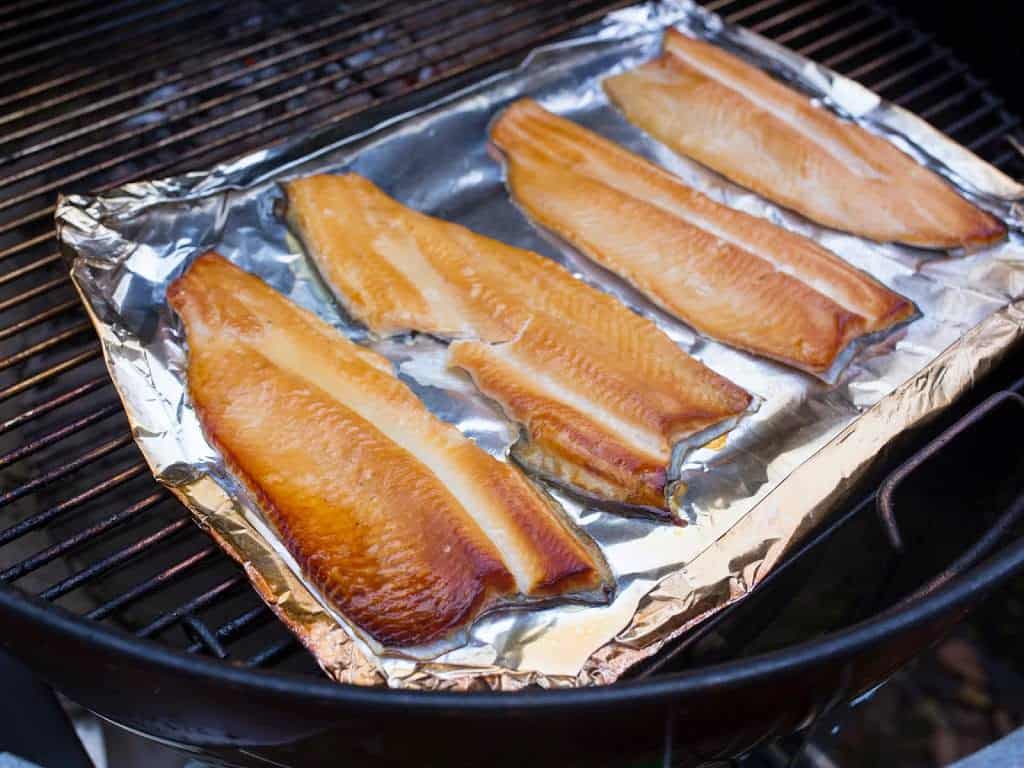
Method 1: Direct Grilling (Whole Trout)
Best for 1–2 pound trout with crispy skin and smoky depth.
- Place the trout skin-side down on hot, oiled grates.
- Do not touch for 6–7 minutes. The fish releases naturally when the skin crisps.
- Flip using two tools: one tong on the head, one spatula under the belly.
- Cook 6–7 more minutes until the internal temperature reaches 145°F and the flesh flakes.
Pro tip: Baste the top side with melted butter right after flipping to lock in moisture and add shine.
Method 2: Grill Basket (Fillets)
Ideal for thin or delicate fillets that tend to break apart.
- Spray the basket generously with oil. Aerosol spray gives the most even coverage.
- Add seasoned fillets and close the lid.
- Grill for 8 minutes, then flip the entire basket.
- Cook another 8 minutes.
- Rest the closed basket for 2–3 minutes before opening. This firms up the flesh and prevents sticking.
Never open the basket mid-cook to flip individual fillets. They will break or stick.
Method 3: Low-and-Slow Smoking
For a rich, jerky-like texture and deep smoky flavor.
- Set the smoker to 225°F–250°F.
- Use hardwoods like apple, cherry, or hickory. Avoid pine and other resinous woods.
- Place a water pan inside to maintain humidity.
- Smoke for 45–60 minutes, flipping once halfway through.
The result is tender, smoky trout that works beautifully in salads or spreads.
Know Exactly When Trout Is Done
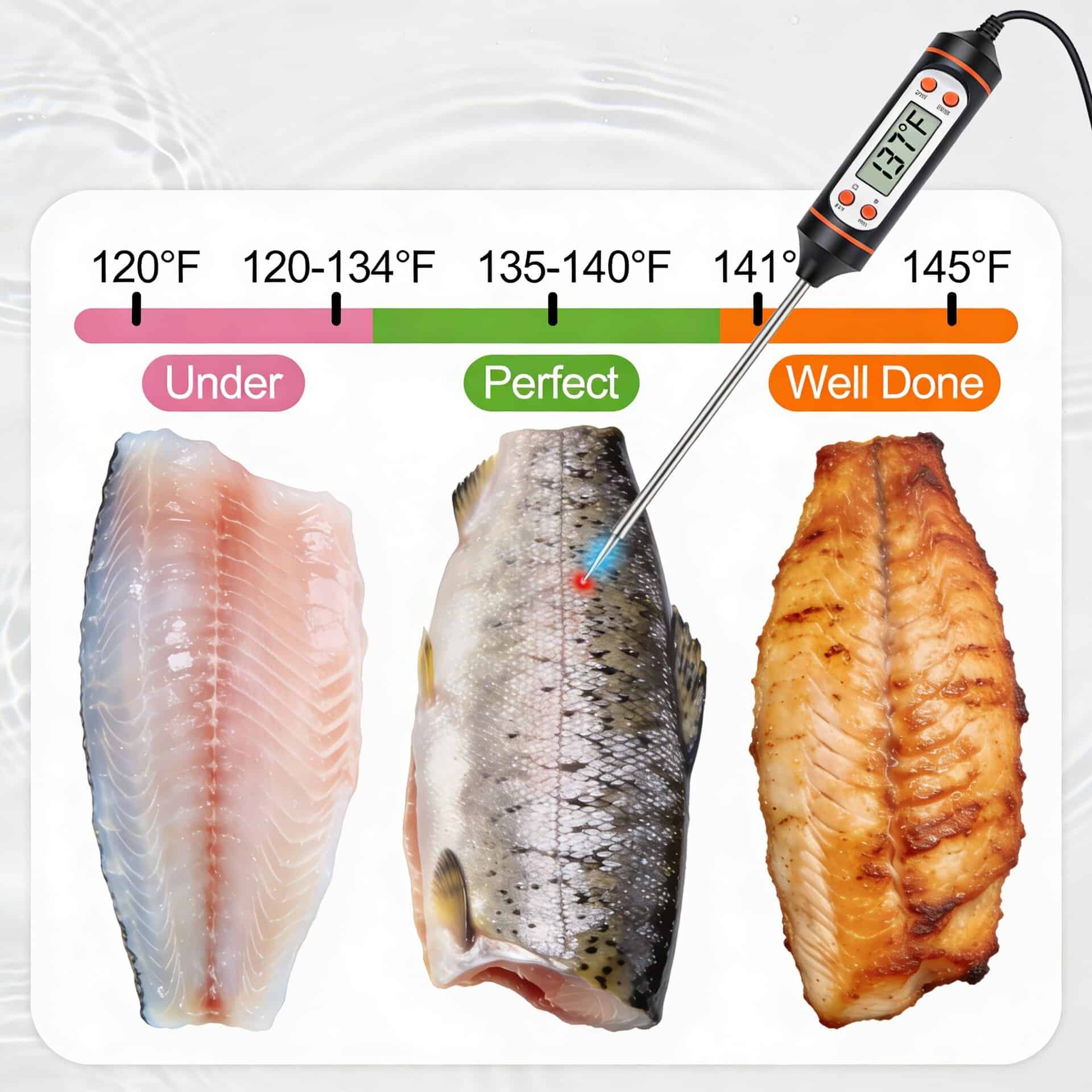
Check Internal Temperature
Insert an instant-read thermometer into the thickest part of the flesh, avoiding bone. The target range is 140°F–145°F. Pull the trout off the grill at 140°F because carryover heat will push it to 145°F as it rests.
Use Visual and Tactile Cues
- Opaque white flesh with no translucent gray.
- Easy flaking when tested with a fork.
- Firm but slightly yielding texture when pressed.
- Skin releases cleanly from the grates.
Never serve undercooked trout, especially wild-caught, due to parasite risk.
Handle Lake Trout Safely
Lake trout can store higher levels of environmental contaminants in their fat. To reduce exposure:
- Trim the white fat lines along the belly and back before cooking.
- Choose farm-raised rainbow trout when possible for lower mercury levels.
- Cook thoroughly to kill any potential parasites.
Debone Whole Trout Like a Chef
Whole deboned trout looks impressive and removes the hassle at the table.
- Cut off the head and tail.
- Slice along the backbone on one side, just above the ribs.
- Lift the central spine from the head end and pull it out in one piece.
- Check for pin bones and remove them with tweezers.
- Press the two fillet halves back together. The fish will look whole but be bone-free.
Serve with lemon wedges and a drizzle of herbed butter.
Pair Grilled Trout with the Right Sides
Finishing Touches
- Fresh lemon juice brightens the flavor.
- Dill butter (melted butter stirred with fresh dill) adds richness.
- Roasted pumpkinseed or sunflower oil gives a nutty finish.
Best Side Dishes
- Starches: Cilantro lime rice, rye spätzle, sweet potato fries.
- Vegetables: Grilled asparagus, sautéed spinach, charred zucchini.
- Salads: Watermelon-feta, mango pico, panzanella.
Drink Pairings
- White wine: Sauvignon Blanc or Pinot Gris.
- Beer: Light lager or wheat ale.
- Non-alcoholic: Sparkling lemon water or hibiscus iced tea.
Nutrition Facts: What You’re Eating
Whole Grilled Trout (per serving)
- Calories: 242
- Protein: 31g (62% DV)
- Fat: 11g (mostly heart-healthy unsaturated fats)
- Omega-3s: High levels supporting heart and brain health
- Sodium: 156mg (low)
- Key vitamins: B12, D, selenium, potassium
Note: A source data point listing 0.3g protein per fillet is clearly erroneous. Expect 20g+ of protein per fillet.
Health Benefits
- Low mercury compared to tuna or swordfish.
- High-quality protein for muscle repair and satiety.
- Rich in omega-3s, which reduce inflammation.
- Low contaminant risk when farm-raised or properly trimmed.
Troubleshoot Common Grilling Problems
Prevent Sticking: 5 Golden Rules
- Clean grates thoroughly before every cook.
- Oil both grates and fish to create a double barrier.
- Pat the fish dry to eliminate surface moisture.
- Wait for natural release before flipping. Forcing it tears the skin.
- Use a thin fish spatula that slides easily under the flesh.
Fix Common Issues
- Skin sticks? You flipped too soon or didn’t oil enough.
- Dry flesh? Overcooked or heat too high. Use a thermometer.
- Burnt outside, raw inside? Fish was too cold. Let it warm up first.
- Smoke flavor too strong? Switch from hickory to milder apple wood.
Step-by-Step: Grill Trout in 8 Minutes
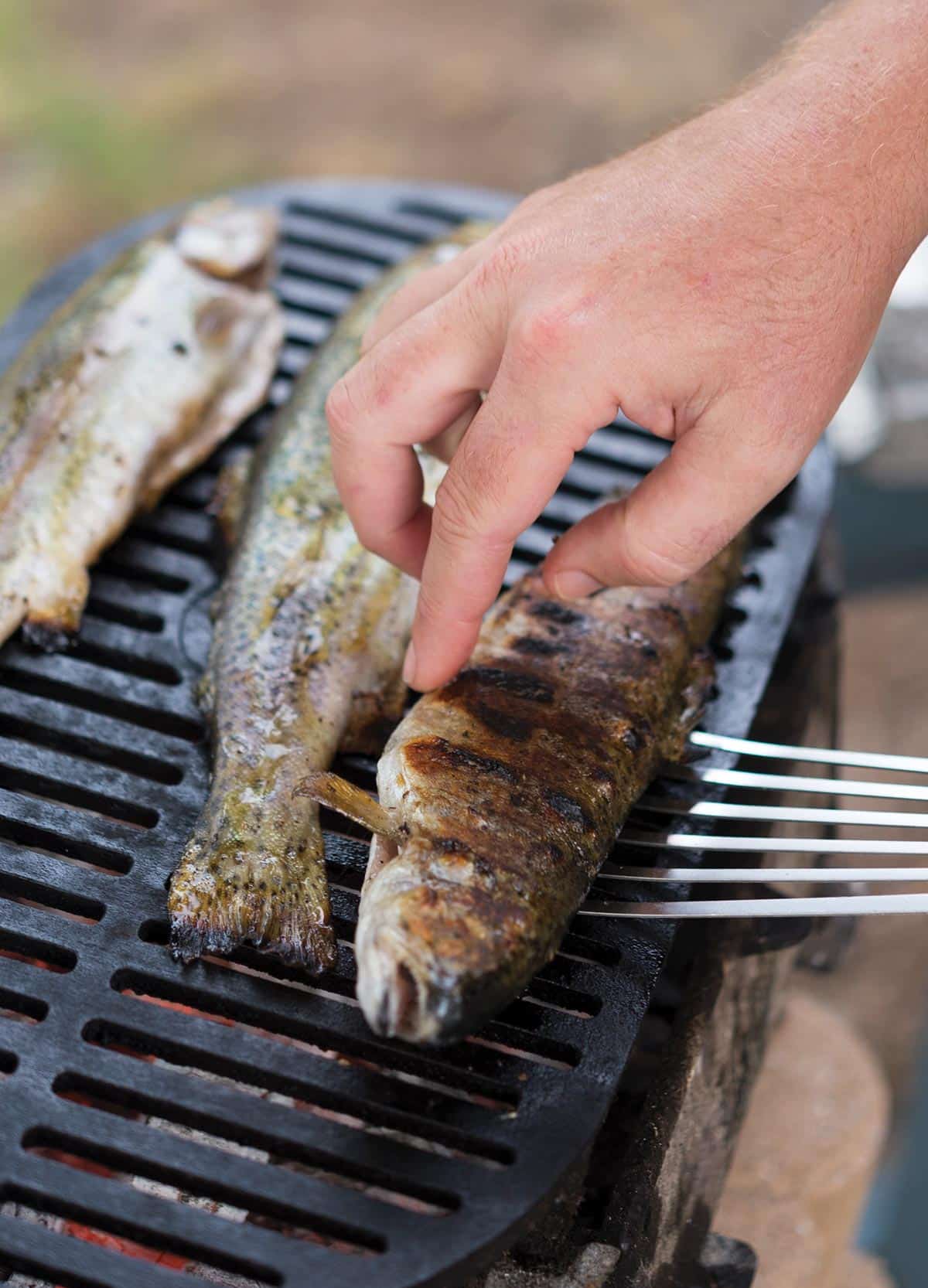
- Clean and oil grates, then preheat to 450°F or higher.
- Pat trout dry inside and out.
- Season the cavity with salt, pepper, lemon, onion, and herbs.
- Oil the exterior and sprinkle with salt.
- Place skin-side down, close the lid, and cook for 6–7 minutes.
- Flip when the fish releases naturally using two tools.
- Cook 6–7 more minutes until the internal temperature hits 145°F.
- Rest for 2 minutes, then serve whole or deboned.
Frequently Asked Questions About Grilling Trout
How long does it take to grill trout?
For a 1.5-pound whole trout, grill 6–7 minutes per side over high heat. Fillets in a basket take about 8 minutes per side. Smoking at low temperatures takes 45–60 minutes total.
What temperature should trout be grilled at?
Preheat your grill to 450°F–500°F for direct grilling. For smoking, maintain 225°F–250°F throughout the cook.
How do you keep trout from sticking to the grill?
Clean and oil the grates, pat the fish dry, oil the skin, and wait for natural release before flipping. Avoid wet marinades on the exterior.
What is the safe internal temperature for grilled trout?
Trout is safe to eat at 145°F internal temperature. Pull it off the grill at 140°F to account for carryover cooking.
Can you grill frozen trout?
You can, but thaw it fully in the fridge first. Grilling frozen fish leads to uneven cooking and excess moisture, which causes sticking.
Should you eat the skin on grilled trout?
Yes, if the skin crisps properly. It adds flavor, texture, and omega-3s. Just make sure it releases cleanly from the grates before serving.
Key Takeaways for Grilling Trout Like a Pro
Grilling trout comes down to three pillars: clean and oiled grates, dry and properly seasoned fish, and patient heat management. Start with fresh trout, pat it completely dry, and season smartly based on whether you’re grilling whole or filleted. Preheat your grill to high, oil everything, and resist the urge to flip until the fish releases naturally. Pull it off at 140°F and let carryover heat finish the job.
Your next step is simple: pick up a fresh trout, fire up the grill, and try the 8-minute method tonight. Once you nail the timing and temperature, you’ll have a go-to recipe that works every single time.