How to Use a Pellet Grill
You just unboxed a shiny new pellet grill, and now you’re wondering where to start. Maybe you’ve seen neighbors pull off perfect briskets and wondered if you could do the same. Pellet grills take the guesswork out of fire-tending, but they still reward users who learn the basics. From startup to cleanup, a little know-how goes a long way toward mouthwatering results.
This guide walks you through everything you need to know about how to use a pellet grill. You’ll learn how to set it up safely, choose the right fuel, master temperature swings, boost smoke flavor, and keep your grill running like new. Whether you’re smoking ribs for the first time or searing a steak at 500°F, these steps will help you cook with confidence.
Set Up Your Pellet Grill Safely Before the First Cook
A few minutes of prep protects your home, your grill, and your food.
Pick the Right Spot
Place your grill on a flat, non-flammable surface at least 3 feet from walls, decks, and overhangs. Avoid low-hanging branches and never operate it in an enclosed space like a garage. Carbon monoxide can build up fast in tight areas.
If you’re grilling on a wooden deck, slide a fire-resistant mat underneath to catch stray embers.
Check the Power and Hopper
Plug your grill into a dedicated 110V outlet. Skip the extension cord whenever possible, because voltage drops can throw off the controller. If you absolutely need one, use a heavy-duty outdoor cord no longer than 25 feet.
Before loading pellets, confirm the hopper is empty and clean. Old ash or debris can clog the auger and stop the feed.
Choose the Right Pellets for Flavor and Performance
Your fuel shapes everything from taste to cook quality.
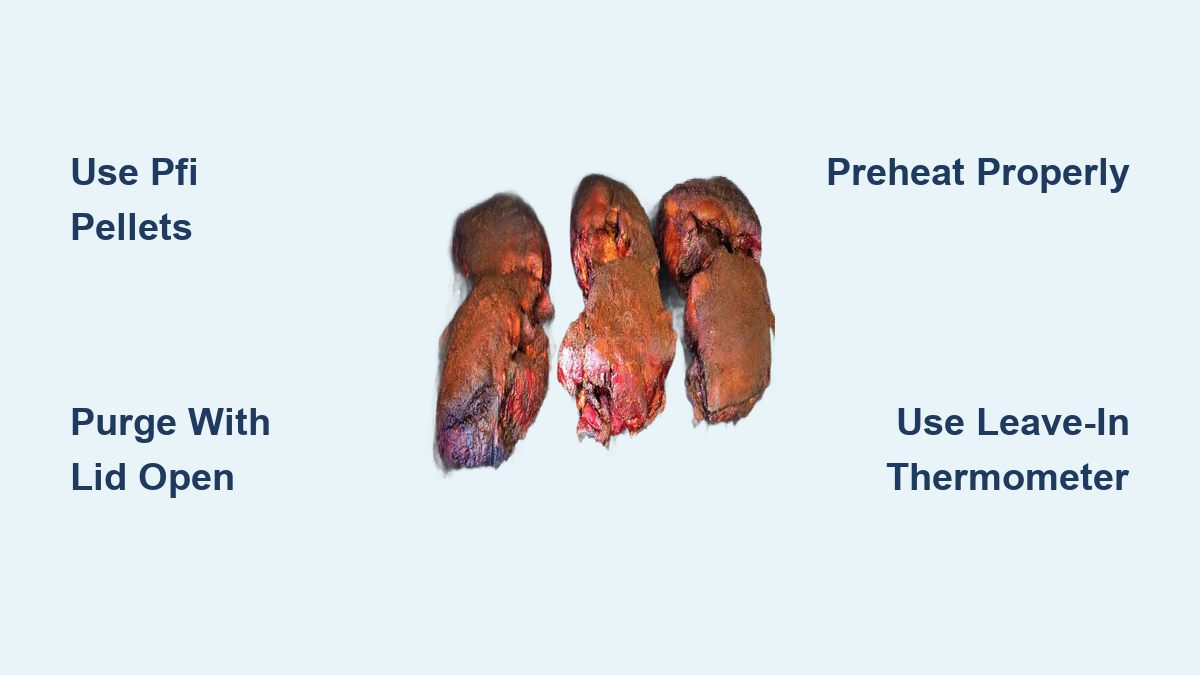
Stick With 100% Hardwood
Only use food-grade hardwood pellets made for grilling. Avoid anything with binders, flavor oils, or softwood fillers. These additives create off-flavors and can gunk up internal parts.
Look for the Pellet Fuels Institute (PFI) Quality Mark on the bag. This seal means the pellets meet strict standards for low moisture, low ash, and uniform size.
Popular wood options include:
– Hickory for bold, bacon-like flavor on beef and pork
– Oak for a medium, versatile smoke that pairs with anything
– Apple for a mild, sweet touch on chicken and pork
– Mesquite for strong, earthy notes on short cooks
Keep Pellets Dry
Moisture is the top cause of auger jams. Store pellets in a sealed container, even if the bag is unopened. If pellets feel soft or crumbly in your hand, they’ve soaked up humidity. Toss them out.
Pro Tip: A 15-hour brisket can burn through roughly 15 pounds of pellets. For long cooks, check the hopper every few hours so you never run dry mid-smoke.
Start Your Pellet Grill the Right Way
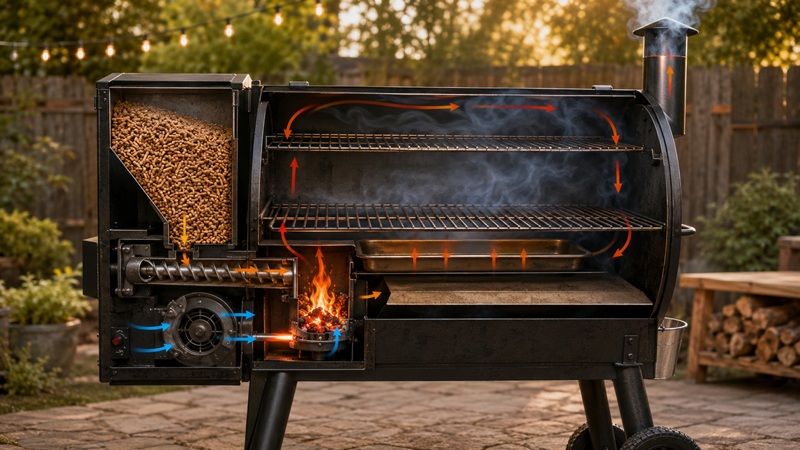
A proper startup prevents flare-ups and sets the stage for clean smoke.
Power On and Purge
- Turn on the grill.
- Set the controller to “Smoke” or the lowest setting.
- Keep the lid open during startup.
The open lid lets fresh oxygen flood the firepot and burns off any leftover odors from past cooks.
Ignite and Watch for Smoke
Press the Ignite button. The auger will drop pellets into the firepot, and the hot rod will light them. Within 2–3 minutes, you should see thick, white smoke billowing out. That’s your sign the fire is catching cleanly.
Close the Lid and Preheat
Once steady smoke appears, close the lid and dial in your target temperature:
– Smoking: 225°F to 275°F
– Roasting or baking: 325°F to 375°F
– Searing: 450°F to 500°F
Let the grill run for 10–15 minutes to stabilize. Use this window to season meat or chop veggies.
Manage Temperature Swings Like a Pro
Pellet grills don’t hold a perfectly steady temp, and that’s okay.
Expect Natural Fluctuation
Your grill will swing about 20°F above or below the set point. At 225°F, you might see anywhere from 205°F to 245°F. This is normal. The controller adjusts pellet feed and fan speed to average things out over time.
Don’t chase the needle. Opening the lid to “fix” a dip only causes more heat loss.
Use a Leave-In Thermometer
Stop guessing and start knowing. A dual-probe thermometer like the ThermoWorks Smoke or Signals lets you track meat temp without lifting the lid. One probe goes into the thickest part of the meat, and you monitor from a display or app.
Boost Smoke Flavor on Every Cook

Pellet grills burn clean, which means less visible smoke. A few tricks help you capture that deep, wood-fired taste.
Start Low and Slow
Begin every smoke on the “Smoke” setting for the first 30 to 60 minutes. This produces the most smoke and helps build a strong smoke ring. After that, bump the temperature to finish the cook.
Add a Smoke Tube for Extra Punch
For short cooks like burgers or chicken, a smoke tube works wonders. Fill the mesh cylinder with hardwood pellets, light one end, and set it on the grates. It smolders for 3–6 hours, adding rich smoke without changing grill temp.
Cook Anything: Smoke, Sear, or Bake

Pellet grills are versatile enough to replace a smoker, an oven, and a grill.
Low-and-Slow Smoking
This is where pellet grills shine. Try these targets:
– Brisket: 10–15 hours at 225°F
– Pork butt: 8–12 hours at 250°F
– Ribs: 5–6 hours at 225°F
Keep the lid closed the entire time. When meat hits the stall (around 160°F internal), wrap it in foil or butcher paper to power through.
High-Heat Searing
Most pellet grills max out at 450°F to 500°F, which is plenty for a great sear. To reverse-sear a steak:
1. Smoke at 225°F until the internal temp reaches 110°F.
2. Crank the grill to 500°F.
3. Sear 2–3 minutes per side.
You’ll get a tender, smoky center with a crisp, caramelized crust.
Baking and Roasting
The convection heat makes pellet grills excellent outdoor ovens. Bake pizza at 450°F on a stone, roast vegetables at 375°F, or warm casseroles at 350°F. Use cast iron or oven-safe pans, and rotate food halfway through for even results.
Clean and Maintain After Every Cook
A few minutes of cleanup keeps your grill running smoothly and your food tasting fresh.
Empty the Burn Pot
After the grill cools, scoop out ash from the burn pot. Use gloves and a small brush or shop vac. Ash buildup blocks airflow and can stop ignition cold. Clean it every 10–15 hours of use, or before every cook if you smoke often.
Manage Grease the Easy Way
Line the drip pan with aluminum foil for fast cleanup. Elevate food on a rack to keep it out of the grease. Empty the grease bucket after each cook, because built-up grease can ignite and cause flare-ups.
Wipe Down the Interior
Scrub grates with a grill brush while they’re still warm. For stuck-on grease, wipe interior walls with a damp cloth once the grill has cooled. Stick to warm water and mild soap. Skip harsh chemicals.
Store Your Grill the Right Way
Proper storage extends the life of your grill and protects your fuel.
Always Use a Cover
Slip a waterproof grill cover over your unit after every use, even under a roof. Humidity sneaks in and ruins pellets and electronics.
Empty the Hopper for Long Breaks
If you won’t grill for more than a week, dump the pellets out. Leftover fuel can absorb moisture, swell, and jam the auger. In dry climates, a small amount is fine, but humid areas demand a full empty.
Troubleshoot Common Pellet Grill Problems

Even great grills have off days. Here’s how to handle the usual suspects.
Auger Won’t Feed Pellets
Moisture is usually the culprit. Discard any soft pellets, unplug the grill, and gently clear the auger path with a long screwdriver.
Grill Won’t Ignite
Start by cleaning the burn pot thoroughly. Confirm your pellets are dry and 100% hardwood. If ignition still fails, inspect the hot rod for cracks or corrosion and replace if needed.
Smoke Flavor Feels Weak
High cooking temps and clean burns reduce visible smoke. Start on “Smoke” mode for an hour, add a smoke tube, or switch to bolder woods like hickory or mesquite.
Temperature Swings Too Much
Keep the lid closed as much as possible. Fill the hopper at least halfway before long cooks. In windy weather, set up a windbreak to shield the grill.
Essential Tools for Pellet Grill Success

The right gear makes every cook easier and more consistent.
Must-Have Accessories
- PFI-certified pellets for reliable fuel
- Leave-in thermometer to track meat without lifting the lid
- Smoke tube for extra smoke on demand
- Waterproof grill cover to block moisture
- Aluminum foil for lining pans and wrapping meat
- Grill brush for cleaning grates
- Fire-resistant mat to protect decks
Nice-to-Have Upgrades
- A pellet vacuum for cleaning the hopper and burn pot
- A cast iron griddle or pizza stone
- Meat hooks for hanging sausages
Follow These Best Practices Every Time
A few habits separate good cooks from great ones.
Never Skimp on Fuel
Cheap or damp pellets cause jams, weak smoke, and bad flavor. Quality fuel is the cheapest upgrade you can make.
Always Purge With the Lid Open
Skipping this step risks flare-ups and sooty off-flavors. Wait for thick white smoke before closing the lid.
Trust the Average Temperature
Your meat doesn’t care if the grill runs at 210°F or 240°F. Focus on steady cooking, not a perfect gauge reading.
Clean the Burn Pot Regularly
This one task prevents most startup failures. Make it a habit.
Use a Thermometer Every Single Time
Guessing doneness leads to dry meat. Rely on internal temps:
– Chicken: 165°F
– Pork shoulder: 195°F
– Brisket: 200°F to 203°F
– Steak (medium): 135°F
Frequently Asked Questions About Pellet Grills
How long does it take for a pellet grill to heat up?
Most pellet grills reach 225°F in about 10 to 15 minutes after startup. Higher temps like 450°F can take 20 to 25 minutes. The exact time depends on outside weather and grill size.
Can you leave a pellet grill unattended?
Pellet grills are designed for low-maintenance cooking, but you should still check on them periodically. For long cooks, verify the hopper has enough fuel and monitor internal meat temps with a leave-in thermometer.
Do pellet grills need electricity to run?
Yes. Pellet grills use electricity to power the auger, fan, and controller. Plug them into a standard 110V outlet. Without power, the automated feed system won’t function.
How often should you clean a pellet grill?
Empty the burn pot every 10 to 15 hours of use, or before every cook if you smoke frequently. Wipe down grates and interior surfaces after each session, and deep clean periodically to remove grease buildup.
What is the best wood for smoking brisket?
Hickory and oak are popular choices for brisket because they deliver bold, classic smoke flavor. Mesquite works in small amounts but can turn bitter on long cooks. Many pitmasters blend hickory with oak for a balanced profile.
Can you use a pellet grill in the rain?
Light rain is fine if your grill is covered and plugged into a protected outlet. Heavy rain can affect performance and pose electrical risks, so it’s best to wait for better weather or grill under a sturdy shelter.
Key Takeaways for Pellet Grill Beginners
Learning how to use a pellet grill comes down to three core habits: start with quality fuel, respect the startup process, and trust the system. Always purge with the lid open until thick white smoke appears. Accept natural temperature swings instead of chasing the gauge. And rely on a leave-in thermometer to nail doneness every time.
Your next step is simple: pick a recipe, grab a bag of PFI-certified pellets, and fire up the grill for your first cook. Start with something forgiving like chicken thighs or pork ribs, and build your skills from there.