
How to Turn Off a Gas Grill: Quick Steps
Turning off a gas grill might seem like a simple task. Just twist the knobs and walk away, right? But doing it incorrectly can lead to gas leaks, fire hazards, or worse. The right shutdown sequence protects your home, your family, and your equipment from preventable danger.
The biggest debate among grillers is whether to close the propane tank before or after turning off the burners. Safety authorities and experienced operators agree that shutting off the gas supply at the source first is the safest approach. This guide walks you through the correct steps, explains why sequence matters, and shows you how to avoid common mistakes.
Shut Down in the Right Order

Close the Propane Tank First
Always start by turning the valve on your propane tank clockwise until it stops. This cuts off the gas supply at its source, which is your most important safety step. Even if the burner knobs are faulty or get bumped later, no gas can escape because the tank is sealed.
This “tank-first” method mirrors industrial safety practices used in plants that handle flammable gases. Isolating the high-pressure source before touching downstream components like hoses and burners is the golden rule. After you close the tank, the grill will keep running briefly on the residual gas left in the lines.
Wait for the Flame to Pop Out
After closing the tank, leave the burner knobs on for 30 to 60 seconds. You will see the flames shrink and then go out with a small “pop” sound. That pop is completely normal. It signals that the gas in the line has fully burned off and the system is depressurized.
Do not try to rush this step by turning the knobs off immediately. Letting the gas burn off prevents buildup in the combustion chamber, which could cause a flash fire the next time you light the grill.
Turn Burner Knobs to Off
Once the flames are completely out, turn every burner knob to the “OFF” position. This final step completes the shutdown and resets the control system. Your grill is now safe to cool down and cover.
This three-step sequence, tank off, wait for the pop, then knobs off, is the gold standard for safe gas grill shutdown.
Why Sequence Matters
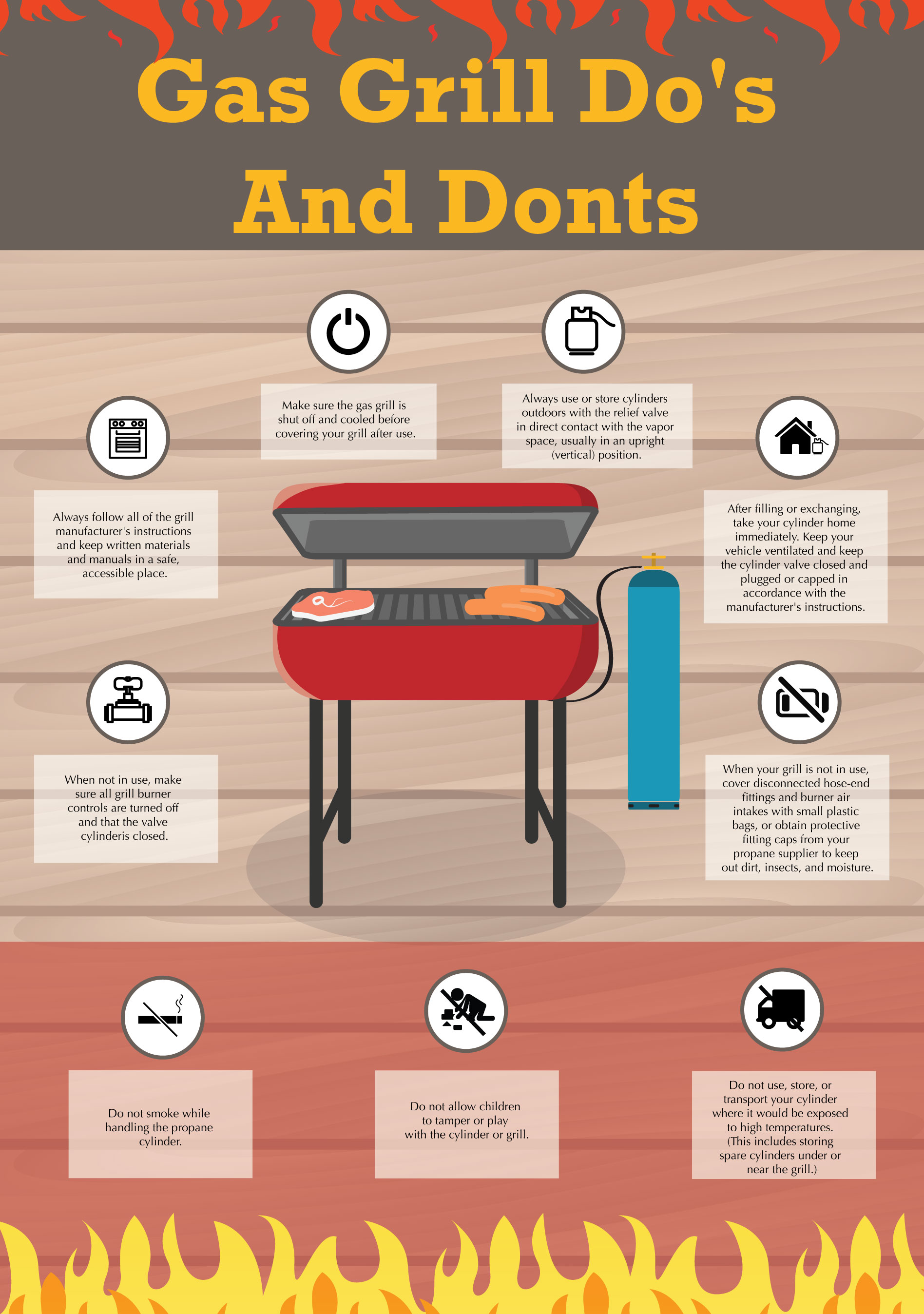
Prevents Gas Leaks
Burner knobs are not fail-safe. Over time they can wear out, clog with grease, or get accidentally turned by pets or children. If your propane tank stays open, a malfunctioning knob can release gas continuously and create a dangerous buildup in your yard.
Closing the tank first eliminates this risk entirely. Even if a burner valve fails, there is no pressurized gas behind it to escape.
Protects Against Rodent Damage
Squirrels and mice love to chew through rubber and plastic gas hoses. If your tank valve is open and a hose gets gnawed through, the entire contents of your propane tank can escape. That creates an extreme explosion hazard.
With the tank valve closed, the same damage poses no immediate danger because the gas source is already cut off.
Meets Safety Regulations
In many areas, it is illegal to leave gas in the lines when your grill is not in use. Local fire codes often require you to shut off the tank to stay compliant. Following the tank-first method keeps you on the right side of the law and reduces your liability.
Common Mistakes to Avoid
Leaving the Tank Open
Some grillers leave the tank valve open between sessions for convenience. They think it prevents moisture from entering the lines or makes restarting easier. This practice significantly increases your risk.
A single point of failure, like a damaged hose or loose connection, can turn your backyard into a hazard zone. The minimal benefit of preventing moisture does not outweigh the real danger of an open gas supply.
Turning Knobs Off First
Turning off the burners before the tank may feel logical, but it leaves the gas line pressurized. This method depends entirely on the integrity of the burner valves, which wear out faster and get bumped more often than the tank valve.
If you forget to close the tank later, you have created a hidden risk that can sit unnoticed for days or weeks. Always prioritize the source shut-off.
Skipping the Burn-Off Step
Rushing the process by turning off the knobs right after closing the tank traps gas in the lines. That trapped gas can linger in the burner tubes and ignite unexpectedly during your next cookout, causing a flare-up or even a flashback explosion.
Letting the flame burn out naturally removes this residual gas safely.
Restarting Your Grill Safely
Open the Tank Before Igniting
Always open the propane tank valve before turning on the burner knobs or attempting to light the grill. This lets the regulator pressurize the system safely.
Never open the tank while the burners are on or during ignition. That can cause an uncontrolled gas surge and increase the risk of flare-ups.
Perform a Leak Test Regularly
If you have disconnected the tank, replaced a hose, or have not used the grill in weeks, do a bubble test before lighting:
- Mix liquid dish soap with water.
- Apply the solution to the tank valve, hose connections, and regulator.
- Slowly open the tank valve without igniting anything.
- Watch for bubbles, which indicate a gas leak.
If you see bubbles forming, turn off the tank immediately. Tighten the connections or replace faulty parts before using the grill again.
Special Safety Scenarios
Grilling with Kids Around
In homes with children, the tank-first shutdown is non-negotiable. Kids are curious and may twist the burner knobs just to see what happens. If the tank is open, this could release a massive amount of gas in seconds.
Closing the tank removes this risk entirely. It is the only mechanical safeguard that works even when supervision lapses.
Outdoor Storage and Wildlife
If your grill sits outdoors in a garage, patio, or shed, rodents are a real threat. They chew through hoses for nesting material, and a closed tank valve is your best defense.
Inspect your hose monthly for signs of gnawing or cracking. Replace it immediately if you spot any damage.
Long-Term Storage
For winter breaks or extended periods of non-use:
- Shut off the tank and burn off the remaining gas.
- Turn off the burner knobs.
- Disconnect the tank and store it upright outdoors, never indoors or in a garage.
- Cover the grill to protect it from moisture and debris.
Before using the grill again, reconnect the tank and perform a full leak test.
Maintenance Tips for Longevity

Inspect Hoses and Connections
Check the gas hose for cracks, brittleness, or soft spots every few months. UV exposure and temperature swings degrade rubber over time. Plan to replace hoses every 3 to 5 years, or sooner if you spot damage.
Make sure all connections are hand-tight. Do not use tools, because over-tightening can damage the seals.
Clean Burner Tubes
Grease and debris can clog burner tubes and lead to uneven flames or gas buildup. Remove the grates and flavor bars periodically, then use a wire brush or pipe cleaner to clear the ports.
Blocked tubes can cause unburned gas to accumulate, which increases the risk of ignition delays or explosions.
Store the Tank Properly
Always store propane tanks upright and outdoors in a well-ventilated area. Never keep them in basements, garages, or enclosed spaces. Heat and confined areas increase pressure and explosion risk.
Keep tanks away from direct sunlight and any ignition sources.
Frequently Asked Questions About Gas Grill Shutdown
Should you turn off the propane tank after every use?
Yes. Closing the tank valve after every use is the safest practice. It isolates the gas source and protects against leaks, knob malfunctions, and rodent damage. Leaving the tank open between sessions creates unnecessary risk.
Why does the grill make a popping sound when shutting down?
The pop happens when the last bit of gas in the supply line burns off after you close the tank valve. It is a normal sign that the line has been depressurized. Hearing this sound confirms your shutdown sequence worked correctly.
Can you leave a gas grill on overnight by accident?
No. An unattended gas grill is a serious fire and explosion hazard. If you forget to shut it down, gas can leak from faulty valves or damaged hoses. Always verify that both the tank and burners are off before walking away.
Is it safe to store a propane tank in a garage?
No. Propane tanks should always be stored outdoors in a well-ventilated area. Storing them in a garage or basement creates a buildup risk if gas leaks. Heat in enclosed spaces can also increase tank pressure and create an explosion hazard.
How often should you replace a gas grill hose?
Replace your gas hose every 3 to 5 years, or sooner if you notice cracks, brittleness, or soft spots. Inspect the hose monthly for damage, especially if your grill sits outdoors where rodents can chew through it.
Do you need to do a leak test every time you grill?
No. A leak test is only necessary when you first connect a tank, after replacing a hose, or when the grill has been sitting unused for weeks. If you smell gas at any point, stop and run a bubble test before lighting the grill.
Key Takeaways for Safe Gas Grill Shutdown
The tank-first method is the most reliable way to protect your home and family. Close the propane tank valve first, wait for the flames to burn out with that reassuring pop, then turn the burner knobs off. This sequence prevents leaks, protects against rodent damage, and keeps you compliant with safety codes.
Make this routine a habit every single time you grill. The extra few seconds it takes to reach the tank valve are well worth the peace of mind. Your next step is simple: perform a bubble test on your grill this weekend to confirm everything is sealed and ready for your next cookout.