How Hot Does a Grill Get: Temperature Guide
If you’ve ever wondered how hot does a grill get, the answer depends heavily on your grill type, fuel source, and setup. From slow-smoking ribs at 225°F to searing steaks at over 600°F, grills deliver a wide thermal range that defines what and how well you can cook. Understanding these temperatures is the key to juicy meats, perfect sear marks, and avoiding flare-ups or undercooked food.
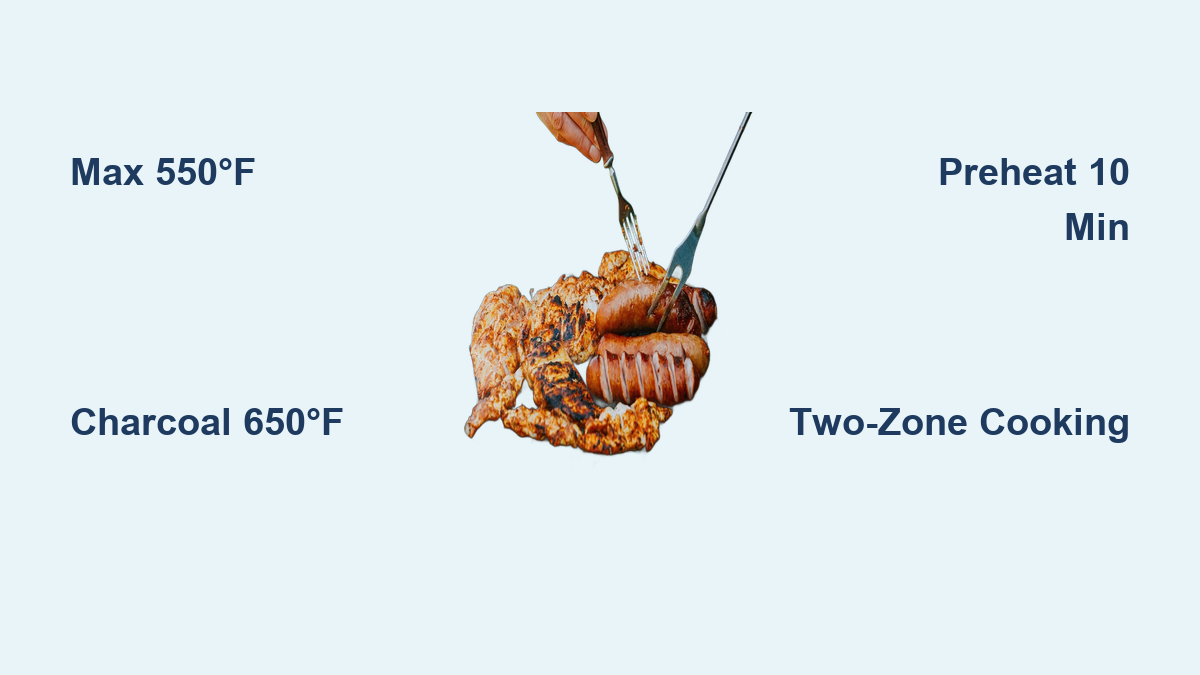
Most standard gas grills max out around 500°F to 550°F, while charcoal models can push beyond 650°F, with fire zones reaching up to 1,200°F. Infrared and specialized setups go even higher, entering what experts call the “incendiary” range, ideal for restaurant-quality searing. Whether you’re using propane, lump charcoal, or wood pellets, knowing your grill’s heat profile transforms guesswork into precision.
This guide breaks down exactly how hot each grill type gets, what those temperatures mean for your food, and how to use them effectively. You’ll learn optimal preheating times, how to set up two-zone cooking, and how to troubleshoot when your grill isn’t heating right, all backed by performance data and thermal testing.
Gas Grill Maximum Temperatures
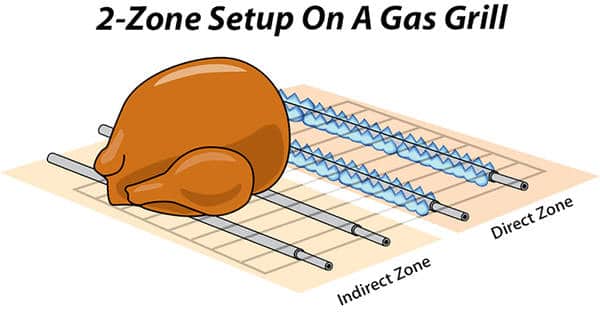
Gas grills offer convenience and consistent heat but have a built-in thermal ceiling. Knowing their limits helps avoid frustration and wasted fuel.
Peak Heat Range: 500°F to 550°F
Despite high BTU ratings on larger models, no standard gas grill exceeds 550°F. The design prioritizes even heating across large surfaces, not extreme searing heat. Propane and natural gas models perform similarly in peak temperature, though natural gas units may take slightly longer to heat due to lower energy density.
Higher BTUs in big grills power additional burners, rotisseries, or side burners, not higher heat per square inch. So a 60,000 BTU grill isn’t hotter than a 30,000 BTU model; it just heats more area.
Direct vs. Indirect Zone Dynamics
With the lid closed, two distinct heat zones emerge:
- Direct zone (over burners): 500°F to 550°F, ideal for searing steaks, burgers, and veggies.
- Indirect zone (off-burner side): 325°F to 400°F, perfect for roasting chicken, ribs, or finishing thick cuts.
Lid open? The indirect zone drops to just 110°F, which is too cool to cook. Always keep the lid down for anything beyond quick searing.
Grate Height Matters
In most gas grills, the cooking grate sits 2 inches above the burner or flavor bars. This proximity ensures efficient heat transfer but also makes cleaning critical, since grease buildup blocks airflow and causes uneven flames.
Charcoal Grill Heat Potential

Charcoal grills outperform gas when it comes to peak heat, delivering intense radiant energy that’s unmatched for searing and crust development.
Kettle Grills: 600°F to 650°F Peak
When coals are fully lit and the lid is on, temperatures 3.5 inches above the coal bed reach 600°F to 650°F, hot enough for a steakhouse-quality sear. This rivals wood-fired pizza ovens in thermal output.
Lid off? Heat plummets to around 200°F due to wind cooling and lack of convection. Never cook with the lid off if you want speed or efficiency.
Two-Zone Setup for Control
Stack coals on one side to create dual heat zones:
- Hot side (over coals): 600°F+ sear zone.
- Cool side (opposite): ~350°F roasting and finishing zone.
This setup mimics an oven and prevents burned exteriors on thick meats.
Kamado and Ceramic Grills: Superior Heat Retention
Thick ceramic walls trap heat like an oven. Once stabilized, these grills maintain temps with minimal airflow adjustment. Unique convection currents mean air 2 inches above the grate can be hotter than the grate itself, requiring careful probe placement.
Pro Tip: Use the diffuser plate legs to route probe cables safely, avoiding direct flame contact.
Pellet Smokers: Searing vs. Smoking

Pellet grills are smokers first, grills second. Their strength lies in precise low-temp control, not blistering heat.
Max Searing Temp: 450°F
Even on “High,” most pellet grills max out at 450°F. Reaching that from a smoking temp (250°F) takes about 15 minutes due to thermal lag.
The thermostat cycles on and off, causing minor fluctuations that are more noticeable at lower temps but even out at high heat.
Hotspot Awareness
The side opposite the fire pot often runs hotter. Rotate food for even cooking.
Never sear with the lid open. Heat drops too fast, so lid closure is essential for temperature stability.
Grill Temperature Zones Explained
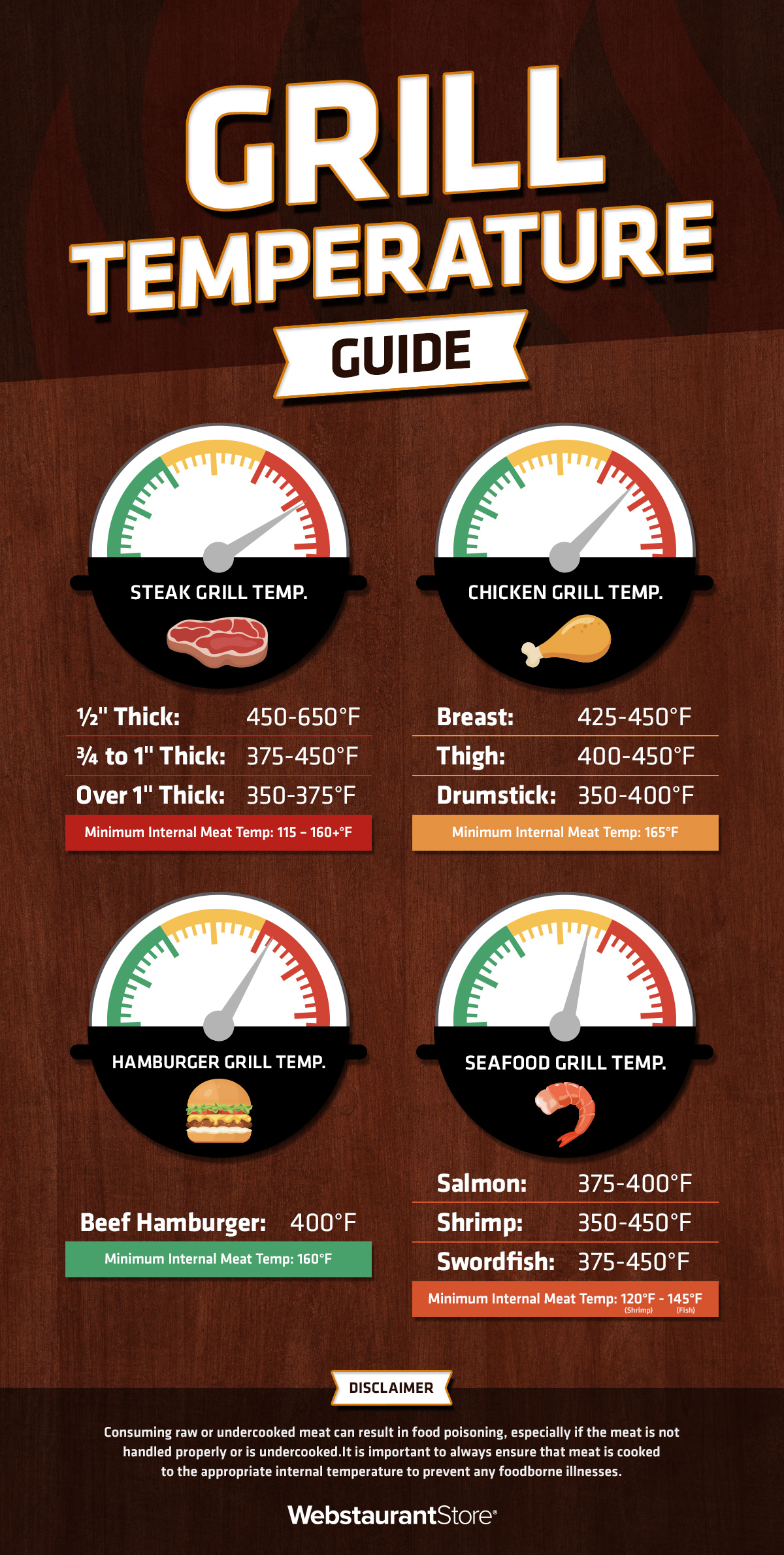
Understanding heat zones ensures you match the right temp to the right food.
| Zone | Temp Range | Best For |
|---|---|---|
| Low | 225°F to 250°F | Brisket, ribs |
| Medium-Low | 275°F to 300°F | Ribs |
| Medium | 325°F to 350°F | Whole chicken, roasts, fish |
| Medium-High | 375°F to 400°F | Burgers, chops, sausages, veggies |
| High | 450°F to 600°F | Steaks, chicken breasts, pizza |
| Incendiary | 650°F+ | Fast searing, crust development |
Food-Specific Cooking Guidelines
- Burgers: 375°F to 400°F, 4 to 5 min/side (160°F internal)
- Steaks (Medium-Rare): 400°F to 450°F, 3 to 4 min/side (130°F to 135°F)
- Chicken Breasts: 375°F to 400°F, 6 to 7 min/side (165°F)
- Sausages: 375°F to 400°F, 8 to 10 min total (160°F)
- Veggies: 375°F to 400°F, 4 to 7 min/side (crisp-tender)
Preheating: The 10-Minute Rule
Skipping preheat ruins searing and increases sticking.
Gas Grills: 10 to 15 Minutes
- For searing (steaks, chops): Preheat to 500°F+.
- For indirect (roasts, whole birds): Preheat to 350°F.
Cold grates cause food to stick and lose juices. A proper sear seals in flavor.
Charcoal: 15 to 20 Minutes
Light coals in a chimney. Wait until fully ashed over with no visible flames before spreading.
Pellet Grills: 15 Minutes to Sear
From cold start, allow 15 minutes to hit 450°F.
Two-Zone Cooking Setup

This technique gives you control over cooking stages: sear first, finish gently.
Gas: One Side On, One Off
- Turn on burners on one side only.
- Hot side: Sear.
- Cool side: Finish large cuts with lid closed (acts like an oven).
Charcoal: Coals on One Side
- Pile coals on half the grate.
- Over coals: High heat.
- Opposite side: ~350°F indirect.
Use tongs to move food when needed.
Why Your Grill Isn’t Getting Hot Enough
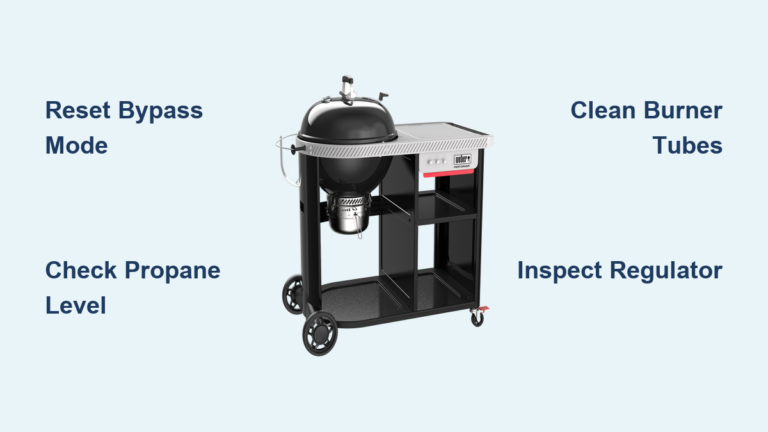
If your gas grill stalls below 500°F, don’t assume it’s broken. Check these common issues first.
Knob Position Error
On many models, “Start” is also “High”. Turning the knob further reduces the flame. Make sure it’s set to maximum.
Lid Left Open
Heat escapes fast. Always cook with the lid down for indirect cooking or roasting.
Burner Tube Blockage
Grease, spider webs, or debris clog burner ports. Use a straightened paper clip to clear them.
Regulator Lockout (Propane Grills)
A safety feature can restrict gas flow if the valve was opened too fast.
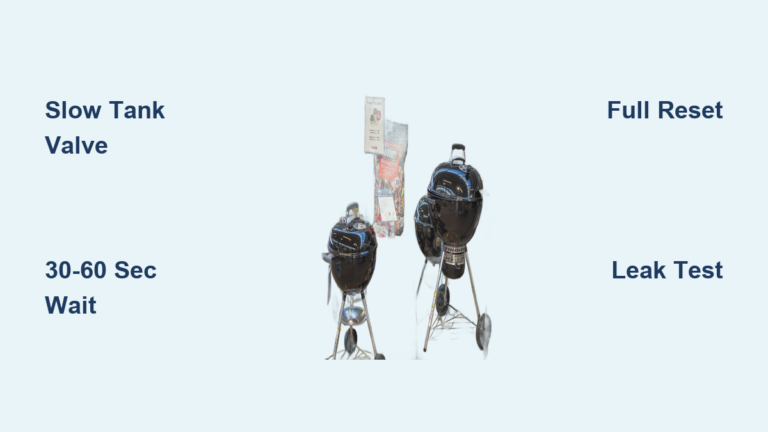
Reset it:
1. Turn tank off.
2. Turn all knobs to ON (wait 30 sec).
3. Turn knobs OFF.
4. Reconnect tank, open valve slowly.
5. Ignite.
If flames remain weak, the regulator may need replacement.
When Your Grill Gets Too Hot
Excessive heat usually means flare-ups, not ambient temperature.
Causes of Flare-Ups
- Fat dripping onto flavor bars or coals.
- Blocked burner tubes causing uneven gas jets.
Solutions
- Clean burners and flavor bars regularly.
- Trim excess fat from meats.
- Use two-zone cooking and move food away when flames surge.
- Check regulator. If flames won’t lower, replace the regulator.
Food Prep: Room Temp Before Grilling
Cold meat from the fridge leads to uneven cooking.
Let Meat Rest 30 to 60 Minutes
Bringing meat to room temp:
– Reduces thermal shock.
– Prevents juice loss.
– Promotes even doneness.
– Enhances flavor and texture.
Exception: Never leave raw poultry or ground meat out longer than 2 hours.
Measuring Grill Temperature Accurately
Lid thermometers lie. They read air near the top, not cooking surface heat.
Use a Laser Infrared Thermometer
Point it at the grate bars for real surface temp. Fast, accurate, and essential for dialing in heat.
Clip-On Probe at Grate Level
For long cooks, place the probe where the food sits, not near the lid.
Avoid the “Hand Test”
Counting seconds before pulling your hand away is unreliable. Use tools instead.
Exterior Grill Temperatures and Safety
The outside gets hot too, especially during long cooks.
Surface Heat Ranges (Gas Grills)
- Lid: 150°F to 250°F (can hit 300°F near burners)
- Side panels: 150°F to 200°F
- Handles and knobs: Up to 200°F+ (burn risk!)
- Feet and legs: 120°F to 180°F
Safety Tips
- Always use grill gloves, even for quick flips.
- Keep kids and pets away.
- Never leave unattended. Sparks can ignite decks or mulch.
- Use heat shields near walls or flammable surfaces.
Maintenance for Consistent Heat
A clean grill heats better and lasts longer.
Clean Burner Tubes Monthly
Use a wire brush and paper clip to clear clogged ports. This prevents uneven flames and cold spots.
Replace Faulty Regulators
Symptoms include:
– Flames won’t adjust.
– Uncontrollably high heat.
– Persistent low output.
Replace with a manufacturer-approved unit. Hand-tighten, then add a slight wrench turn. Don’t over-tighten.
Perform Leak Tests
After changing hoses or regulators:
– Mix soap and water.
– Apply to connections.
– Bubbles mean a leak. Tighten or replace.
Frequently Asked Questions About Grill Temperatures
What is the maximum temperature a gas grill can reach?
Standard gas grills max out between 500°F and 550°F. Higher BTU ratings on larger models don’t increase peak temperature; they just heat larger surface areas and power additional features like side burners.
How hot does a charcoal grill get compared to gas?
Charcoal grills reach 600°F to 650°F directly above the coal bed, significantly hotter than gas. In concentrated configurations, charcoal fires can even approach 1,200°F, making them ideal for steakhouse-quality searing.
How long should I preheat my grill?
Gas grills need 10 to 15 minutes to reach optimal cooking temperature. Charcoal grills require 15 to 20 minutes after coals are fully ashed over. Pellet grills take about 15 minutes to transition from smoking to searing temps.
Why isn’t my gas grill getting hot enough?
Common causes include incorrect knob position (ensure it’s fully on “High”), cooking with the lid open, clogged burner tubes, or a triggered propane regulator lockout. Most issues can be resolved with cleaning or a simple regulator reset.
What temperature zone is best for searing steaks?
Searing requires 450°F to 600°F on standard grills, or 650°F+ in the “incendiary” range for restaurant-quality crust development. Always sear with the lid closed to maintain temperature stability.
Can pellet grills sear meat effectively?
Pellet grills can reach 450°F on high, which works for moderate searing. However, they can’t match the 600°F+ heat of charcoal or gas grills, so expect slightly less aggressive crust development.
Key Takeaways for Mastering Grill Temperatures
Now that you know how hot does a grill get across different fuel types, you can match the right heat to every cooking task. Gas grills deliver reliable 500°F to 550°F performance for everyday cooking. Charcoal grills push past 650°F for superior searing. Pellet smokers excel at low-and-slow smoking up to 450°F.
Start by preheating properly for at least 10 to 15 minutes, set up two-zone cooking for flexibility, and measure grate-level temperature with an infrared thermometer. Keep burners clean, reset your regulator if heat drops unexpectedly, and always let meat rest at room temperature before grilling.
Your next step: Pick one recipe, identify its target temperature zone from the guide above, and run a preheat test with your infrared thermometer. You’ll quickly learn your grill’s personality and cook with confidence.