How Hot Does a Charcoal Grill Get?
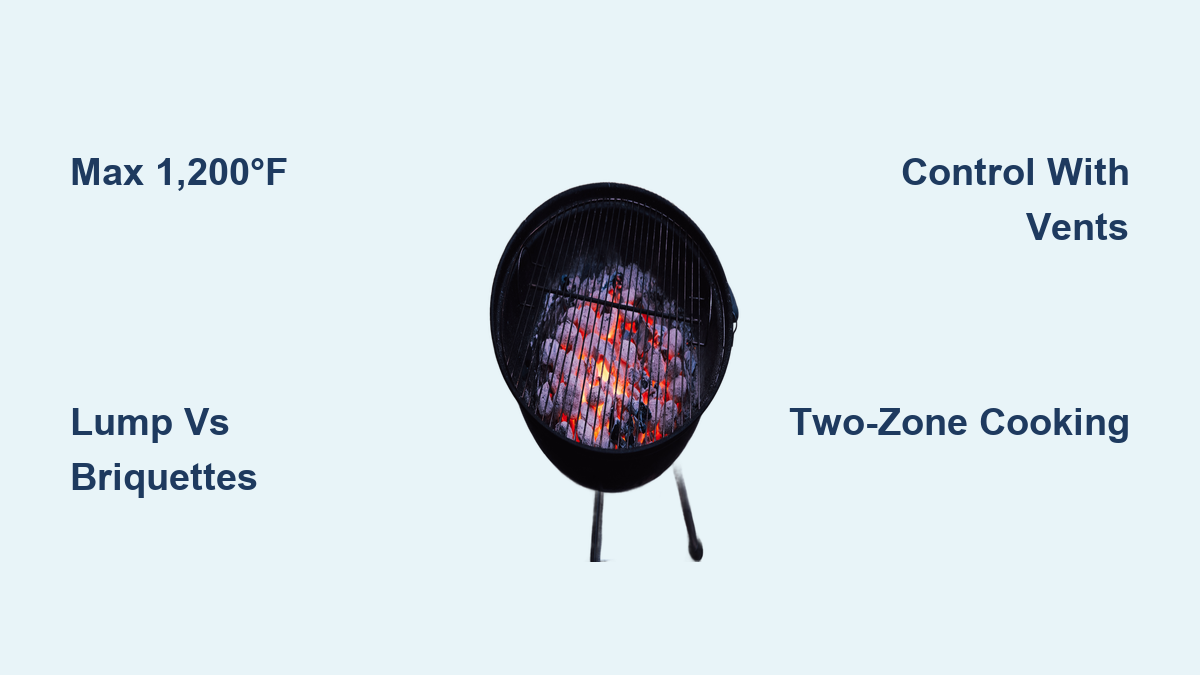
You strike a match, light the charcoal, and watch the flames climb. Within minutes, your grill transforms into a roaring inferno. But how hot does a charcoal grill actually get? The answer spans an incredible range, from a low 225°F (105°C) perfect for slow-smoking ribs to a blistering 1,200°F (649°C) capable of cooking Neapolitan pizza in under 90 seconds.
Unlike gas grills with fixed knobs, charcoal grills respond to fuel type, airflow, and coal arrangement. A full chimney of lump charcoal with vents wide open can push past 900°F, while a managed two-zone fire holds steady at 250°F for hours. This guide breaks down charcoal grill temperatures zone by zone, explains the variables that control heat, and shows you how to master your fire for any cooking style.
Temperature Zones: What Heat Level Are You On?
High Heat: 450°F–650°F (230°C–340°C)
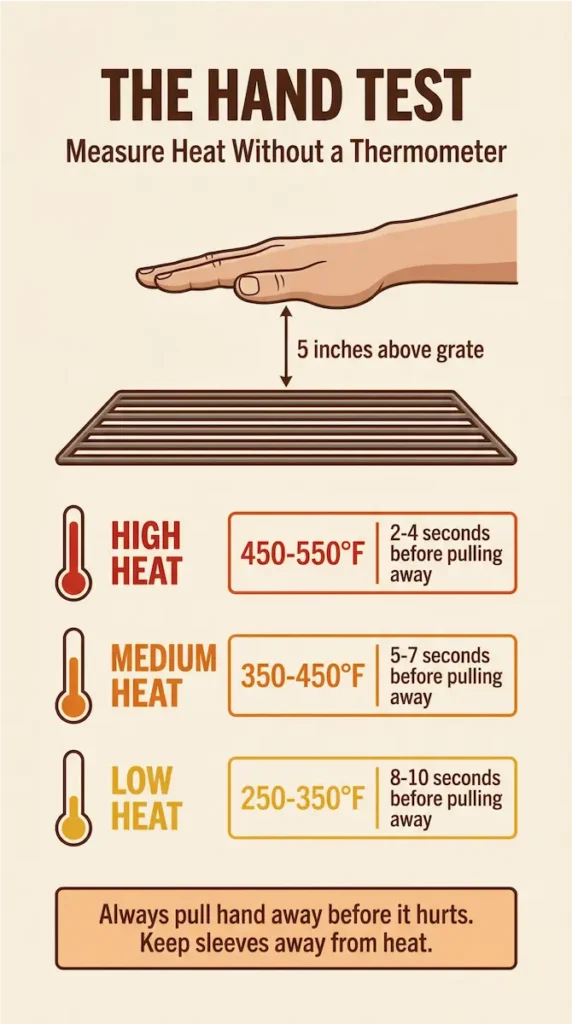
When coals first pour from the chimney starter, your grill enters the high heat zone. At 450°F to 650°F, this phase delivers rapid browning and crisp crusts. The hand test confirms it: if you can only hold your hand 3–5 inches above the grate for 2 to 3 seconds, you are in high-heat territory.
This range works best for thin steaks, tuna or flash-grilling vegetables. It is also perfect for cleaning grates. Burn off residue for 5 minutes before scrubbing. Without lid control or airflow adjustment, this heat fades fast, dropping to medium-high in under 15 minutes.
Pro Tip: Use this window wisely. Sear both sides quickly, then move food to a cooler zone to finish cooking.
Medium-High: 375°F–450°F (190°C–230°C)
About 5 to 10 minutes after lighting, charcoal settles into medium-high heat. Flames subside, coals glow bright orange, and the hand test shows 4 to 5 seconds of tolerance. This is the sweet spot for most direct grilling.
Burgers, sausages, chicken breasts, and fish fillets thrive here. The heat is strong enough to create grill marks and lock in juices, but not so extreme that exteriors burn before interiors cook through. With the lid closed, this zone lasts 10–15 minutes.
Avoid This Mistake: Opening the lid too often disrupts convection and causes sharp temperature drops. Keep it closed as much as possible.
Medium: 325°F–375°F (160°C–190°C)
At 6 to 7 seconds on the hand test, you have entered medium heat. Coals glow red with minimal visible flame, and the grill stabilizes. This range is excellent for indirect cooking, including whole chickens, turkeys, and roasts.
With the lid closed, a well-built fire maintains this zone for 45 to 60 minutes, especially in insulated grills. It is hot enough to brown the surface but gentle enough for controlled internal cooking.
Key Insight: This is where many beginners misjudge doneness. Use a meat thermometer instead of relying solely on time.
Medium-Low: 250°F–325°F (120°C–160°C)
When the hand test reaches 8 to 10 seconds, your grill has cooled to medium-low. At around 300°F, the fire loses its ability to effectively brown food. This is a transition phase, not a cooking zone.
Use it for warming plates, reheating leftovers, or holding cooked items. If you are still grilling, it is time to add fresh coals. Without replenishment, heat dissipates rapidly, especially in open-air setups.
Warning: Do not try to sear at this temperature. You will steam the food instead of searing it.
Low Heat: 225°F–250°F (105°C–120°C)
The low heat zone, measured at 11 to 15 seconds on the hand test, is where true barbecue begins. At 225°F to 250°F, connective tissues in ribs and brisket slowly break down, yielding tender, pull-apart results. Add wood chunks or chips, and you are officially smoking.
Maintaining this range in a standard kettle grill requires vigilance. Expect to add fresh coals every hour. Alternatively, use the Charcoal Snake Method to extend burn time with minimal intervention.
Expert Note: Consistency beats peak heat. Fluctuations of more than 25°F can dry out meat or prolong cook times.
Extreme Heat: 900°F–1,200°F (482°C–649°C)

Yes, charcoal grills can exceed 1,000°F, hotter than most home ovens and many commercial pizza ovens. This extreme heat zone is achievable with:
– Large quantities of lump charcoal (especially oak)
– Fully open top and bottom vents
– A stable, deep coal bed
Infrared gun readings on cast-iron grates have recorded approximately 1,000°F, and under optimal conditions, flames can reach 1,200°F. This is the realm of:
– Neapolitan-style pizza (cooks in under 90 seconds)
– Intense steak searing
– Burn-off cleaning cycles
Caution: Standard sheet metal grills may warp or degrade at these temperatures. Use only briefly and monitor closely.
Fuel Matters: Lump vs. Briquettes
Lump Charcoal Burns Hotter and Faster
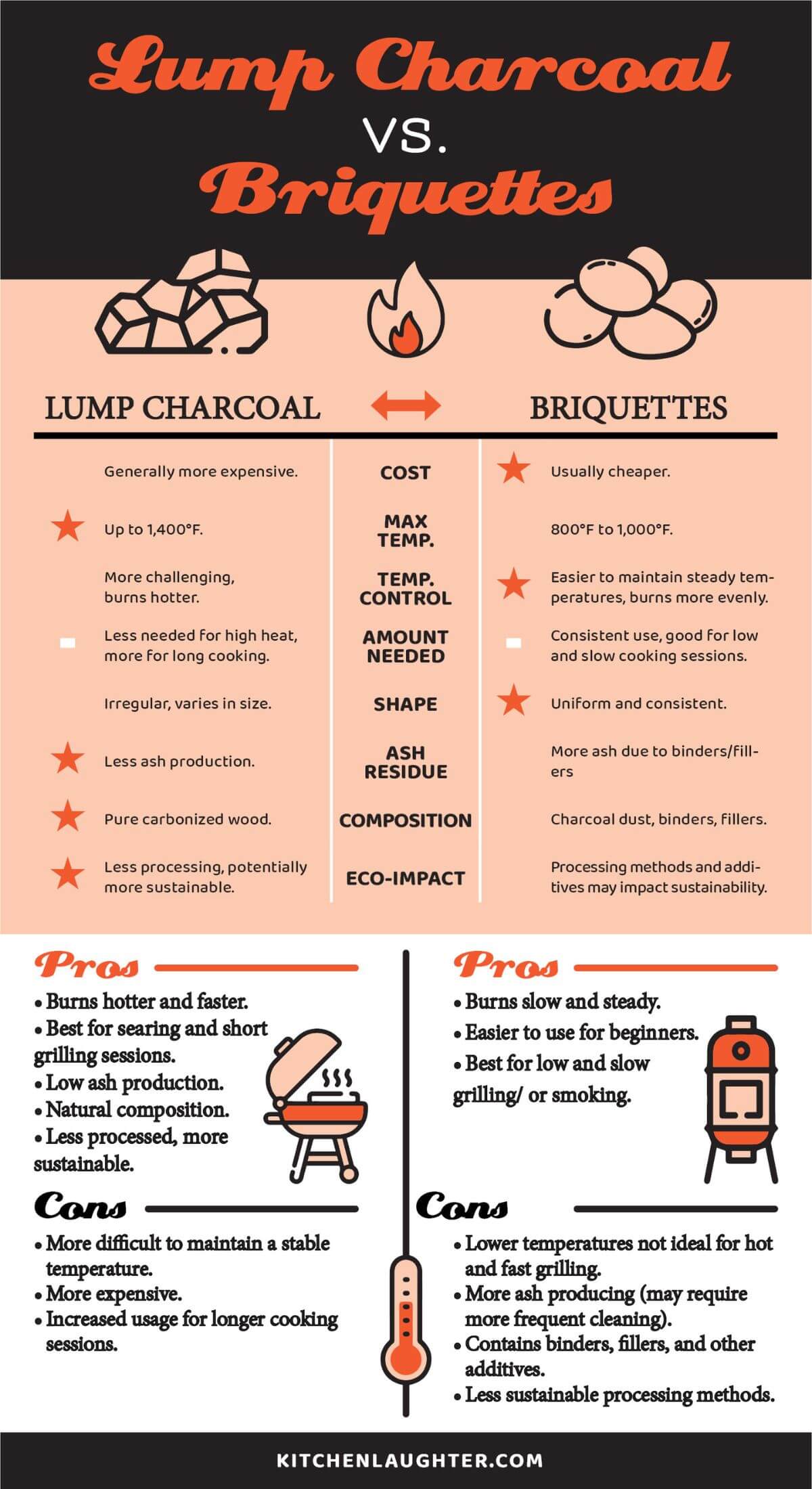
Lump charcoal, made from pure carbonized hardwood, ignites quickly and burns hotter and cleaner than briquettes. It responds rapidly to airflow changes, making it ideal for high-heat grilling and pizza.
- Peak Temp: Can surpass 1,000°F with proper setup
- Burn Time: Shorter, typically 45–60 minutes
- Best For: Searing, high-temp applications, wood-fired flavor
Hardwoods like oak, maple, hickory, and cherry deliver higher BTUs and more consistent heat than softwoods. Avoid pine or cedar for fuel; they burn too fast and impart off-flavors.
Pro Tip: Use lump charcoal when you want quick, intense heat and authentic wood flavor.
Briquettes Offer Steady, Long-Lasting Heat
Briquettes are compressed sawdust, coal dust, and binders. They burn at a slightly lower peak temperature but offer unmatched consistency.
- Peak Temp: Approximately 650°F–700°F (lower than lump)
- Burn Time: Up to 2 hours, depending on quantity
- Best For: Low-and-slow smoking, indirect cooking, beginners
Because they react slowly to airflow adjustments, briquettes are easier to manage for long cooks. Their uniform size ensures even burning.
Trade-Off: Less responsive to vent changes, so fine-tuning takes longer.
Recommendation: Use briquettes for ribs, brisket, or any cook lasting over an hour where steady heat matters more than max output.
Airflow Control: Master the Oxygen
How Vents Dictate Temperature
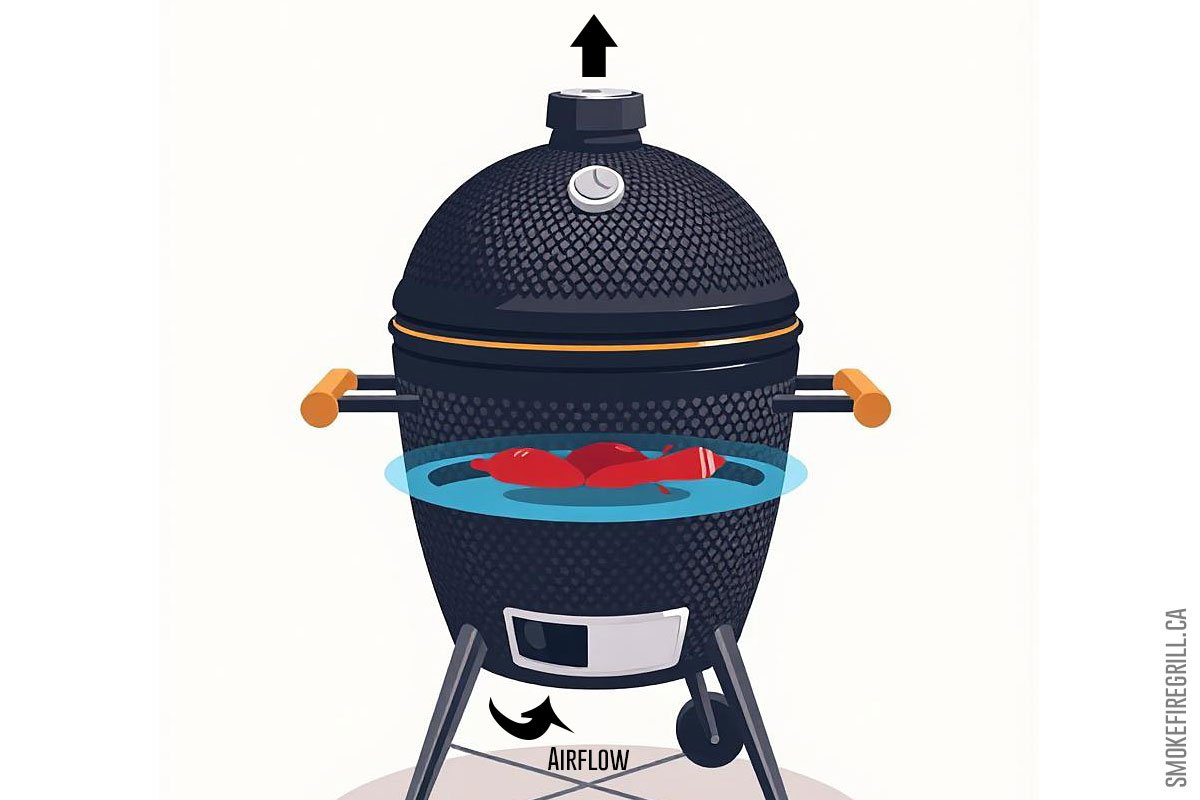
Charcoal needs oxygen to burn, and you control the temperature with vents. No dials, no sensors, just airflow.
- Bottom (intake) vents: Pull fresh air into the fire. Open wider = hotter.
- Top (exhaust) vents: Let hot air and smoke escape, creating draft. Open wider = stronger pull = hotter fire.
Maximum Heat: Both top and bottom vents fully open. This maximizes airflow and combustion intensity.
Sustained Medium Heat: Bottom vent open, top vent partially or fully closed. This reduces draft, slowing the burn and stabilizing temperature.
To Cool or Extinguish: Close all vents. Starved of oxygen, the fire dies within minutes.
Never Use a Blower: Leaf blowers or fans create uncontrolled combustion, risking flare-ups or grill damage. Natural draft is safer and sufficient.
Vent Strategies by Grill Type
Kettle Grills: With both vents open, expect medium-high heat (around 400°F). Close the top vent and you drop to medium (around 350°F). For low smoking, close the top nearly all the way and adjust the bottom to fine-tune.
Ceramic Grills (Kamado): Thick walls retain heat, and precise vents allow incredible stability. You can hold 225°F for 12+ hours with minimal adjustment. Use the top vent as your primary control knob.
Pro Insight: Always clean vents regularly. Ash buildup blocks airflow and cripples temperature control.
Heat Management: Coal Arrangements That Work

Direct Heat: Full Bed for Searing
Spread coals evenly across the entire lower grate for direct heat grilling. This configuration delivers 450°F–550°F, perfect for quick-cooking items.
- Fuel Load: 1 full chimney (around 100 briquettes or 4 lbs lump)
- Best For: Steaks, burgers, kebabs, vegetables
Wait for the Right Moment: Do not cook immediately after dumping coals. Let them ash over (10–15 minutes) for stable heat.
Flare-Up Safety: Leave a small coal-free zone to move food if flames erupt.
Two-Zone Cooking: Hot and Cool Sides
The most versatile setup involves piling coals on one side, leaving the other empty.
- Hot Side: 450°F–550°F for searing
- Cool Side: 250°F–350°F for indirect cooking
Technique: Sear on the hot side, then move to the cool side to finish. This prevents burning while ensuring thorough doneness.
Ideal For: Chicken pieces, thick steaks, sausages, fish.
Ventilation Tip: Keep the top vent directly above the coal side to draw smoke and heat efficiently.
Parallel Two-Zone: Smoking Large Cuts
Arrange coals along both sides of the grill, leaving the center empty. Place a foil pan with hot water in the middle.
- Temp: 250°F–350°F
- Humidity Boost: Water pan adds moisture, keeping meat tender
- Best For: Whole turkey, rib racks
This setup mimics a smoker, with even heat circulation and moisture retention.
Charcoal Snake Method: All-Night Smoking
For long smokes without constant monitoring, use the Charcoal Snake Method:
- Arrange unlit briquettes in a C-shaped ring along the outer edge.
- Place 6–8 lit coals at one end.
- The fire slowly burns along the snake, lasting 6–8 hours.
- Temp: 225°F–250°F
- No Refueling Needed: Ideal for ribs or brisket
- Works Best in Kettle Grills
Add More Snake: Extend the ring for even longer burns.
Burn-Down Method: Set and Forget
Fill the charcoal chamber with unlit briquettes. Place a few lit coals on top.
As the top layer burns, it ignites the layer below, creating a slow, downward-burning fire. Temperature starts high and gradually declines, perfect for long cooks where a slow cooldown is acceptable.
Best For: Smokers with limited airflow control.
Grill Types: How Design Affects Heat
Kettle Grills: Versatile and Hot
The classic Weber-style kettle can reach 600°F–650°F 3.5 inches above the coals with the lid on.
- Without Lid: Heat plummets to around 200°F due to lost convection
- Exterior Temp: Can hit 477°F; keep away from flammable surfaces
- Max Potential: Capable of near-pizza-oven temps with lump charcoal and open vents
Pro Tip: Use a heat deflector or KettlePizza insert to safely achieve 900°F for pizza.
Ceramic Grills: Precision and Stability
Kamado-style grills (Big Green Egg, etc.) excel in heat retention.
- Thick Ceramic Walls: Minimize heat loss, maintain flat temperature curves
- Convection Effect: Air 2 inches above the grate can be hotter than the grate itself
- Low Fuel Use: Can hold 225°F for 12+ hours on one load
Probe Safety: Route thermometer cables over diffuser legs to avoid melting.
Gas Grills: Convenient but Cooler
For comparison, most gas grills max out around 500°F–600°F. Thermal probes show charcoal beds outperform gas elements in peak heat.
- Two-Zone Works: But the cool side drops to around 110°F with the lid open
- Less Searing Power: Cannot match the radiant intensity of glowing coals
Pellet Smokers: Great for Smoke, Not Searing
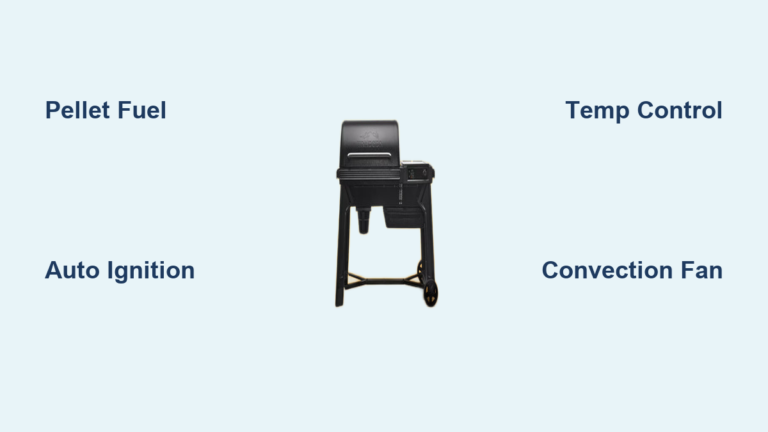
Pellet grills cycle on and off, making temperature spikes harder.
- Searing from 250°F to 450°F takes around 15 minutes
- Lid Opening = Big Drop: Heat collapses quickly
- Not Ideal for High-Heat Tasks
Special Use: Cooking Pizza at 900°F
Neapolitan Pizza Needs Extreme Heat
Authentic Neapolitan pizza cooks in under 90 seconds at approximately 900°F. Can your charcoal grill do it?
Yes, but only with the right setup:
– Fuel: Oak lump charcoal plus hardwood chunks
– Coal Pile: Concentrated hot zone
– Tool: Use a KettlePizza dome or terra-cotta tandoor insert to trap heat
Without an insert, heat escapes too quickly. Even then, standard grills risk warping at 1,000°F and above.
Safety First:
– Keep water or extinguisher nearby
– Wear high-heat gloves and face protection
– Never leave unattended
Measuring Heat Accurately
Built-In Thermometers Lie
Most grill-mounted dials max out at 500°F–550°F. Once your fire exceeds that, the gauge becomes useless. Worse, many are poorly calibrated.
Solution: Use an external, high-temp probe.
Use the Hand Test for Quick Checks
No tools? Use your hand:
- 2 sec: 500°F+ (High)
- 4 sec: Around 375°F (Medium-High)
- 6 sec: Around 300°F (Medium)
- 8–10 sec: 250°F–325°F (Medium-Low)
- 11–15 sec: 225°F–250°F (Low/Smoking)
Hold your palm 3–5 inches above the grate; never touch.
High-Temp Probes for Real Data
For accuracy, use a ceramic-sheathed Type-K probe rated to 2,200°F.
- Avoid Cable Meltdown: Do not drape wires across hot grates
- Route Safely: In Kamados, go over diffuser legs; in kettles, approach from the side
- Gas Grill Caution: Keep probes away from open flames
Thermal cameras cap at 626°F, so they cannot capture true max temps, but they are great for spotting hotspots.
Safety and Maintenance Tips
Prevent Grill Damage at High Heat
- Sheet Metal Grills: Risk warping or burn-through above 900°F
- Use Inserts: For pizza or extreme searing, protect the body
- Inspect Regularly: Check for cracks, rust, or weakened joints
Keep Your Grill Efficient
- Clean Ash Weekly: Clogged vents reduce airflow and heat
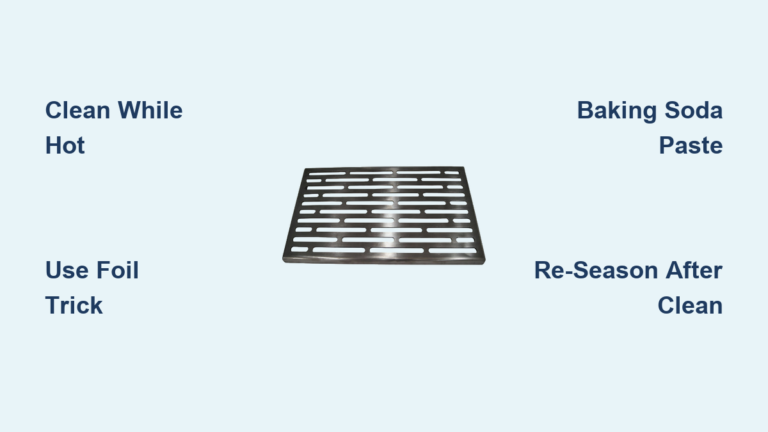
- Scrub Grates Hot: After lighting, burn off residue for 5 minutes, then brush
- Store Covered: Protect from moisture and debris
Know When to Replenish Coals
After about one hour, heat drops noticeably. If the hand test hits 8–10 seconds during direct grilling, add fresh coals.
Smart Move: Pre-light new coals in a chimney before adding to avoid temperature crashes.
Frequently Asked Questions About Charcoal Grill Temperatures
What is the hottest a charcoal grill can get?
A charcoal grill can reach 1,200°F (649°C) under extreme conditions. This requires large quantities of oak lump charcoal, fully open vents, and a stable coal bed. Standard sheet metal grills may warp at these temperatures, so use caution.
How long does a charcoal grill stay hot?
A full chimney of charcoal (around 100 briquettes) burns at high heat for roughly one hour without intervention. Briquettes last up to 2 hours, while lump charcoal burns for 45–60 minutes. Methods like the Charcoal Snake can extend low-heat burns to 6–8 hours.
Is charcoal hotter than gas?
Yes, charcoal burns significantly hotter than gas. Charcoal beds can exceed 1,000°F, while most gas grills max out around 500°F–600°F. This makes charcoal superior for high-heat searing and pizza cooking.
What temperature should my charcoal grill be for steaks?
For steaks, aim for 450°F–650°F (high heat). Use the hand test: if you can hold your hand 3–5 inches above the grate for only 2–3 seconds, you are in the right zone. Sear each side quickly, then move to a cooler zone if needed.
Can I smoke meat on a charcoal grill?
Absolutely. For smoking, maintain 225°F–250°F using the Charcoal Snake Method or a two-zone setup with minimal coals. Add wood chunks or chips for authentic smoke flavor. Expect to add fresh coals every hour in standard kettle grills.
Why does my grill thermometer only read 500°F?
Most built-in grill thermometers max out at 500°F–550°F and are often poorly calibrated. For accurate readings above this range, use an external ceramic-sheathed Type-K probe rated to at least 2,000°F.
Key Takeaways for Mastering Charcoal Grill Temperatures
Charcoal grills are thermal powerhouses capable of everything from slow-smoked brisket at 225°F to flash-seared steak at 1,200°F. The key is not just knowing how hot they get, but how to control that heat through fuel choice, airflow, and coal arrangement.
Start with two-zone cooking to build confidence with indirect and direct heat. Experiment with lump versus briquettes to find your preferred balance of heat intensity and burn duration. Use the hand test for quick checks and invest in a high-temp probe for precision.
Master these fundamentals, and you will unlock flavor and versatility no gas grill can match. Fire up your chimney, adjust those vents, and start grilling exactly as your recipe demands.