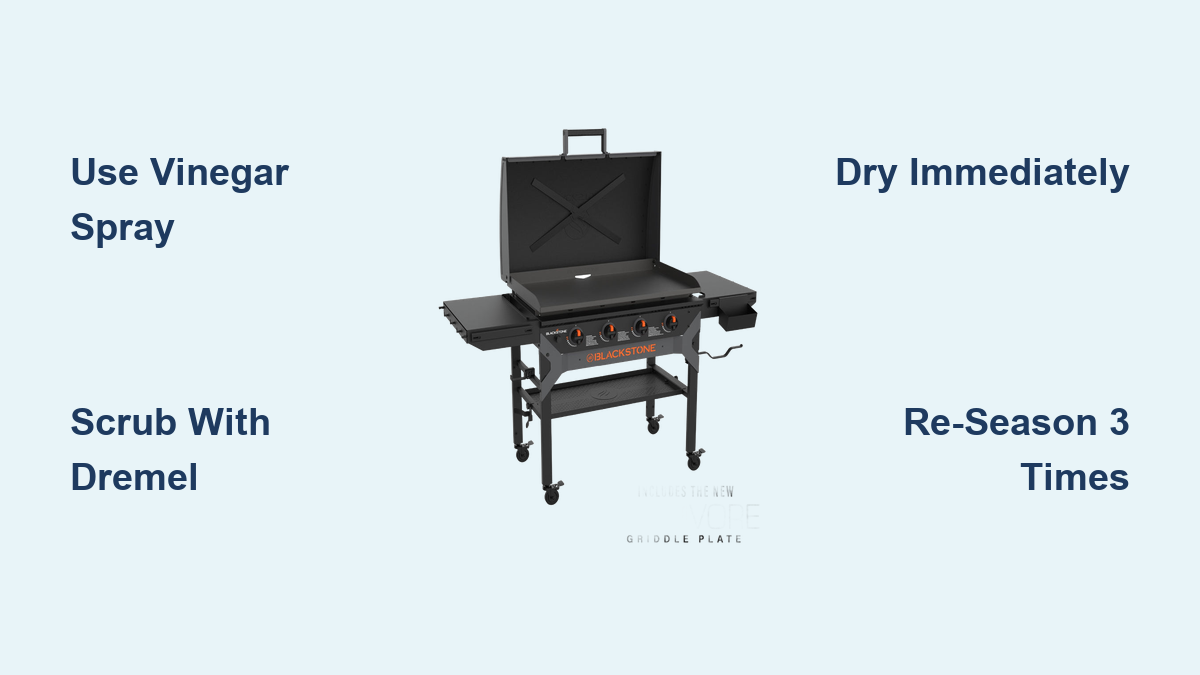
How to Remove Rust from Blackstone Grill
Rust on your Blackstone grill isn’t just unsightly. It can ruin food, compromise non-stick performance, and shorten your griddle’s lifespan. The good news? How to remove rust from a Blackstone grill is a solvable problem with the right tools and techniques.
Whether you’re dealing with light surface rust or stubborn, baked-on corrosion, this guide delivers proven, step-by-step solutions. You’ll learn how to safely strip rust using household items, power tools, or commercial cleaners, followed by a foolproof re-seasoning process that locks in protection. No more guesswork. Just a clean, smooth, rust-free cooking surface ready for pancakes, smash burgers, or steak.
Identify Rust Type and Severity
Before grabbing a scrubber, assess the rust level. This determines your method and effort.
Surface Rust vs. Deep Corrosion
Surface rust appears as light orange speckles and hasn’t penetrated the metal. It’s easily removed with mild abrasives or vinegar. Deep rust is dark, flaky, and may feel pitted. It requires aggressive scrubbing or chemical treatment.
Check for Seasoning Confusion
Sometimes what looks like rust is actually carbonized oil buildup. True rust feels rough and wipes off slightly when scrubbed. Carbon buildup is black, hard, and bonded to the surface. If in doubt, apply vinegar. Rust will react and bubble slightly, while carbon won’t.
Use Vinegar to Dissolve Light Rust
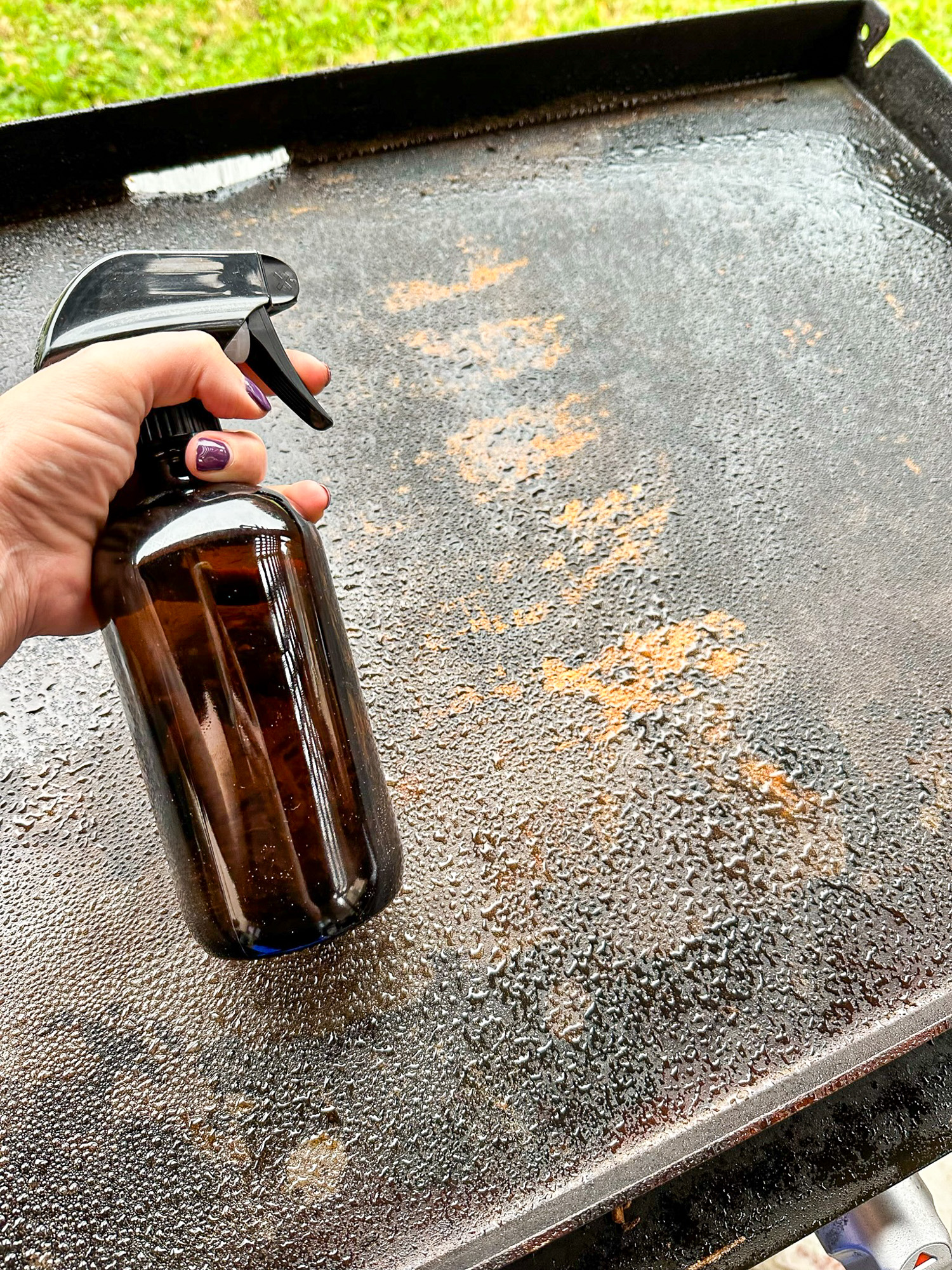
White vinegar is a safe, accessible acid that breaks down iron oxide without damaging steel.
Apply 1:1 Vinegar-Water Spray
Mix equal parts white vinegar and water in a spray bottle. Generously coat rusted areas. Let sit for 10 to 15 minutes. This dwell time allows acetic acid to loosen rust bonds. Avoid longer exposure to prevent over-etching bare metal.
Scrub with Non-Abrasive Pad
After soaking, scrub the surface with a non-abrasive pad or grill brush. Focus on discolored zones. For extra traction, sprinkle sea salt on the vinegar. Its granules act as a gentle abrasive. Rinse with water and dry immediately.
Try Baking Soda Paste for Mild Abrasion
Baking soda offers a pH-neutral alternative that lifts rust without harsh fumes.
Make a Thick Paste
Combine baking soda and water until it forms a spreadable, toothpaste-like consistency. Apply directly to rust spots. Let it dwell for 30 minutes to penetrate oxidation layers.
Wipe Clean After Dwell Time
Use a soft scrubber or sponge to remove the paste. Baking soda won’t produce dramatic bubbling like vinegar, but it effectively lifts surface rust and preps the metal for seasoning. Rinse and dry thoroughly.
Deploy Power Tools for Heavy Rust
When rust resists hand cleaning, mechanical removal delivers faster results.
Choose the Right Tool
- Wire brush: Best for edges and corners
- Sandpaper (80–120 grit): Manual option for flat zones
- Dremel with coarse pad: Ideal for large, pitted areas
Attach the coarsest compatible pad to your Dremel. Work in straight lines, not circles, to avoid gouging. Pair with Dawn Power Spray for added cleaning power.
Avoid Grinding the Base Layer
One critical warning: do not grind down the griddle surface. Users report this can remove the natural material, damaging the steel’s integrity. Use moderate pressure. Your goal is rust removal, not metal reshaping.
Use Commercial Cleaners Safely

Specialized products cut through rust fast, but require caution.
Apply Liquid Grill Cleaner with Care
Spray a high-heat liquid grill cleaner over the surface. Add a splash of water to activate foaming. Let it bubble for about 10 seconds only. This short reaction time prevents etching.
Beware of Toxic Fumes
This method produces a giant smoke cloud of chemical vapors. Only use outdoors with full ventilation. Wear gloves and avoid inhaling fumes. Immediately rinse with hot water after cleaning.
Try Coca-Cola and Hydrogen Peroxide (With Caution)
This DIY chemical mix creates an aggressive rust-dissolving reaction.
Mix in a Large Container
Pour Coca-Cola into a bucket, then slowly add hydrogen peroxide. Expect immediate, vigorous foaming. Use a container at least 3x the liquid volume to prevent overflow.
Apply and Monitor
Spread the mixture on rusted areas. Let sit for 10 to 15 minutes. Scrub with a brush. Rinse completely. Never store this mixture. Prepare only what you need.
Dry the Griddle Immediately
Moisture left after cleaning causes flash rust, which is new oxidation within minutes.
Wipe and Heat in Sequence
First, dry with paper towels or microfiber cloths. Then, turn all burners to high for 5 to 10 minutes. Watch for steam. When it stops, the metal is dry. Skip this step and your work is undone.
Never Leave Wet Metal Exposed
Bare steel oxidizes rapidly. Move straight from drying to oiling. Delaying even 10 minutes increases rust risk, especially in humid climates.
Apply High-Smoke-Point Oil
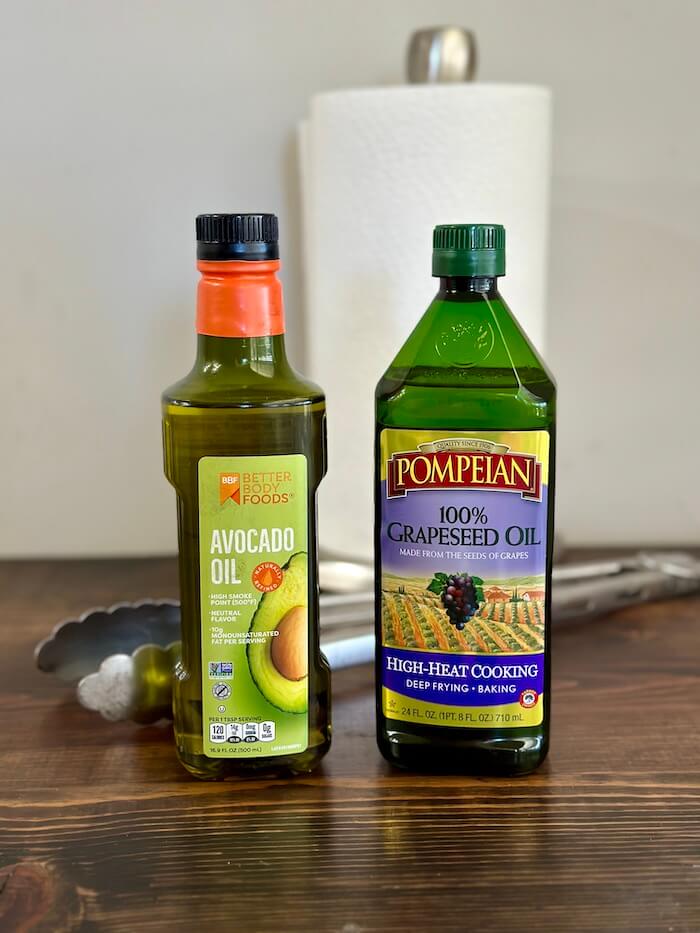
The right oil builds a durable, non-stick layer during polymerization.
Pick the Best Oil
Choose from these options:
- Flaxseed oil: Hardest finish, but degrades faster
- Grapeseed oil: Excellent balance of durability and smoke point
- Canola or vegetable oil: Affordable, widely available
Avoid olive oil or butter. They burn and gunk up the surface.
Spread a Thin, Even Layer
Pour 1 to 2 tablespoons of oil on the griddle. Use a lint-free cloth to spread it in circular motions. Wipe off excess. Too much oil creates sticky patches. A sheen is enough.
Heat Until Oil Smokes (Polymerization)
Heating transforms liquid oil into a solid, protective coating.
Set Burners to Medium-High
Turn all burners to medium-high or high. Wait for the oil to shimmer, then smoke. This smoke signals polymerization. The oil is bonding to the metal.
Maintain Heat for 30–60 Minutes
Keep the griddle smoking for at least 30 minutes. For heavy restoration, go 60 minutes. The surface will darken significantly.
Repeat Seasoning 2–3 Times
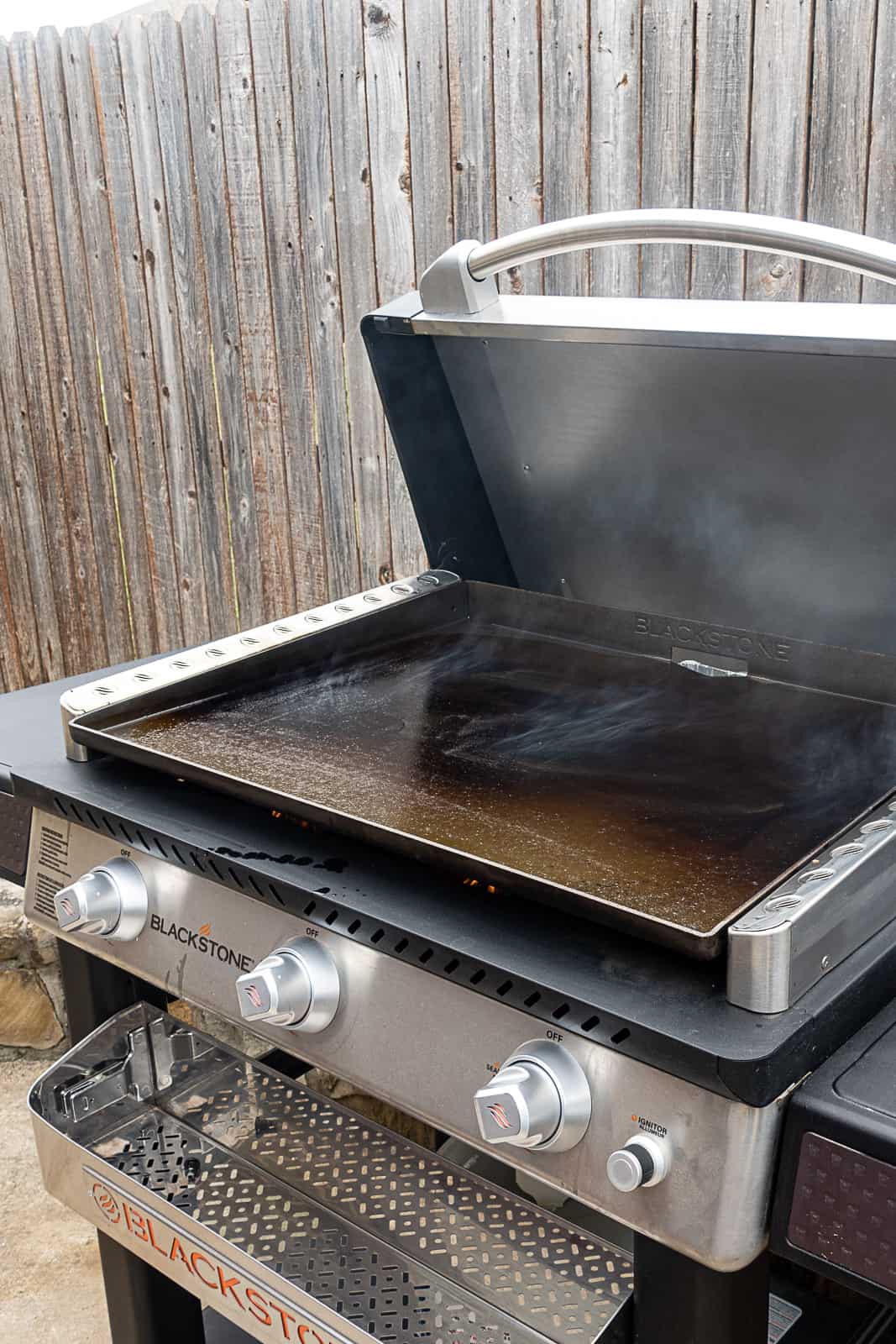
One layer isn’t enough for long-term protection.
Build Layers Gradually
After the first round, let the griddle cool completely. Reapply a thin oil coat. Heat until smoking again. Repeat 2 to 3 times total.
Expect a Dark, Smooth Finish
Each layer deepens the color and improves non-stick performance. After three rounds, the surface should be jet black and slick, ready for cooking.
Fix Persistent Rust on New Griddles
Even a 2-month-old Blackstone Adventure 22″ can develop dark, food-staining residue.
Diagnose the Cause
This isn’t always rust. It may be poor initial seasoning or carbon buildup. If standard cleaning fails, strip and re-season completely.
Follow Full Restoration Workflow
- Cool the griddle fully
- Deep clean with vinegar or baking soda
- Dry and re-season with 3 oil layers
- If residue returns, contact Blackstone customer support. It could be a material defect
Prevent Rust with Daily Habits
Restoration works, but prevention keeps your grill like new.
Dry After Every Use
After cooking, scrape residue, wipe with a damp cloth, then dry with a towel. Heat briefly to evaporate moisture. Never use water on a hot griddle.
Oil While Warm (Not Hot)
Apply a thin coat of oil after each use while the griddle is warm, around 200°F. This seals pores and blocks moisture.
Store Covered and Indoors
Keep your Blackstone under a waterproof cover. Better yet, store it in a garage or shed. Humidity is the enemy.
Know When to Replace the Griddle Top
Restoration has limits.
Consider Stainless Steel Replacement
If rust is deeply pitted or the surface is warped, replacing the top with a stainless steel alternative may be easier. It changes heat retention and seasoning behavior, but eliminates rust forever.
Weigh Effort vs. Outcome
Severe rust may require hours of labor. For older units, replacement is often more cost-effective than repeated fixes.
Frequently Asked Questions About Removing Rust from a Blackstone Grill
What is the fastest way to remove rust from a Blackstone grill?
The fastest method combines mechanical and chemical approaches. Spray a 1:1 vinegar-water solution on the rust, wait 10 to 15 minutes, then scrub with a Dremel fitted with coarse pads. For heavy rust, a commercial grill cleaner works in about 10 seconds but requires outdoor ventilation.
Can I use Coca-Cola to remove rust from my griddle?
Yes. Mixing Coca-Cola with hydrogen peroxide creates a foaming chemical reaction that dissolves rust. Use a large container to manage overflow, apply for 10 to 15 minutes, then scrub and rinse thoroughly. Never store the mixture.
How many times should I season my Blackstone after removing rust?
Apply 2 to 3 layers of high-smoke-point oil after rust removal. Each layer requires heating until the oil smokes and maintaining that temperature for 30 to 60 minutes. Multiple layers build a durable, non-stick barrier against future rust.
Is grinding safe for removing rust from a Blackstone griddle?
Avoid heavy grinding. It can remove the natural material of the griddle and damage the steel’s integrity. Use moderate pressure with a Dremel or sandpaper, working in straight lines rather than circles to prevent gouging.
How do I prevent my Blackstone grill from rusting again?
Dry the griddle completely after every use, apply a thin oil coat while warm (around 200°F), and store it covered in a dry location. Consistent post-cook maintenance is the key to long-term rust prevention.
When should I replace my Blackstone griddle top instead of restoring it?
Consider replacement if rust is deeply pitted, the surface is warped, or restoration requires excessive labor. A stainless steel replacement top eliminates rust concerns permanently, though it changes cooking characteristics slightly.
Key Takeaways for a Rust-Free Blackstone Grill
Removing rust from a Blackstone grill comes down to matching the method to the rust level. Start mild with vinegar or baking soda, then escalate to power tools or commercial cleaners only when needed. The real key to lasting results is immediate drying followed by 3-layer re-seasoning.
For daily maintenance, remember the three-step rule: wipe, dry, oil. With consistent care, your griddle will stay rust-free, non-stick, and ready for every cookout. Start your restoration today and enjoy a like-new cooking surface by this weekend.