How to Clean the Inside of a Grill
Nothing ruins a backyard cookout faster than a dirty grill. Grease buildup, charred food residue, and clogged burner tubes affect taste, increase fire risks, and shorten your grill’s lifespan. Knowing how to clean the inside of a grill properly is essential for safe, efficient, and flavorful grilling.
This guide delivers a complete breakdown of cleaning every internal component, whether you use gas, charcoal, or a hybrid model. You’ll learn the best tools, natural cleaning methods, material-specific techniques, and maintenance schedules to keep your grill performing at its best.
Safety First: Preparing Yourself and Your Grill
Before touching any internal component, follow these safety steps to prevent injury, fire, or equipment damage.
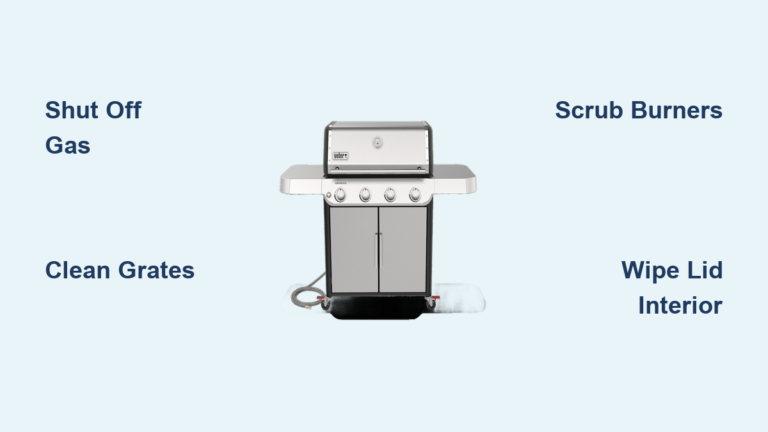
Shut Off Fuel and Allow Cooling
For gas grills, turn off the propane tank valve and disconnect the fuel line. Set all control knobs to “Off” and never clean near open gas lines. For charcoal grills, wait 24 hours after use until coals and ash are completely cold. Use a shop vac or metal container to remove ash and never pour water on hot coals.
Wear Protective Gear
Always wear heat-resistant gloves when handling hot parts or sharp scrapers. Use safety glasses if chipping hardened grease. When using steam or chemical cleaners, protect your skin and eyes. If using wire brushes, inspect bristles first since loose wires can end up in food.
Set Up Your Workspace
Lay down a tarp or cut-open trash bags to catch grease and debris. Place two large plastic bins nearby, one with warm soapy water (add Dawn for grease cutting) and the other with clean rinse water. Keep a bucket, hose, and rags within reach.
Clean Cooking Grates by Material Type
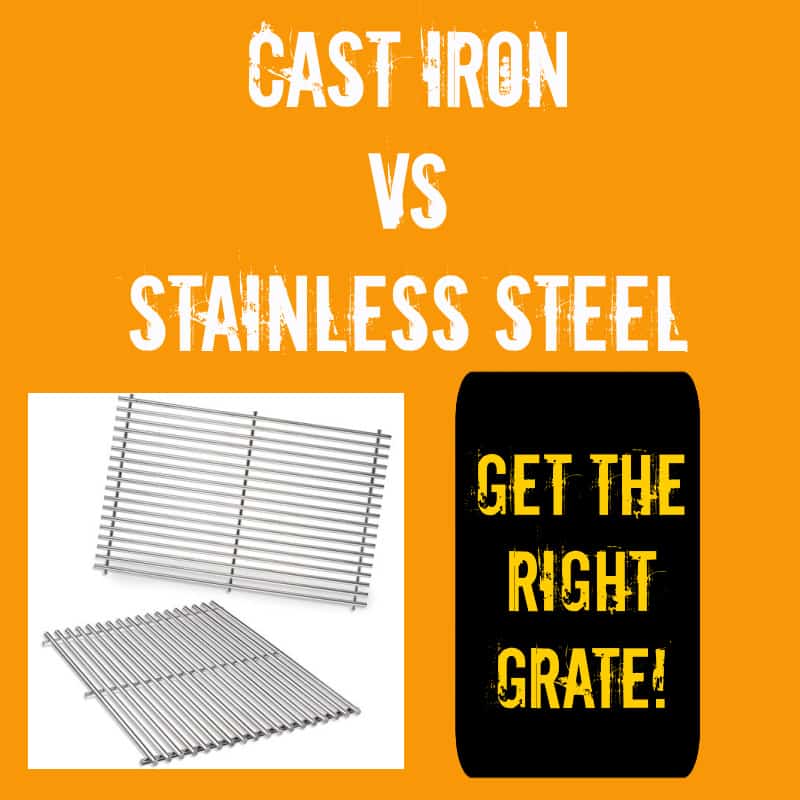
Grates take the most abuse during cooking. Cleaning them correctly depends on the material, since using the wrong tool can damage the surface or contaminate food.
Preheat Before Scrubbing
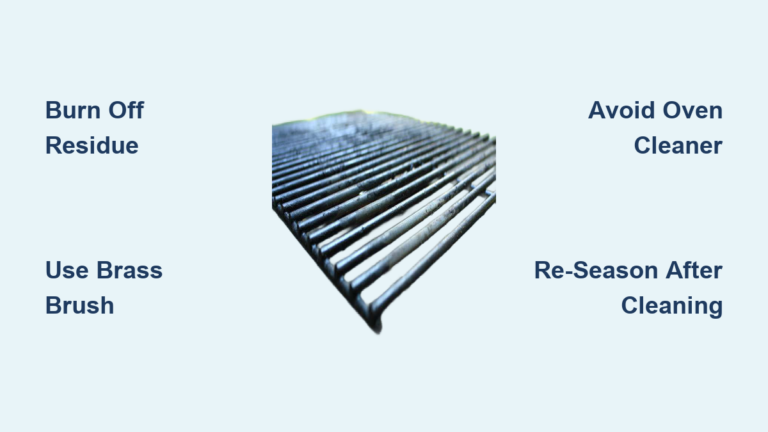
Always heat the grill on high for 15 minutes with the lid closed. This burns off stuck-on food and softens grease. Cleaning cold grates doubles the effort and halves the results.
Stainless Steel Grates
Use a brass bristle brush or crumpled aluminum foil to scrub hot grates. For deep cleaning:
1. Remove grates and soak in hot, soapy water for 30 minutes.
2. Scrub with stainless-steel wool or a nylon brush.
3. Rinse and dry completely.
Do not place stainless steel grates in a self-cleaning oven, as extreme heat can warp them.
Porcelain or Enamel-Coated Grates
These delicate surfaces scratch easily. Never use metal brushes or foil on them. Instead:
1. Apply a paste of 1.5 cups baking soda mixed with 0.5 cup water.
2. Let sit for 10–15 minutes.
3. Scrub gently with a nylon brush or scouring sponge.
4. Rinse and dry thoroughly.
Cast Iron Grates
Cast iron retains heat beautifully but rusts without proper care. After heating:
1. Mix 1.5 cups baking soda, 0.25 cup dish soap, and 0.25 cup vinegar.
2. Apply to grates and let sit for 15–20 minutes.
3. Scrub with a nylon brush.
4. Rinse, dry completely, then coat with vegetable oil.
5. Heat the grill on high for 10–15 minutes to re-season.
For rust spots, apply 2 parts vinegar to 1 part baking soda. Wait 20–30 minutes, scrub, rinse, and re-season.
SearMagic (Aluminum) Grids
Avoid steel brushes, steel wool, and oven cleaners like Easy-Off, as they cause pitting. Instead:
– Daily: Rotate grids and use a wood scraper or brass brush while heating.
– Deep Clean: Soak in hot, soapy water and scrub with a nylon pad.
– Steam Method: Mist with water during warm-up, then scrub with a brass brush.
A color shift from bronze to black over time is normal and harmless.
Natural Cleaning Alternatives
Skip harsh chemicals with these safe, effective methods:
– Onion or Lemon Scrub: Cut in half, hold with tongs, and wipe over hot grates. Steam and acidity loosen buildup.
– Overnight Soak: Mix 1 cup baking soda with 1 cup white vinegar in a trash bag or bin. Submerge grates for 8–12 hours, then rinse and dry.
Maintain Flavorizer Bars and Burner Tubes
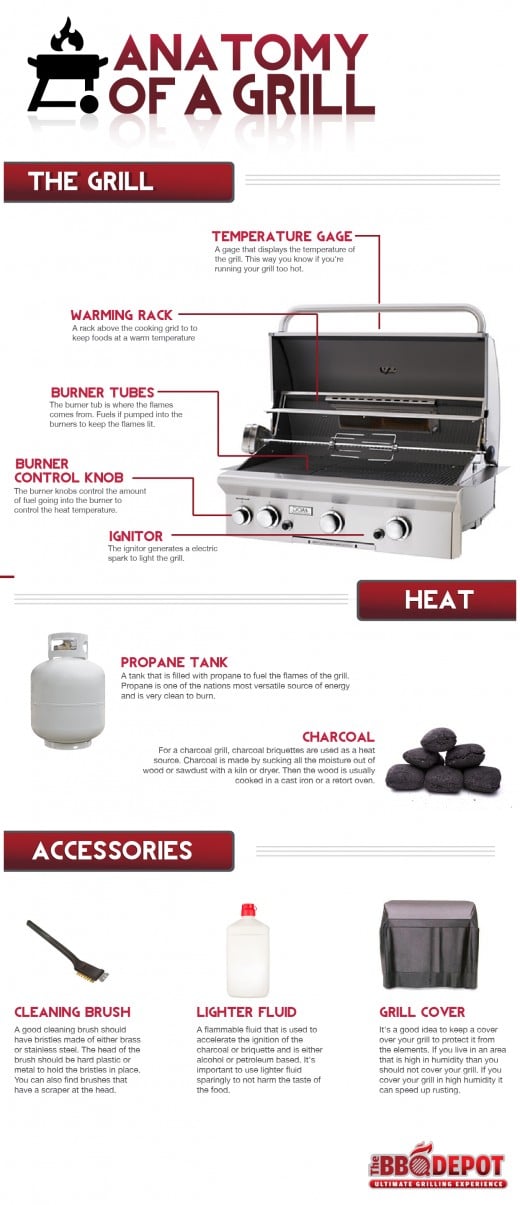
These hidden components directly impact performance. Neglect leads to uneven flames, flare-ups, and dangerous flashback fires.
Clean Flavorizer Bars
These V-shaped bars sit above burners and shield flames from drippings. Over time, grease and food debris clog them.
1. Remove bars and scrape with a wire brush or grill floss.
2. Soak in soapy water.
3. Scrub with stainless-steel wool.
4. Rinse and dry before reinstalling.
Clear Burner Tubes Monthly
Spiders and insects often nest in burner tubes, blocking gas flow and causing flashback fires where flames shoot back into the manifold.
1. Inspect tubes for obstructions.
2. Use a pipe cleaner, bristle brush, or steel wool to clear debris.
3. Wipe with a damp rag to remove loose particles.
4. Check igniters and clean any grease or corrosion with a cotton swab.
Wipe Down the Grill Head and Interior Castings
Grease coats the inside of the lid and housing, affecting both heat distribution and flavor.
Stainless Steel Heads
Clean with a damp cloth, warm water, and mild dish soap. For tough stains, use Fantastik or Formula 409. Rinse and dry immediately afterward. Standing water, especially from garden hoses containing iron, causes pitting that resembles rust.
Aluminum Interior Castings
Carbon buildup may look like peeling paint, but it’s just residue.
1. Scrape loose chunks with a putty knife.
2. Scrub gently with crumpled aluminum foil.
3. For deep cleaning, remove the top casting, soak in hot soapy water, scrub with a nylon mesh pad, rinse, and dry.
Scrape and Clean the Cookbox
The cookbox collects grease, ash, and food particles. If ignored, it becomes a serious fire hazard.
Step-by-Step Cookbox Cleaning
- Work top to bottom and scrape debris into the grease tray.
- Spray with a grill-safe degreaser to loosen buildup.
- Use a bristle brush or steel wool on metal surfaces.
- Remove all caked-on grease.
- Finish with a wet rag to pick up loose particles.
Clean the Cabinet and Knobs
Wipe down the inside of the cabinet, control knobs, and exterior with hot soapy water and a rag. Remove cobwebs and dust.
Empty and Clean Grease Trays and Drip Pans
A full drip pan causes flare-ups and attracts pests. Cleaning frequency depends on how often you grill.
When to Clean
- After every use for Phoenix grills, which channel grease aggressively.
- Otherwise, clean when full or during deep cleans.
Cleaning Process
- Let the tray cool completely.
- Remove and scrape contents into a trash bag.
- For Phoenix grills, use a 3-inch putty knife to clear the drain channel.
- Soak in warm soapy water for 5–10 minutes.
- Wash with a sponge, rinse, and dry.
Disposal Tips
Tie trash bags tightly and place them far from the grill to avoid attracting rodents. Dump soapy water away from grilling and dining areas.
Use Pro Cleaning Formulas and Hacks

These targeted mixes tackle specific grime without harsh chemicals.
Baking Soda Cleaning Guide
| Purpose | Mix | Dwell Time | Tool |
|---|---|---|---|
| General Grate Clean | 1.5 cups baking soda + 0.5 cup water | 5–10 mins | Aluminum foil ball |
| Enamel-Safe Scrub | 1.5 cups baking soda + 0.5 cup water | 10–15 mins | Nylon sponge |
| Cast Iron Revival | 1.5 cups baking soda + 0.25 cup dish soap + 0.25 cup vinegar | 15–20 mins | Nylon brush |
| Overnight Soak | 1 cup baking soda + 1 cup vinegar | 8–12 hours | None (soak only) |
| Rust Removal | 2 parts vinegar + 1 part baking soda | 20–30 mins | Brush |
Steam Loosens Buildup
Place a pan of water inside the grill while preheating. The steam softens grease on grates and interior walls, making scrubbing easier.
Follow a Smart Cleaning Schedule

Consistent maintenance prevents grime from turning into a weekend-long project.
After Every Use (4–5 Minutes)
- Heat grill on high for 15 minutes.
- Scrape grates with a brush or foil.
- Wipe down if needed.
- Empty charcoal ash once completely cold.
Every 7–8 Cooks
- Deep clean grates.
- Wipe interior.
- Check grease tray.
Twice a Year (Seasonal Deep Clean)
- Start and end of grilling season.
- Remove and soak grates, flavorizer bars, and castings.
- Clean cabinet, knobs, and exterior.
- Inspect gas lines and connections.
Monthly (Gas Grills)
- Check and clean burner tubes and venturi tubes.
- Prevent spider nests with tube covers or steel wool plugs (remove before lighting).
Avoid Common Cleaning Mistakes
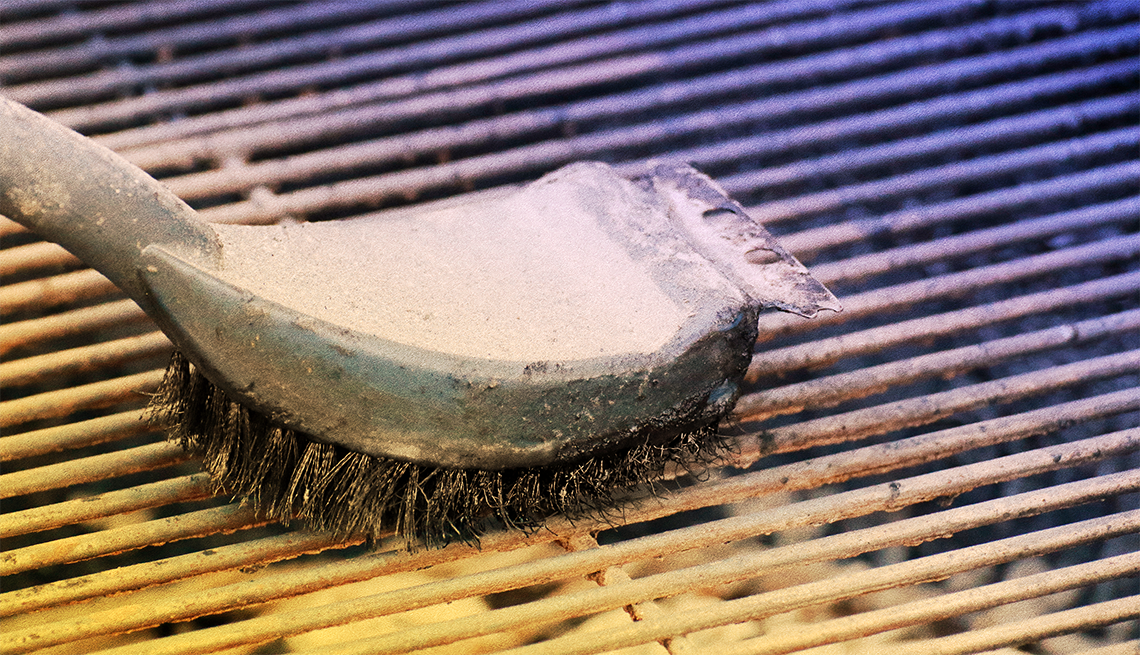
Even experienced grillers make errors that damage equipment or create hazards.
Cleaning a Cold Grill
Cold grease is stubborn. Always heat first to cut scrubbing time in half.
Ignoring the Cookbox
Focusing only on grates leaves grease pools below, increasing fire risk. Clean top to bottom: lid, walls, cookbox, then tray.
Using Wrong Tools
- Steel wool on aluminum grids causes pitting.
- Wire brushes on enamel cause scratches and rust.
- Easy-Off on aluminum damages the surface and voids the warranty.
Leaving Water on Stainless Steel
Moisture causes pitting that looks like rust. Always dry immediately after cleaning.
Skipping Burner Maintenance
Blocked tubes cause flashback fires. Clean monthly, especially after long storage.
Final Steps: Reassemble and Protect
A clean grill isn’t safe until it’s properly reassembled and protected.
Inspect Before Reassembly
- Ensure drain channels are clear.
- Confirm igniters spark cleanly.
- Verify all parts are dry to prevent rust.
Reinstall Components
Place grates, flavorizer bars, and drip pans back in position. Reconnect gas lines securely and perform a leak test with soapy water on connections. Bubbles mean a leak.
Apply Protective Oil
For cast iron grates, rub with high-temperature oil like avocado or canola after cleaning. This preserves seasoning and prevents moisture damage.
Cover and Store
Use a weather-resistant cover to keep dust, rain, and pests out. Store in a dry place when possible.
Frequently Asked Questions About Cleaning the Inside of a Grill
How often should I deep clean the inside of my grill?
Deep clean your grill every 7–8 cooks or twice a year at the start and end of grilling season. Spot clean after every use to prevent heavy buildup.
Can I use a wire brush on porcelain grill grates?
No. Wire brushes scratch porcelain and enamel coatings, leading to rust. Use a nylon brush or scouring sponge instead.
What is the safest way to clean burner tubes?
Inspect tubes monthly for spider nests or debris. Use a pipe cleaner, bristle brush, or steel wool to clear blockages, then wipe with a damp rag.
How do I remove rust from cast iron grates?
Apply a mixture of 2 parts vinegar to 1 part baking soda. Let it sit for 20–30 minutes, scrub, rinse thoroughly, dry completely, and re-season with vegetable oil.
Is baking soda safe for all grill surfaces?
Yes, baking soda is safe for stainless steel, porcelain, cast iron, and aluminum when used correctly. Avoid abrasive tools like steel wool on softer aluminum surfaces.
Why does my stainless steel grill look rusty after cleaning?
Standing water, especially from garden hoses containing iron, causes pitting that resembles rust. Always rinse and dry stainless steel immediately after cleaning.
Key Takeaways for a Clean, Safe Grill
Learning how to clean the inside of a grill comes down to three essentials: heat first, match your tools to the material, and stay consistent. Preheat for 15 minutes before scrubbing, use nylon brushes on delicate surfaces, and follow a simple after-use routine to prevent grease from accumulating.
Set a calendar reminder for monthly burner checks and seasonal deep cleans. Your grill will last longer, cook better, and keep your food tasting the way it should. Start with a quick post-cook scrape tonight and build from there.