How to Clean Stainless Steel Grill Grates
Nothing ruins a backyard cookout faster than food welding itself to dirty grill grates. If you own a stainless steel grill, you already have one of the most durable cooking surfaces available, but only if you maintain it correctly. Over time, carbon buildup, grease, and food residue can destroy non-stick performance, cause sticking, and even trigger rust if ignored. The good news? Learning how to clean stainless steel grill grates doesn’t require harsh chemicals or expensive tools.
The secret lies in understanding that stainless steel grates develop a protective patina, a natural layer formed by heat and oil that enhances non-stick performance and prevents corrosion. Your goal isn’t to make them look brand new. It’s to remove harmful gunk while preserving that essential layer. This guide covers quick post-grill cleanups, deep seasonal restorations, rust removal, and re-seasoning techniques so your grill delivers perfect sear marks for decades.
Clean Stainless Steel Grates While the Grill Is Hot

Scrubbing while the grill is still blazing is the fastest way to prevent stubborn buildup. Heat loosens residue and turns scrubbing into a quick swipe rather than a workout.
Post-Cooking Scrub Routine
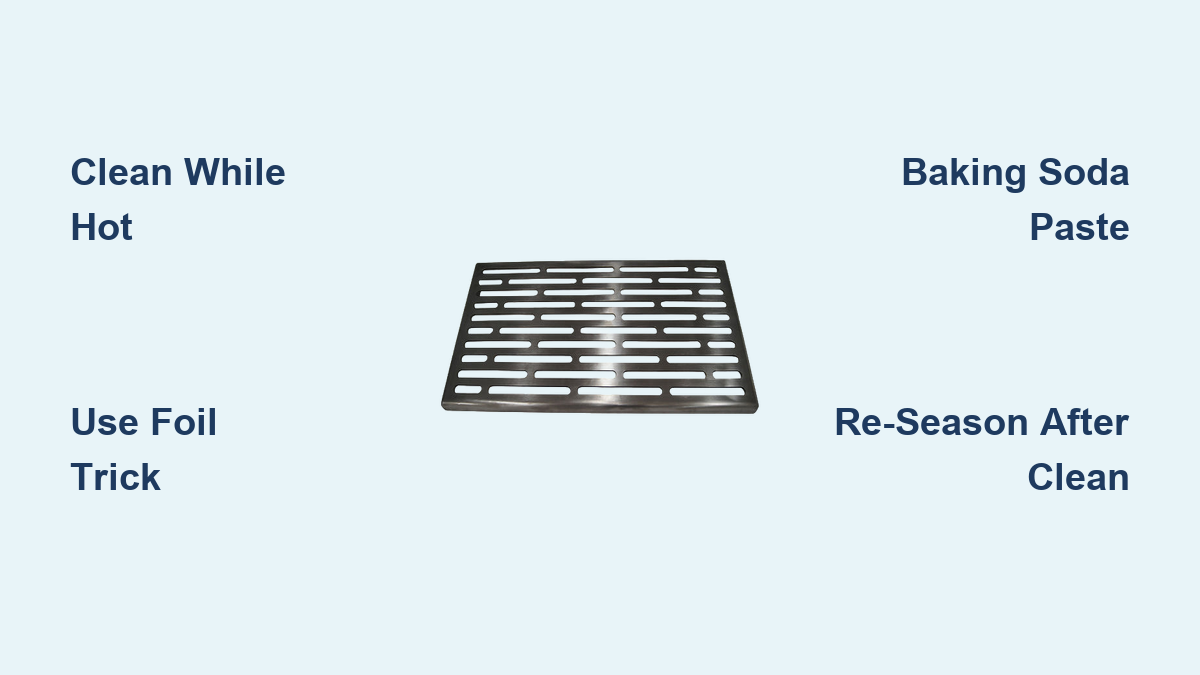
After finishing your cook, keep the grill running on high (500°F or higher) for 10 to 15 minutes. This carbonizes leftover food particles and grease. Once the grates are hot, grab a bristle-free grill brush or stainless steel scrub pad and scrub in the direction of the rods. You’ll see char and debris flake away effortlessly.
Why this works: High heat turns leftover grease brittle, making it easy to brush off. Skipping this step allows layers of buildup that require aggressive cleaning later.
Pro Tip: Always wear heat-resistant gloves. The grill and tools get dangerously hot.
If you forgot to clean after your last cook, preheat the grill to 500°F+ before your next use and scrub the grates clean before placing food on them.
Use the Aluminum Foil Trick for Stuck-On Food
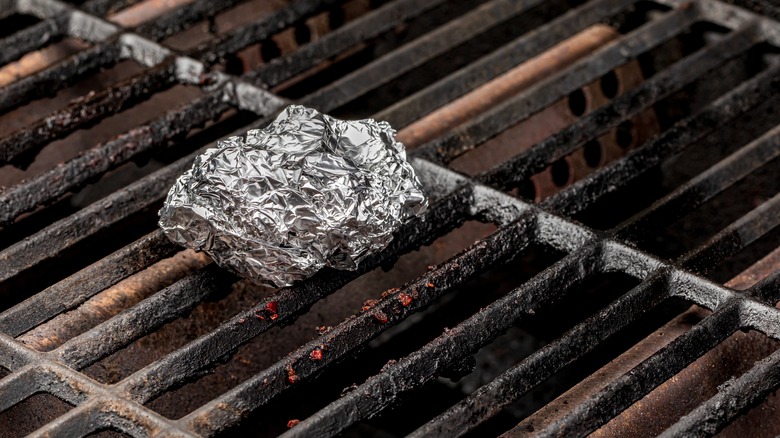
When residue refuses to budge, the foil method creates a mini self-cleaning cycle using trapped heat and steam.
Remove Stubborn Residue Fast
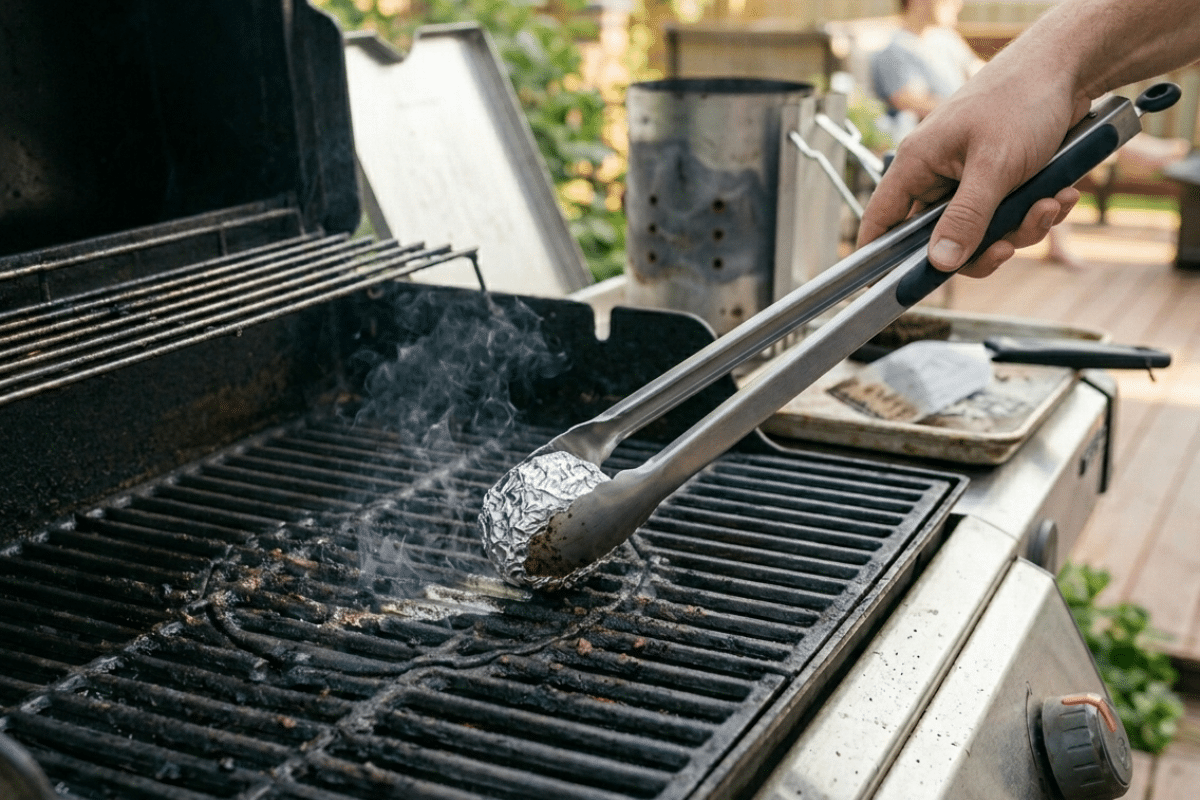
Tear off a sheet of aluminum foil, shiny side down, and place it directly over the dirty section of the grate. Close the lid and let the grill heat to 500°F+. After 5 to 10 minutes, open the lid and remove the foil with tongs. The concentrated heat and steam will have softened the gunk. Now scrub with a bristle-free brush or nylon pad.
What to look for: Blackened bits will lift off easily. This method mimics an oven’s pyrolytic clean but without chemicals.
Warning: Never leave foil unattended. It can blow around in wind or touch gas burners, creating a fire hazard.
This trick is ideal for spot-cleaning between deep cleans and avoids the need for soaking or harsh cleaners.
Apply Baking Soda Paste for Safe Deep Cleaning
For deeper cleaning without toxic fumes, a baking soda paste lifts carbon and grease using natural abrasion.
Scrub with Foil and Paste
Mix 1½ cups of baking soda with ½ cup of water to form a thick paste. Apply it evenly across the grates using a sponge or brush. Let it sit for 5 to 10 minutes to penetrate baked-on gunk. Then crumple a 2 to 3 foot length of aluminum foil into a ball and scrub the paste-covered grates vigorously.
The foil acts as a safe abrasive, tough enough to remove grime but gentle enough to avoid scratching. Rinse thoroughly with water and dry completely before returning the grates to the grill.
Visual cue: As you scrub, you’ll see dark residue lifting, revealing the darker patina underneath. This is normal and desirable.
Soak Grates Overnight for Extreme Buildup
For neglected grills with caked-on grease, an overnight soak breaks down buildup with minimal scrubbing.
Use Vinegar and Baking Soda Mix
In a large container or heavy-duty trash bag, combine 1 cup of white vinegar and 1 cup of baking soda. Place the grates inside, ensuring they’re fully coated. Seal the bag or cover the container and let soak overnight.
The chemical reaction between vinegar (acid) and baking soda (base) creates a foaming action that penetrates and softens carbon deposits. The next day, rinse the grates under running water. Most grime will wash away. Use a nylon brush for any remaining spots.
Time estimate: 8 to 12 hours
Difficulty: Low effort, high effectiveness
Note: While popular, this method may take longer than commercial degreasers. Reserve it for seasonal deep cleans, not weekly maintenance.
Try Chemical Degreasers When Needed
For fast results on extremely dirty grates, commercial cleaners save time but require caution.
Choose Safe, Effective Cleaners
Biodegradable options like Simple Green Heavy-Duty BBQ Cleaner are effective and safer for food-contact surfaces. Spray it on, let it sit for 10 to 15 minutes, then scrub with a stainless steel pad. Rinse thoroughly.
For tougher jobs, Dawn Power Wash (applied with a spray bottle) cuts through grease in minutes. It’s less corrosive than lye-based products and widely available.
Avoid lye-based cleaners unless absolutely necessary. They’re highly corrosive, can damage skin and eyes, and require full PPE (gloves, goggles, ventilation). If used, soak grates in a sealed container for 24 hours, then scrub and rinse extensively.
Final rinse rule: Always rinse chemical-treated grates with hot water and run the grill on high for 10 minutes before cooking to burn off any residue.
Remove Rust Without Damaging the Patina

Rust spots on stainless steel usually mean the protective layer has been compromised, often from moisture or using the wrong tools.
Treat Rust with Baking Soda Blend
Mix 1½ cups baking soda, ¼ cup dish soap, and ¼ cup white vinegar. The mixture will foam. Apply it directly to rusted areas. Let sit 15 to 20 minutes.
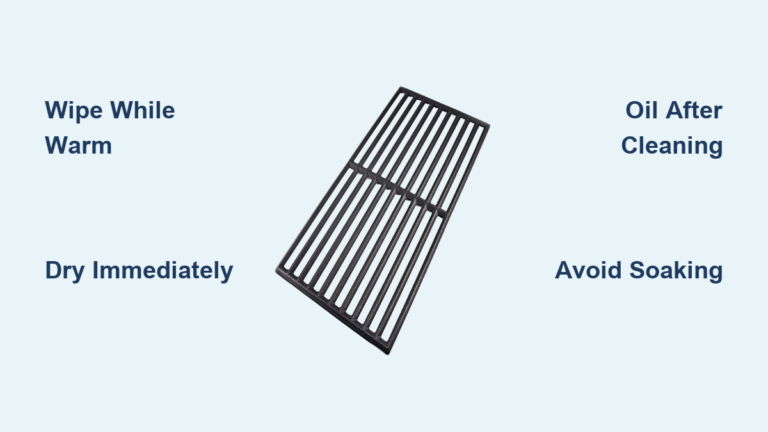
Scrub gently with a nylon brush or non-metal scouring pad. Do not use steel wool. Regular steel wool rusts and leaves particles behind. Rinse well, dry completely, and immediately coat the area with vegetable oil.
Then heat the grill to high for 15 minutes to bake the oil into the metal, forming a new protective layer.
Prevention tip: Always dry grates after cleaning and store the grill covered in damp weather.
Re-Season Grates After Any Deep Clean
Any deep clean, especially soaking or chemical treatment, strips away the patina. Re-seasoning restores non-stick performance and rust resistance.
Build a Protective Oil Layer
After cleaning and drying, apply a generous coat of high-temperature oil like Crisco, palm oil, or lard. Use a cloth or brush to cover every inch of the grate.
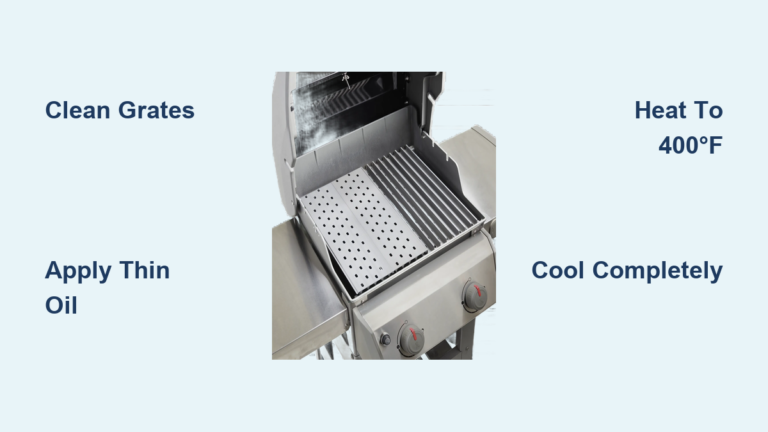
Place the oiled grates back on the grill and turn it to high. Let them heat for 30 to 45 minutes until the oil polymerizes and turns dark. This creates a new non-stick surface.
Expert note: Seasoning isn’t a one-time fix. Reapply oil every 2 to 3 cooks to maintain the layer.
Never pour oil directly on hot grates. It can cause dangerous flare-ups. Always apply oil to cool or warm grates before heating.
Choose the Right Tools for Safe Cleaning

Using improper tools can damage grates or contaminate food. Safety and material compatibility are critical.
Avoid Wire Brushes Entirely
Wire grill brushes are dangerous. Bristles can break off, stick to grates, and end up in your food, causing serious health risks. The FDA has issued warnings about this hazard.
Instead, use:
– Bristle-free brushes (silicone or polymer bristles)
– Stainless steel scrub pads (safe and durable)
– Nylon brushes or scouring sponges (ideal for coated or delicate surfaces)
Pro tip: Replace brushes annually or when bristles show wear.
Always wear heat-resistant gloves when cleaning hot grates or handling chemicals.
Prevent Sticking with Smart Grilling Habits
The best cleaning strategy is preventing mess in the first place. Smart habits make maintenance effortless.
Oil Food, Not Grates
While seasoning the grates matters, cooking experts agree: oil your food, not the grates. Brush oil directly onto steaks, burgers, or vegetables before grilling.
Why? Oiling the grates can lead to flare-ups and uneven carbonization. Oiling the food ensures better browning and reduces sticking without the fire risk.
Also, preheat the grill fully before cooking. A hot surface instantly sears food, creating a natural release layer.
Maintain the Natural Patina for Longevity
Many grillers make the mistake of trying to restore grates to a shiny, silver finish. This is counterproductive.
Preserve the Seasoned Surface
The dark, slightly mottled appearance of used stainless steel grates is the patina, a protective layer of polymerized oil and heat-treated metal. It prevents rust and improves non-stick performance.
Do not use oven cleaner, bleach, or abrasive pads to remove discoloration. These strip the patina and expose bare metal to corrosion.
Myth busted: Rainbow hues or dark spots are not signs of damage. They’re signs of a well-used, well-protected grate.
Clean to remove debris, not appearance. A seasoned grate should look used, not brand new.
Schedule Seasonal Deep Cleans
Routine hot cleaning keeps grates functional, but deep cleaning twice a year ensures long-term performance.
Start and End Each Season with a Deep Clean
- Spring prep: Clean grates before first use to remove winter dust and moisture.
- Fall shutdown: Clean after final cook to prevent grease from hardening over winter.
For deep cleans, remove grates and use the overnight vinegar soak or baking soda paste method. Inspect for rust, warping, or damage. Re-season before storage.
Time commitment: 1 to 2 hours, including drying and re-seasoning
Store grates in a dry place or leave them on the grill with a tight cover.
Troubleshoot Common Grate Problems
Even with proper care, issues arise. Here’s how to fix them fast.
Food Sticks to Grates
- Cause: Lost patina or cold grates
- Fix: Clean gently, then re-season. Always preheat grill before cooking.
Grates Turn Black or Rainbow-Colored
- Cause: Normal patina formation
- Action: No cleanup needed. This is healthy seasoning.
Smoke During Cooking
- Cause: Built-up grease burning off
- Fix: Clean grates thoroughly and run grill on high for 15 minutes before cooking.
Rust Spots Appear
- Cause: Moisture exposure or steel wool use
- Fix: Treat with baking soda-vinegar paste, dry, oil, and heat.
Frequently Asked Questions About Cleaning Stainless Steel Grill Grates
Can I use a wire brush on stainless steel grill grates?
No. Wire brushes shed bristles that can stick to grates and end up in your food, causing serious health risks. Use bristle-free brushes, stainless steel scrub pads, or nylon brushes instead.
How often should I deep clean my grill grates?
Perform a deep clean at the beginning and end of each grilling season. Routine hot cleaning after every cook prevents the need for frequent deep cleans.
Is it normal for stainless steel grates to turn dark or rainbow-colored?
Yes. This discoloration is the patina, a protective layer of polymerized oil and heat-treated metal. It improves non-stick performance and prevents rust. Do not try to scrub it off.
What is the best oil for seasoning stainless steel grates?
High-temperature oils like Crisco, palm oil, or lard work best. Apply a thin coat, heat the grill on high, and repeat every 2 to 3 cooks to maintain the protective layer.
Can I put my grill grates in the dishwasher?
It’s not recommended. Dishwashers may not fit large grates, and harsh detergents can strip the patina. Hand cleaning with baking soda paste or overnight soaking is safer and more effective.
How do I remove rust from stainless steel grates?
Mix 1½ cups baking soda, ¼ cup dish soap, and ¼ cup white vinegar. Apply to rusted areas, let sit 15 to 20 minutes, then scrub gently with a nylon brush. Dry thoroughly and oil immediately.
Key Takeaways for Maintaining Stainless Steel Grill Grates
Cleaning stainless steel grill grates comes down to four core habits: clean hot, use safe tools, preserve the patina, and deep clean seasonally. Avoid wire brushes and harsh chemicals unless absolutely necessary. Baking soda, vinegar, and high-heat oil handle most jobs naturally and safely.
Re-season after every deep clean to keep food from sticking and prevent rust. With consistent care, high-quality stainless steel grates can last 10 to 20 years, often outlasting the grill itself. Start your next cook by preheating the grill and scrubbing the grates while they’re hot. That single habit will prevent 90% of buildup before it starts.