How to Clean a Pit Boss Pellet Grill
A neglected Pit Boss pellet grill doesn’t just look bad—it cooks worse, smokes unevenly, and can become a serious fire hazard. Grease, ash, and carbonized food slowly choke airflow, clog the fire pot, and throw off your temperature readings. If you’ve noticed longer startup times, weak smoke, or strange hot spots, a dirty grill is often the culprit.
Learning how to clean a Pit Boss pellet grill properly protects your investment and improves every meal you cook. This guide breaks down the exact steps, tools, and schedule used by experienced Pit Boss owners. You’ll learn what to do after every cook, how to handle a deep clean, and how to re-season your grill so it performs like new.
Burn Off Pellets and Cool the Grill Safely

Before scrubbing anything, you need to prep the grill the right way. Skipping this step can damage your auger or leave moisture trapped inside.
Clear the Auger System
Turn your Pit Boss to 400°F and let it run for 15 minutes. This burns off any residual pellets sitting in the auger tube and prevents jams caused by moisture or expanded fuel. Once the cycle finishes, shut the grill down and unplug it.
Let It Cool Completely
Hot metal can burn you and warp plastic components. Give the grill 30 to 60 minutes to cool fully before touching any internal parts. Only begin cleaning once the grates, fire pot, and body are safe to handle.
Quick Cleanup After Every Cook
A fast post-cook routine takes just a few minutes and prevents heavy buildup later. Most Pit Boss owners follow these three steps every single time.
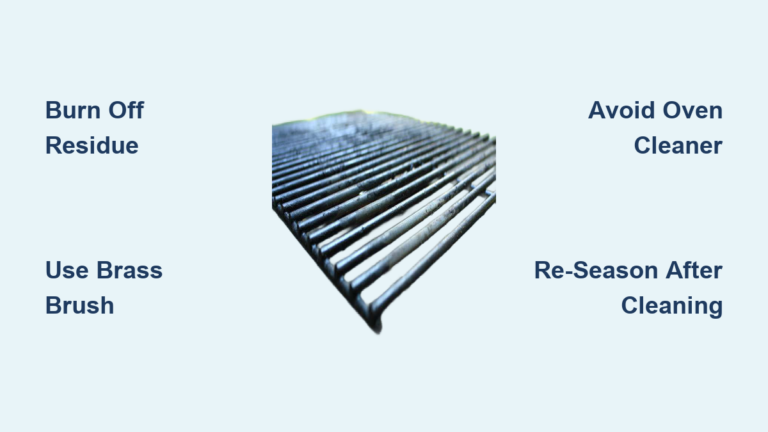
Scrub the Grates While Warm
Use a wire brush or a BBQ Daddy brush to scrub the cooking grates while they’re still warm but not scorching. A quick pass removes stuck-on food and protects the seasoned layer. Avoid soap at this stage unless you’re doing a full deep clean.
Empty the Ash Tray
If your model has a removable ash tray, slide it out and dump the contents into a metal container. Even “cool” ashes can stay hot for hours, so never use a plastic bag or trash bin.
Run a Burnout Cycle
Turn the grill back on and set it to 400°F for 10 to 15 minutes. This burns off leftover residue, sterilizes the cooking chamber, and helps prevent grease fires. Afterward, shut down and let the grill cool again before covering.
Deep Clean Every 18–20 Cooking Hours

When grease and ash start piling up, a full disassembly is required. This is the most important part of knowing how to clean a Pit Boss pellet grill for long-term performance.
Remove and Soak Components
Pull out the cooking grates, heat shields, Flame Broiler plate, grease trays, and water pan (for vertical smokers). Soak metal parts in warm, soapy water for 15 minutes to loosen stubborn residue. For fish cooks or sticky messes, extend the soak or use Pit Boss Grill Cleaner Degreaser.
Rinse everything thoroughly. Leftover soap or chemicals can affect the flavor of your next cook.
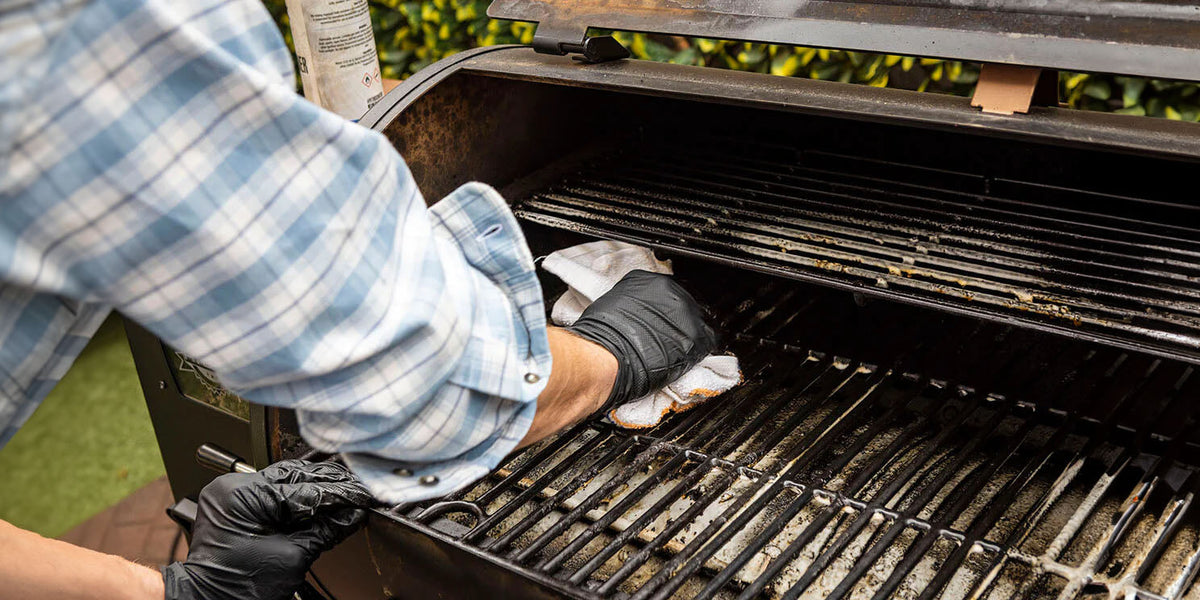
Scrub Heat Shields and Flame Broiler
Use a scraper or grill brush to remove carbonized grease from the heat shields and Flame Broiler plate. These parts block flare-ups and spread heat evenly, so clean them well. Pay extra attention to corners and crevices where grease hides.
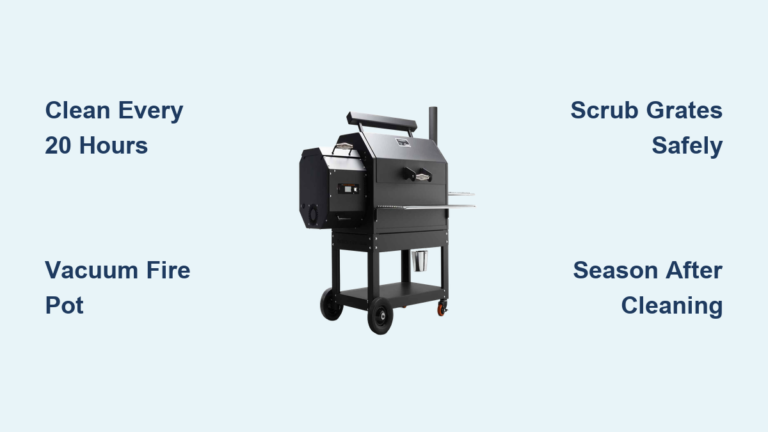
Vacuum the Fire Pot and Interior
A wet/dry vacuum is essential for this step. Suck up ash from the fire pot, firebox housing, and the bottom of the grill chamber. Ash buildup restricts airflow and causes poor ignition or uneven heating.
Never use compressed air. It can blow debris into the auger motor or fan and cause expensive damage.
Use the Right Tools for the Job

The right equipment makes cleaning faster, safer, and more effective. Here’s what experienced Pit Boss owners recommend.
Wire Brush vs. BBQ Daddy
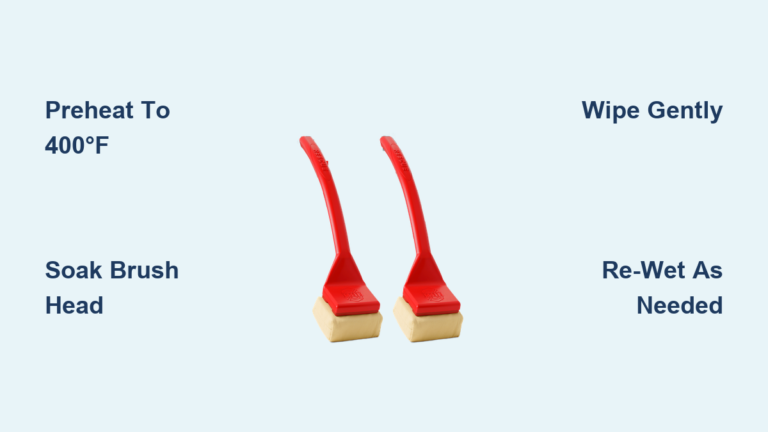
A standard wire brush works fine, but many users prefer the BBQ Daddy brush. Its spring-loaded, rotating design cleans grates quickly with minimal effort. Replace any brush with loose bristles to avoid metal fragments ending up in your food.
Wet/Dry Vacuum for Ash
A shop vac with a HEPA filter is ideal for capturing fine ash. Never use a household vacuum for ash cleanup. It isn’t designed for fine particles and can overheat or catch fire.
Scraper for Tough Buildup
A flat-edge metal scraper handles caked-on grease on heat shields and interior walls. Use gentle pressure to avoid scratching the finish.
Special Care for Vertical Smokers

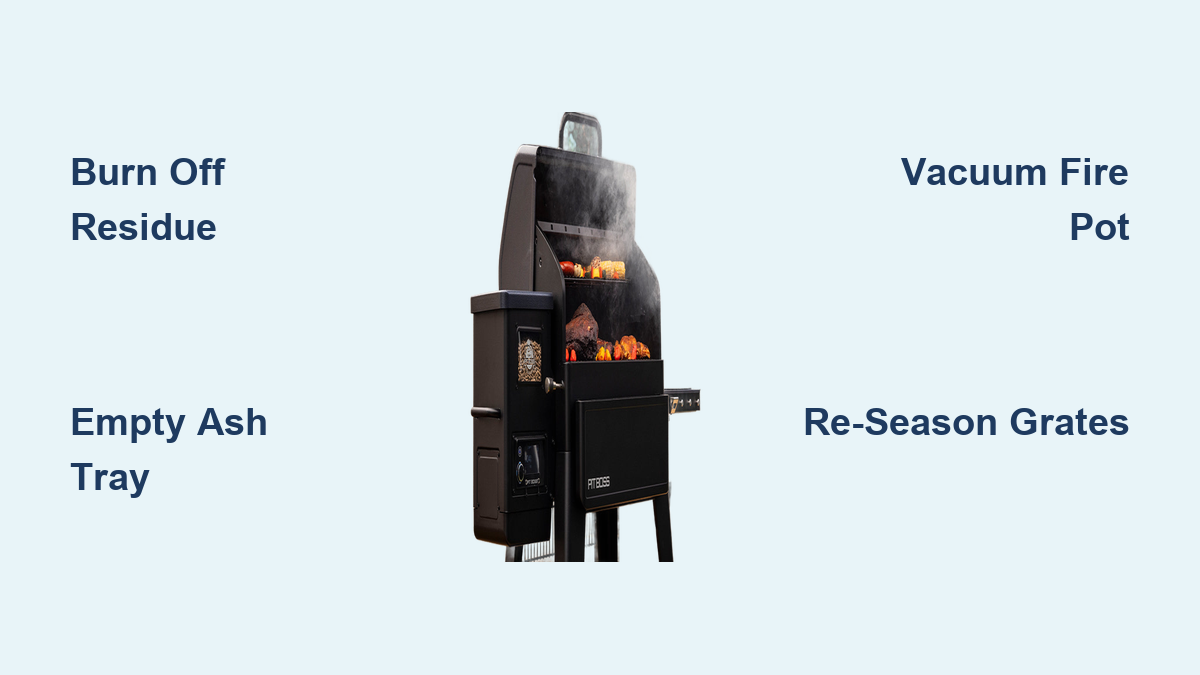
Vertical Pit Boss smokers have a few extra parts that need attention.
Wipe Down the Sight Glass
Grease and smoke residue cloud the sight glass quickly. Spray it with degreaser, wipe with a paper towel, then finish with glass cleaner to remove streaks. Do this every few cooks to keep visibility clear.
Clean the Grease Tray and Water Pan
Remove both trays and wash them with hot, soapy water or a degreaser. Dry them completely before reinstalling. A clogged grease tray can overflow and create fire hazards.
Reassemble and Season the Grill
After a deep clean, re-seasoning protects the metal and restores non-stick performance.
Apply High-Heat Oil
While components are cool and dry, lightly coat the cooking grates, Flame Broiler plate, and heat shields with canola oil or avocado oil. Both handle high temperatures without breaking down.
Avoid olive oil or butter. They burn at grill temperatures and leave sticky residue.
Heat to 350°F for 20 Minutes
Reinstall all parts, close the lid, and set the grill to 350°F. Run it for 15 to 20 minutes to polymerize the oil into a protective layer. Let the grill cool naturally afterward. The seasoning sets as the metal cools.
Troubleshoot Common Cooking Issues
A clean grill doesn’t just look better. It cooks better. Many cooking problems trace back to poor maintenance.
Fix Dry Ribs With Better Moisture Control
Dry ribs often come from poor heat distribution, not just overcooking. Clean grates and heat shields spread heat evenly, reducing hot spots that dry out meat.
Try cooking ribs at 230°F for 2.5 hours, then wrap them in foil with apple juice, butter, and brown sugar for 1.5 hours. This traps steam and keeps the meat juicy.
Prevent Hot Spots
Grease buildup and blocked heat shields create uneven cooking zones. The right side of most Pit Boss grills runs hotter due to airflow design. Place delicate foods on the left side or top rack for gentler heat.
Avoid These Common Cleaning Mistakes
Even experienced grillers slip up. Here are the errors to watch for.
Don’t Use Soap Too Often
Frequent soap washing strips seasoning from grates. Stick to brushing and burn-offs between deep cleans. When you do use soap, rinse thoroughly and always re-season afterward.
Never Skip Ash Removal
Ash insulates the fire pot and kills combustion efficiency. Skipping vacuuming can cause failed startups, low temperatures, and excessive smoke. Make it part of every deep clean.
Don’t Rush Reassembly
Make sure every part is fully dry before putting the grill back together. Moisture leads to rust, especially on steel components. Double-check that the heat shield and Flame Broiler are correctly positioned to prevent flare-ups.
Stick to a Simple Cleaning Schedule
Consistency matters more than effort. Follow this schedule to keep your Pit Boss running like new.
| Task | Frequency |
|---|---|
| Brush grates | After every cook |
| Empty ash tray | After every cook |
| Burnout cycle | After every cook |
| Vacuum interior | Every 3–4 cooks |
| Deep clean | Every 18–20 cooking hours |
Store Your Grill Properly
Always cover your Pit Boss when it’s not in use, especially in humid or rainy climates. A quality cover protects against moisture, which causes rust and pellet swelling. Keep the hopper empty during long storage periods.
Frequently Asked Questions About Cleaning a Pit Boss Pellet Grill
How often should I deep clean my Pit Boss pellet grill?
You should perform a full deep clean every 18 to 20 hours of cooking time. Between deep cleans, brush the grates and empty the ash tray after every cook to prevent heavy buildup.
Can I use soap to clean my Pit Boss grates?
Yes, but only during a deep clean. Soak grates in warm, soapy water for 15 minutes, rinse thoroughly, and re-season with high-heat oil afterward. For routine cleaning, stick to brushing and burn-off cycles to preserve the seasoning.
What temperature should I use for the burn-off cycle?
Set your Pit Boss to 400°F and let it run for 15 minutes to clear residual pellets from the auger system. For post-cook cleanup, a 10 to 15 minute burnout at the same temperature burns off leftover residue.
Do I need a special vacuum for ash cleanup?
Yes. Use a wet/dry vacuum (shop vac) with a HEPA filter to handle ash. Household vacuums aren’t designed for fine ash and can overheat or catch fire.
What oil is best for seasoning a Pit Boss grill?
Use canola oil or avocado oil for seasoning. Both have high smoke points and polymerize well at grilling temperatures. Avoid olive oil or butter, which burn and create sticky residue.
How do I clean the sight glass on a vertical Pit Boss smoker?
Spray the glass with a degreaser, wipe with a paper towel, then finish with glass cleaner to remove streaks. Clean it every few cooks to maintain clear visibility.
Key Takeaways for Cleaning Your Pit Boss Pellet Grill
Keeping your Pit Boss pellet grill clean comes down to three habits: burn off residue after every cook, vacuum ash regularly, and deep clean every 18 to 20 hours. Use the right tools, avoid excess soap, and always re-season after a deep clean.
Start with a quick post-cook routine tonight. Brush the grates, empty the ash tray, and run a 15-minute burnout cycle. Your grill will heat faster, smoke better, and last for years to come.