
How to Keep Mice Out of a Grill
If you’ve ever lifted your grill lid to find shredded paper, droppings, or chewed wires, you’re not alone. Mice in grills are a surprisingly common problem, especially in fall and winter, turning your outdoor cooking station into a rodent hideout. These pests are drawn to grills because they offer warmth, shelter, and the lingering smell of last weekend’s barbecue. Beyond the mess, a mouse infestation poses real dangers: contaminated surfaces, chewed gas lines, and damaged electrical components can lead to fires or even explosions.
The good news is that with the right strategies, you can keep mice out of your grill for good. This guide breaks down proven, step-by-step methods, from deep cleaning and physical barriers to smart repellents and seasonal storage. Whether you own a gas, charcoal, or pellet model, these actionable tips will help you eliminate attractants, block entry points, and deter rodents before they move in.
Sanitize After Every Use

A clean grill is the first line of defense against a mouse problem. Mice are primarily attracted to food residue, grease, and odors. If your grill smells like dinner, they’ll treat it like a snack bar.
Remove Grease and Food Debris Immediately
After each cook, spend 5 to 10 minutes cleaning:
– Scrape grates with a wire brush.
– Wipe down interior walls, lid, and flavorizer bars on gas grills.
– Empty and rinse the grease tray, which is a top nesting spot.
– For charcoal grills, remove all ash and leftover coals.
Pro Tip: Never leave grease trays attached to the grill outdoors. Store them indoors in a sealed container instead.
Deep Clean Monthly
Even with regular wipe-downs, buildup happens. Perform a full deep clean every 4 to 6 weeks:
1. Remove grates, burners, and drip pans.
2. Soak metal parts in hot, soapy water.
3. Use a degreaser on stubborn grease.
4. Rinse and dry completely before reassembly.
A clean grill doesn’t just perform better. It’s invisible to hungry mice.
Seal All Entry Points

Mice can squeeze through holes the size of a dime. If they can fit, they will nest.
Inspect for Gaps and Holes
Check these common entry zones:
– Vents and exhaust openings
– Gaps around gas lines or control knobs
– Loose panels or seams in the body
– Underside of the cart or base
Use a flashlight to peer into dark corners. Look for chew marks, smears, or nesting scraps.
Block Holes with Steel Wool
Stuff coarse steel wool into any openings. Mice can’t chew through it, and it’s heat-resistant when placed in non-cooking areas.
Critical Warning: Remove all steel wool before lighting the grill. Never leave it near burners or in the firebox.
Reinforce Seams with Metal Tape
For cracks or weak seals, apply aluminum foil tape. Duct tape won’t work because mice chew through it. Metal tape is durable, weather-resistant, and rodent-proof.
Use a Tight-Fitting Grill Cover
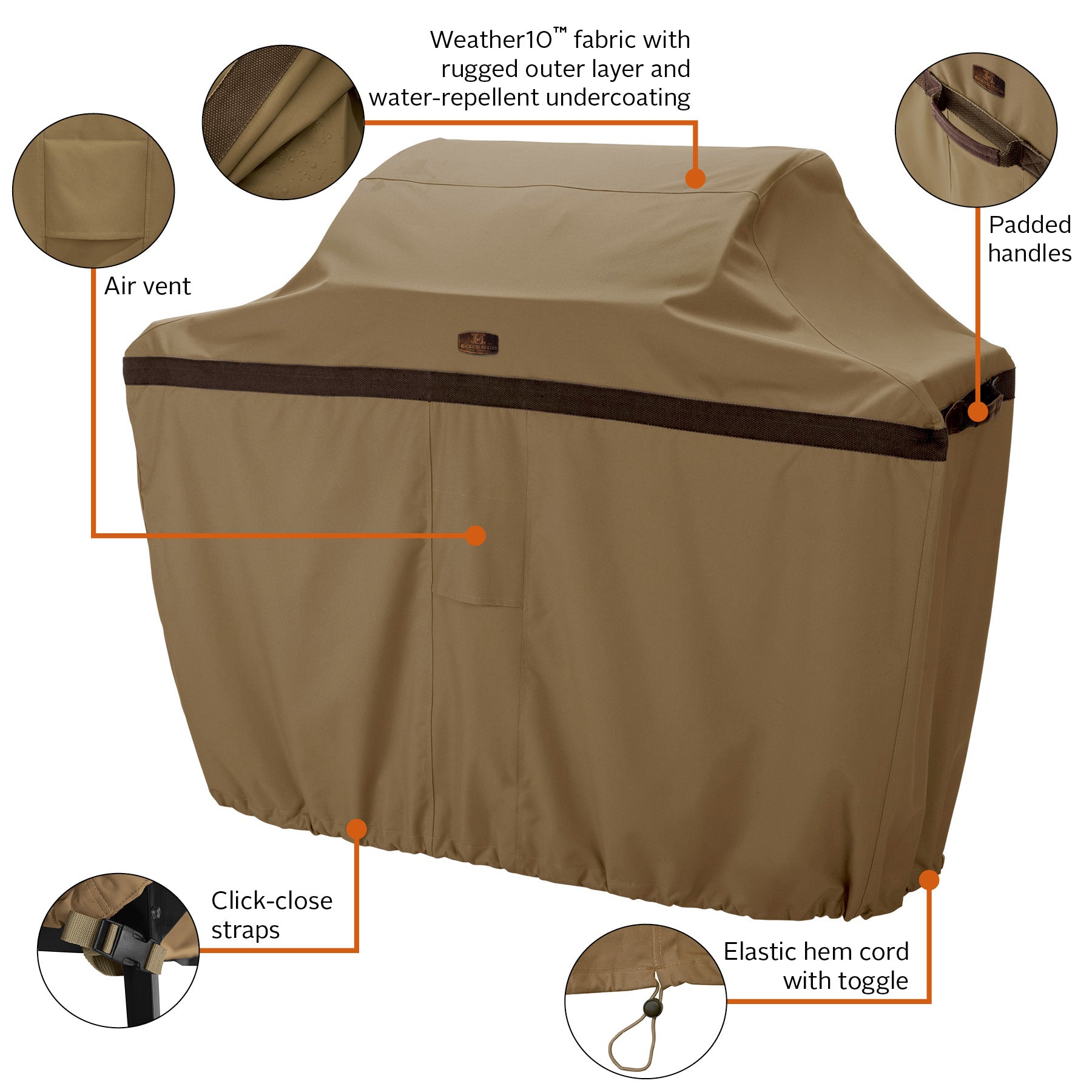
A cover isn’t just for weather protection. It serves as a physical barrier against rodents.
Choose the Right Cover
Look for:
– Heavy-duty vinyl or polyester
– Snug fit with elastic hems or straps
– No loose flaps or gaps underneath
Avoid tent-style covers that create space for nesting.
Cover Every Time
Make it a habit to cover the grill after every use, even for short periods. An uncovered grill for just 24 hours can attract scouts.
Upgrade with a Hard-Shell Tote
For small grills like the Weber Q series, try the tote method:
– Place the grill inside a large, lidded plastic storage bin (around 32″ x 20″ x 20″).
– Secure the lid and strap it down.
– Elevate the tote on a stand or bricks.
This hard-shell enclosure is nearly impenetrable to rodents.
Elevate and Relocate the Grill
Where you place your grill matters just as much as how you cover it.
Lift It Off the Ground
Mice love ground-level access. Raise your grill:
– Use a metal stand with solid sides.
– Or place bricks under the legs.
Even 6 inches of elevation makes a difference.
Move Away from Risk Zones
Avoid placing your grill:
– Within 3 feet of your house, fence, or shed
– Near woodpiles, compost bins, or tall grass
– Close to trees or overhanging branches
These areas are mouse highways. Distance reduces risk.
Deploy Natural Repellents

Scent-based deterrents work when used consistently. Rotate scents to prevent mice from adapting.
Use Peppermint Oil
Mice hate the strong smell. Here’s how to apply it:
– Soak cotton balls in pure peppermint oil.
– Place them under the lid, near wheels, and in storage corners.
– Replace every 3 to 5 days or after rain.
Alternative: Mix 10 drops peppermint oil with 1 cup water and spray around the base.
Try Vinegar Spray
White vinegar cuts grease and repels mice:
– Mix equal parts vinegar and water.
– Spray on legs, handles, and outer casing weekly.
The smell fades to humans but lingers for rodents.
Other Effective Scents
Rotate these options to prevent adaptation:
– Eucalyptus oil
– Citronella
– Lavender
– Rue herb planted near the grill area
Commercial options like Stay Away® Rodent pouches combine essential oils and last up to 30 days.
Install Electronic and Mechanical Deterrents

When scent isn’t enough, add active defenses.
Use Ultrasonic Repellers
These plug-in devices emit high-frequency sound:
– Inaudible to humans and most pets.
– Uncomfortable for rodents.
Best for: Covered patios, garages, or sheds.
Tip: Use one near the grill and another in storage areas.
Set Traps Around the Base
Place traps as an early warning system:
– Snap traps (Tomcat brand): Effective and affordable.
– Humane live traps: For relocation (check local laws).
– Bait stations: Use rodenticide only if safe and legal.
Bait Tips: Peanut butter, oats, or nesting material like dental floss work well.
Place traps near wheels and legs, but away from kids and pets.
Store Components Indoors
Don’t leave tempting parts outside where mice can access them.
Remove and Store Key Parts
Before long-term storage or winter:
– Take out the grease tray and drip pan
– Empty the pellet hopper for pellet grills
– Store all in sealed plastic bins indoors
These parts retain grease and odors, making them prime targets for mice.
Store the Whole Grill Inside
If possible:
– Move the grill into a garage, shed, or basement.
– Ensure the space is clean, dry, and sealed.
Even a few weeks of indoor storage during peak rodent season can prevent infestation.
Winterize Your Grill Properly
Cold months are peak nesting time. Protect your grill before the first freeze.
Complete Winter Prep Checklist
- Deep clean the entire unit
- Remove and store grease tray and grates
- Seal all vents and holes with removable steel wool
- Apply peppermint oil or repellent pouches
- Cover tightly or place in a tote
- Elevate off concrete or soil
- Check monthly for signs of activity
Do not skip inspections. Lift the cover every few weeks to look for droppings or nests.
Clean an Infested Grill Safely
If you find evidence of mice, do not cook until the grill is sanitized.
Signs of Infestation
Look for:
– Rice-sized droppings
– Shredded paper or grass nests
– Chewed wires or hoses
– Musty, ammonia-like odor
Follow CDC-Approved Sanitizing Steps
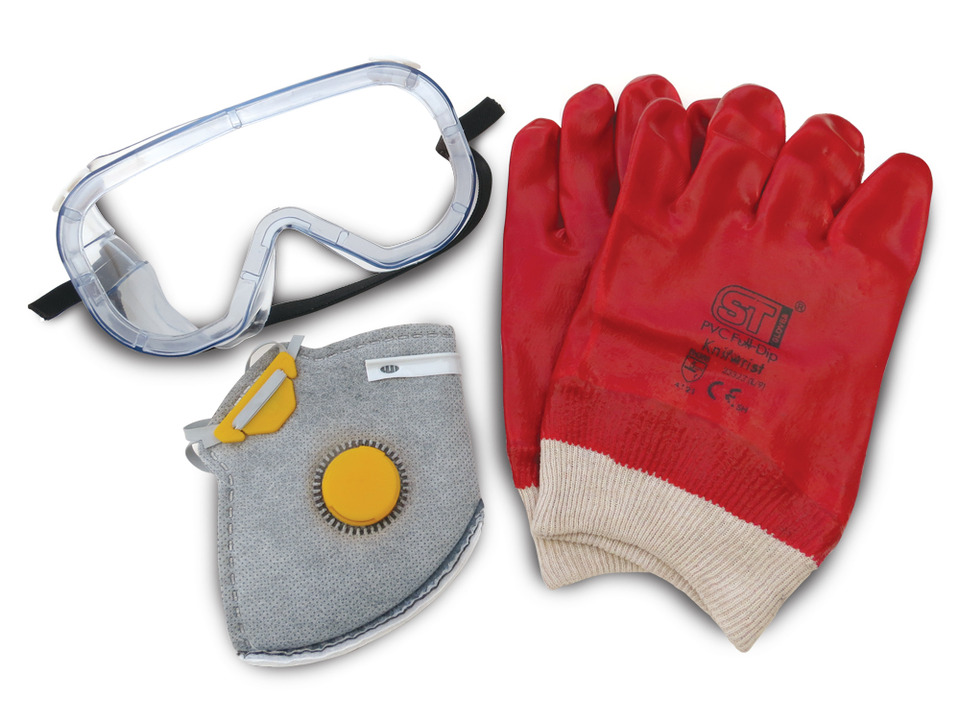
- Wear gloves and an N95 mask
- Do not sweep or vacuum, as this spreads virus particles
- Spray affected areas with 10% bleach solution (1:9 bleach to water)
- Wait 10–15 minutes before wiping with disposable rags
- Remove nests and droppings with paper towels, seal in a plastic bag, and trash immediately
- Wash all removable parts in hot, soapy water
- Reassemble and heat on high for 20 minutes to burn off contaminants
Warning: If gas lines or wiring are chewed, do not use the grill. Replace or repair professionally.
Prevent Future Infestations
Once clean, maintain a rodent-free zone with ongoing habits.
Adopt a Zero-Odor Policy
- Never leave food scraps or grease.
- Clean after every use.
- Store charcoal and pellets in airtight plastic bins.
Rotate Deterrents
Mice adapt quickly. Switch repellents monthly:
– Week 1: Peppermint oil
– Week 2: Vinegar spray
– Week 3: Ultrasonic device
– Week 4: Trap monitoring
Monitor with Camera or Motion Light
A small outdoor motion-activated light or camera can scare off nocturnal visitors and alert you to activity.
Frequently Asked Questions About Keeping Mice Out of a Grill
Why are mice attracted to grills in the first place?
Mice seek grills because they offer warmth, shelter, and food odors. In colder months, an unused grill becomes an ideal nesting site. Grease and food residue make the attraction even stronger year-round.
Can mice chew through a grill cover?
Yes, mice can chew through thin or damaged covers. Use heavy-duty vinyl or polyester covers with snug fits. For added protection, consider the tote method with a hard plastic bin.
Is steel wool safe to use in a grill?
Steel wool is safe for blocking entry points, but you must remove it before cooking. Leaving steel wool near burners creates a serious fire hazard.
What smell do mice hate the most around grills?
Peppermint oil is one of the most effective natural repellents. Eucalyptus, citronella, lavender, and vinegar also work well when applied consistently.
How do I know if my grill has mice?
Look for rice-sized droppings, shredded nesting material, chew marks on wires or hoses, and a musty ammonia-like odor. Check the grease tray, under the lid, and around the hopper on pellet grills.
Should I replace my grill after a mouse infestation?
Not necessarily. If you sanitize thoroughly using the bleach method and heat the grill on high for 20 minutes, it can be safe to use. However, replace the grill if gas lines or wiring are heavily chewed.
Key Takeaways for a Mouse-Free Grill
Keeping mice out of your grill requires layers of defense working together. Start with cleanliness by removing grease and food residue after every use. Seal entry points with steel wool and metal tape, then cover your grill with a snug, heavy-duty cover or hard-shell tote. Elevate the grill off the ground and position it away from rodent highways like woodpiles and tall grass.
Add scent repellents such as peppermint oil and vinegar, and rotate them monthly to prevent adaptation. In high-risk areas, combine ultrasonic devices with traps for active protection. During winter, store removable parts indoors and inspect your grill regularly.
If you discover an infestation, sanitize with a 1:9 bleach solution and heat the grill on high for 20 minutes before cooking again. Replace any chewed gas lines or wiring immediately, because safety always comes first.
Your next step: Perform a deep clean this week, seal any visible gaps, and set up your first round of peppermint oil repellents. A mouse-free grill starts today.


