How to Dispose of an Old Grill
You’ve upgraded to a new grill, but that old one still sits in your backyard, rusting, greasy, and taking up space. Now you’re left with a simple question: how to dispose of an old grill the right way? Throwing it in the dumpster might seem easy, but grills contain hazardous parts, recyclable metals, and components that can harm the environment if handled carelessly.
Most grills are made of valuable scrap metal like steel or aluminum, yet many end up in landfills due to improper disposal. Worse, propane tanks, even when empty, pose serious explosion risks if mishandled. The good news is that with a few safety steps and some disassembly, you can responsibly recycle your old grill, possibly earn a few dollars, or even help someone in need through donation.
This guide walks you through the safest, most eco-friendly ways to get rid of your old grill. You’ll learn how to remove hazardous parts, separate recyclable materials, and choose the best disposal method, whether that’s scrap recycling, junk removal, donation, or municipal pickup.
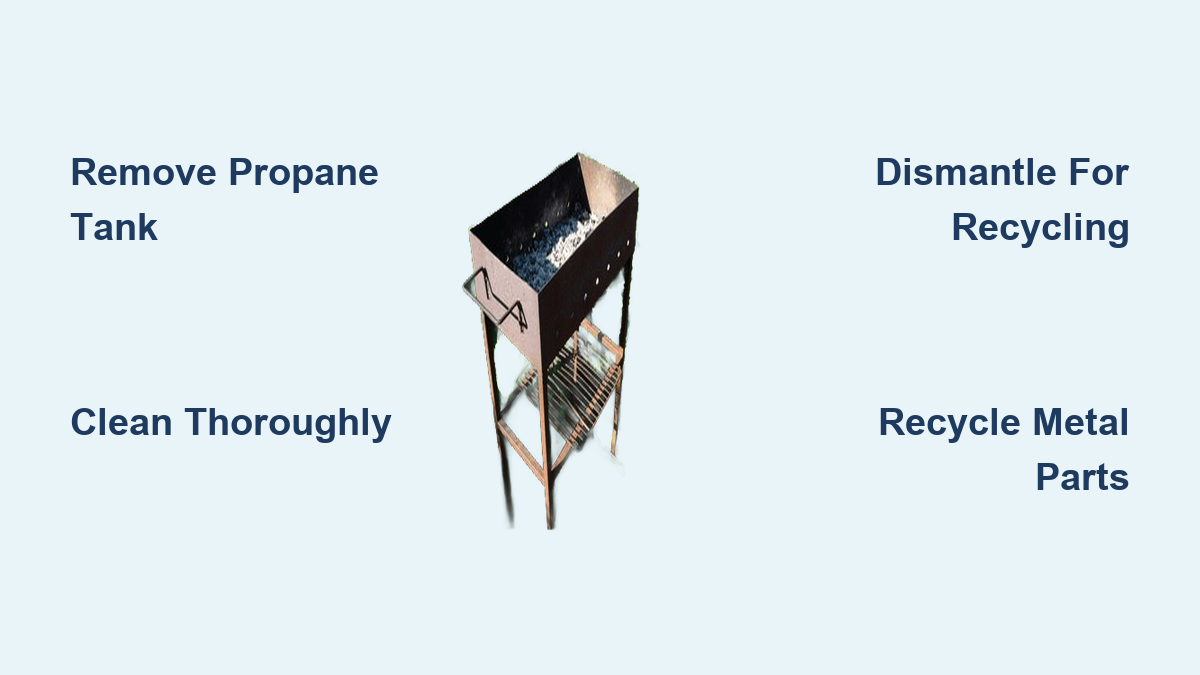
Disconnect and Remove the Propane Tank

Never Throw Tanks in the Trash
The single most dangerous part of any gas grill is the propane tank. These pressurized cylinders can explode if crushed, heated, or punctured, making them strictly prohibited in landfills, dumpsters, and regular trash. Even empty tanks may contain flammable residue and must be treated as hazardous waste.
Take Tanks to a Propane Dealer or HHW Facility
Do not try to manually empty the tank by releasing gas. This creates a fire hazard and is illegal in many areas. Instead, consider these safe options:
- Use a tank exchange program at hardware stores or propane suppliers
- Drop off at a Household Hazardous Waste (HHW) facility if your local program accepts tanks
- Contact your gas company or fire department for disposal guidance, as some offer seasonal collection events
Pro Tip: If recycling the tank without refilling, mark it clearly with “RECYCLE” in permanent marker to prevent accidental refills.
Deep Clean Before Disposal or Donation
Grease Attracts Pests and Creates Fire Hazards
An unclean grill is a liability. Leftover grease can attract rodents and insects, create fire hazards during transport or processing, and disqualify your grill from donation or recycling programs entirely.
Scrub All Components Thoroughly
Use a degreaser, wire brush, and soapy water to clean the grill body, lid, burners, flavorizer bars, side shelves, and warming racks. Let all parts dry completely before disassembly. This step is required for donation and improves recycling efficiency.
Dismantle the Grill for Recycling

Separate Materials by Type
To maximize recycling and avoid contamination, take apart your grill. Most scrap yards won’t accept whole grills, so dismantling increases value and ensures proper processing.
Remove Rubber Hoses and Dispose in Trash
Cut hoses from both the tank connector and grill burners. These are made of non-recyclable rubber and belong in the regular trash. Never burn or cut open hoses that may still contain gas.
Pull Out Electronics and Batteries
Ignition systems, digital controls, and battery-powered starters are e-waste. Remove them and take them to a local e-waste drop-off, a city-sponsored recycling event, or a retailer that accepts small electronics. Leaving electronics in the grill can contaminate metal recycling batches.
Recycle Metal Components at a Scrap Yard
Grill Bodies Are Made of Valuable Metal
Most gas grills are built from steel (common in basic models), stainless steel (higher-end grills), or aluminum (lightweight or cart components). These metals are 100% recyclable and in high demand at scrap yards.
Transport Metal Parts to a Recycling Center
After disassembly, follow these steps:
- Stack clean metal pieces including the body, lid, shelves, and cart
- Remove non-metal parts like plastic, rubber, and electronics
- Load into a truck or trailer
- Take to a local scrap metal recycler
Note: Some facilities pay by weight, with returns typically ranging from $1 to $10 depending on size and metal type. While not profitable, recycling keeps hundreds of pounds of metal out of landfills.
Handle Plastic and Non-Recyclable Parts
Sort Plastics by Recycling Symbols
Not all plastic is recyclable. Check for resin codes on control knobs, side shelves, and wheel casings. If your local program accepts the plastic type, recycle it. If not, dispose of it in regular trash.
Dispose of Non-Recyclable Accessories
Items like rubber seals, insulation pads, and plastic grill covers should go in the garbage unless your city hosts special appliance recycling events.
Donate If the Grill Still Works
Only Give Functional, Clean Units
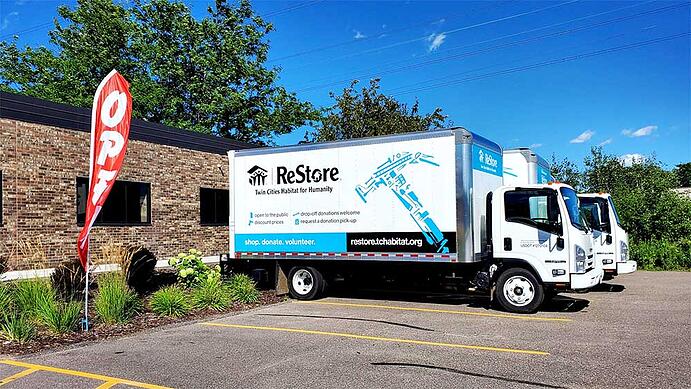
Charities like Goodwill and Habitat for Humanity ReStore accept grills, but only if the grill lights and heats properly, is free of rust, damage, and grease, and has all parts present and working. Call ahead to confirm local ReStore policies, as some locations accept grills while others don’t due to liability or storage issues.
Sell or Give Away Locally
Use platforms like Facebook Marketplace, Craigslist, or Nextdoor to offer your grill “as-is” for free or at a low price. Include clear photos and mention if the propane tank is included (empty and safe).
Warning: Never give away a grill with a tank still attached.
Use Professional Junk Removal
Skip the Heavy Lifting
If disassembly or transport isn’t feasible, hire a junk removal service. These companies offer pickup from your driveway, porch, or deck.
Choose Eco-Friendly Haulers
Look for companies that sort items for recycling and donation, provide real-time tracking and upfront pricing, and are insured and background-checked. Most offer same-day or next-day pickup. Prices vary by region and grill size, but expect $75 to $150 for a large grill.
Bonus: Some services recycle up to 60–80% of what they collect, significantly reducing landfill impact.
Check Municipal Bulk Pickup Rules
Some Cities Collect Large Items
Many municipalities offer bulky item pickup for appliances, yard equipment, and grills. Services may be free with your trash subscription, available on scheduled dates, or require advance sign-up.
Contact your local waste management department to ask whether grill pickup is allowed, whether the propane tank must be removed, and whether the grill needs to be disassembled.
Note: Some cities ban metal-heavy items from curbside pickup due to weight or recycling policies.
Never Put a Whole Grill in the Dumpster
Rental Companies Often Reject Grills
Standard roll-off dumpsters may refuse grills because they’re too heavy (often over 200 lbs), contain non-acceptable materials like propane or grease, or are mostly recyclable metal that violates landfill bans.
Only Use Dumpsters If Rules Allow
If your rental company permits grill disposal, you must remove the propane tank, clean all grease off the unit, and confirm approval in writing. Violations can result in fines or extra fees.
Charcoal Grill Disposal Tips
Handle Ash and Fluids Safely
Charcoal grills pose different hazards. Let used briquettes cool completely, then bag and trash them. Do not compost if lighter fluid was used. Lighter fluid is classified as hazardous waste, so take it to an HHW facility and never pour it down drains or toss it in regular trash.
Recycle Metal Parts the Same Way
The body, lid, and cart of charcoal grills are often made of steel or cast iron, just as recyclable as gas grills. Follow the same disassembly and scrap yard process.
Follow Local Disposal Regulations
Rules Vary by City and State
Some areas ban propane tanks from garages and sheds, fine residents for improper hazardous waste disposal, or require metal appliances to be recycled rather than trashed. Check your city’s waste management website or call customer service to avoid penalties.
Prevent Environmental Harm
Recycling Reduces Resource Waste
Steel and aluminum recycling uses 75–95% less energy than producing new metal, reduces mining and greenhouse gas emissions, and keeps durable materials in circulation. A single recycled grill can save enough energy to power a home for several hours.
Stop Methane and Fire Risks
Improperly discarded propane tanks can leak gas in landfills, contributing to methane emissions, explode during waste compaction or incineration, and endanger sanitation workers. Proper tank disposal protects both people and the planet.
Step-by-Step Disposal Checklist

1. Turn Off Gas and Disconnect Tank
Shut the valve. Remove the tank. Store it upright outdoors, away from heat.
2. Clean the Grill Thoroughly
Scrub all grease and debris. Dry completely.
3. Dismantle and Sort Components
- Metals (body, lid, shelves, valves) go to the scrap yard
- Propane tank goes to a dealer or HHW facility
- Hoses, plastic, and rubber go in the trash
- Electronics and batteries go to e-waste
- Functional grills can be donated or sold
4. Choose Your Disposal Method
| Option | Best For | Effort Level | Cost |
|---|---|---|---|
| Scrap Recycling | Eco-conscious DIYers | High | $0 (may earn $1–$10) |
| Junk Removal | Convenience seekers | Low | $75–$150 |
| Donation | Working, clean grills | Medium | Free |
| Municipal Pickup | Free disposal access | Medium | Free or small fee |
| Curb Alert | Quick metal removal | Low | Free |
Pro Tip: Post a “Free Grill – All Metal – Curb Alert” sign. Scrap collectors often pick these up within hours.
Frequently Asked Questions About Disposing of an Old Grill
Can I throw a propane tank in the regular trash?
No. Propane tanks are classified as hazardous waste and are strictly prohibited from landfills, dumpsters, and regular trash bins. Even empty tanks may contain flammable residue and can explode if crushed or punctured. Take them to a propane dealer, tank exchange program, or Household Hazardous Waste facility instead.
How much money can I get for recycling a grill?
Scrap value is typically low, ranging from $1 to $10 for an entire grill depending on size and metal type. Most people don’t profit meaningfully from grill recycling. The primary benefit is environmental responsibility and keeping metal out of landfills, not financial gain.
Do charities accept old grills?
Some do, but only if the grill is spotless, fully functional, and free of rust or damage. Goodwill has strict requirements, and Habitat for Humanity ReStore locations vary in their policies. Always call ahead to confirm your local ReStore accepts grills before attempting to donate.
Can I put my grill in a rental dumpster?
It depends on the rental company’s policies. Many dumpsters reject grills because they’re too heavy, contain hazardous materials, or violate metal recycling rules. You must remove the propane tank, clean all grease, and get written approval before disposal to avoid fines.
What do I do with the rubber hoses on my grill?
Cut the hoses from both the tank connector and grill burners and dispose of them in regular trash. Rubber hoses cannot be recycled and should never be burned or cut open if they may still contain gas.
How do I dispose of a charcoal grill?
Follow the same metal recycling process as a gas grill. Let used briquettes cool completely before bagging and trashing them. If you used lighter fluid, take the leftover fluid to a Household Hazardous Waste facility. Never pour lighter fluid down drains or toss it in regular trash.
Key Takeaways for Disposing of Your Old Grill
Disposing of an old grill doesn’t have to be a hassle or a hazard. By removing the propane tank, cleaning the unit thoroughly, and separating materials properly, you protect your community and the environment. Whether you recycle for scrap, donate to charity, or hire a professional hauler, the most important thing is doing it safely and legally.
Take action today: disconnect that tank, scrub off the grease, and choose the disposal method that fits your time, effort, and values. Your old grill may be done cooking, but it can still make a positive impact.