
How to Clean a Charcoal Grill
A charcoal grill delivers unbeatable smoky flavor, but that flavor comes with a cost: grease, ash, and grime buildup. If you’ve ever battled sticky grates, cement-like ash, or mysterious flakes inside the lid, you know how quickly a grill can go from great to gross. Worse, neglecting regular cleaning shortens your grill’s lifespan and ruins the taste of your food. The good news? Learning how to clean a charcoal grill is fast, safe, and straightforward once you know the right steps. This guide covers everything from cooling and ash removal to seasoning grates, so your grill stays in peak condition for years.
Let the Grill Cool Down Completely
Rushing into a hot grill is the fastest way to burn yourself or warp metal components. After your last cook, close the vents to cut off oxygen and let the coals die out naturally. Wait at least 4 to 6 hours before you begin any deep cleaning. Always assume coals are still hot until proven otherwise.
For quick lid wipe-downs, a warm (not hot) grill works perfectly. The gentle heat loosens grease without posing a burn risk, making it easier to wipe away fresh residue.
Disassemble the Grill for Full Access
Remove Grates and Removable Parts
Start by taking out the cooking grates, ash catcher, and any flavorizer bars or heat deflectors on your model. This gives you unrestricted access to the bowl and prevents debris from falling onto freshly cleaned surfaces. Lay parts on a clean tarp or work surface to avoid contamination. Keep a metal bucket nearby for ash disposal to save trips later.
Work in a Well-Ventilated Area
If you’re using aerosol cleaners or strong degreasers, always work outdoors with good airflow. Avoid enclosed spaces where fumes can build up, even when using EPA Safer Choice Certified products.
Burn Off and Scrub the Cooking Grates

Heat the Grates First
Fire up the grill and let the grates heat for about 5 minutes to char leftover food. High heat turns stubborn residue into ash-like flakes that brush away easily. Alternatively, preheat your grill for 10 to 15 minutes before your next cook and brush immediately after cooking while the grates are still hot.
Apply BBQ Cleaner
Spray a thick-foam cleaner like Simple Green Heavy Duty BBQ Cleaner directly onto cool grates. The foam clings to vertical surfaces, giving it time to break down grease. Let it sit for 5 to 10 minutes. Avoid cleaners with added dyes or fragrances that could transfer to your food.
Scrub with a Stainless Steel Brush
Grab a long-handled stainless steel bristle brush and scrub both sides of the grates with firm pressure. For extra stubborn spots, pair the brush with a scouring pad. Never use wire brushes on porcelain enamel lids; reserve them for grates only.
Rinse and Dry Thoroughly
Rinse grates under running water to wash away all cleaner and loosened debris. Shake off excess water, then dry completely with a towel or by air-drying. Moisture left on metal leads to rust, especially on cast iron grates.
Manage Ash and Fuel Residue Daily

Empty Ash Every Time You Grill
Leaving ash in the bowl is the number one cause of long-term grill damage. When ash mixes with moisture, it hardens into a cement-like sludge that blocks airflow and resists removal. Always empty the ash at the end of the day, even when you’re tired. If your grill has a Weber One-Touch system, use it to sweep debris into the catch pan, then scoop out the rest manually.
Use a Dedicated Ash Bucket
Transfer ash to a metal bucket with a tight-fitting lid. This lets any warm coals finish extinguishing safely. Store the bucket in a dry spot away from flammable materials, and never dispose of ash until you’re certain it’s completely cold.
Switch to Lump Charcoal
Lump charcoal burns cleaner and produces far less ash than briquettes. Switching fuels simplifies cleanup, reduces waste, and gives you more time grilling and less time scooping.
Preserve the Interior Seasoning

Treat the Bowl Like Cast Iron
Unlike grates, the interior bowl should stay seasoned. A thin layer of carbonized grease helps regulate temperature and prevents rust. Avoid deep-cleaning the bowl after every use. A monthly wipe-down is plenty.
Wipe Debris, Not Grease
After each cook, use a dry paper towel to remove loose food or ash from the bowl. For deeper cleaning, use mild dish soap and a steel wool pad, but scrub gently. Your goal is to remove buildup without stripping the protective seasoning layer.
Handle Lid Flakes the Right Way
Flakes inside a porcelain enamel lid are almost always grease and smoke deposits, not peeling paint. They’re non-toxic and easy to remove. Brush them away with a stainless steel brush before grilling, then wipe the lid with a damp cloth after cooking while it’s still warm.
Clean the Exterior Once a Month
Restore the Shine
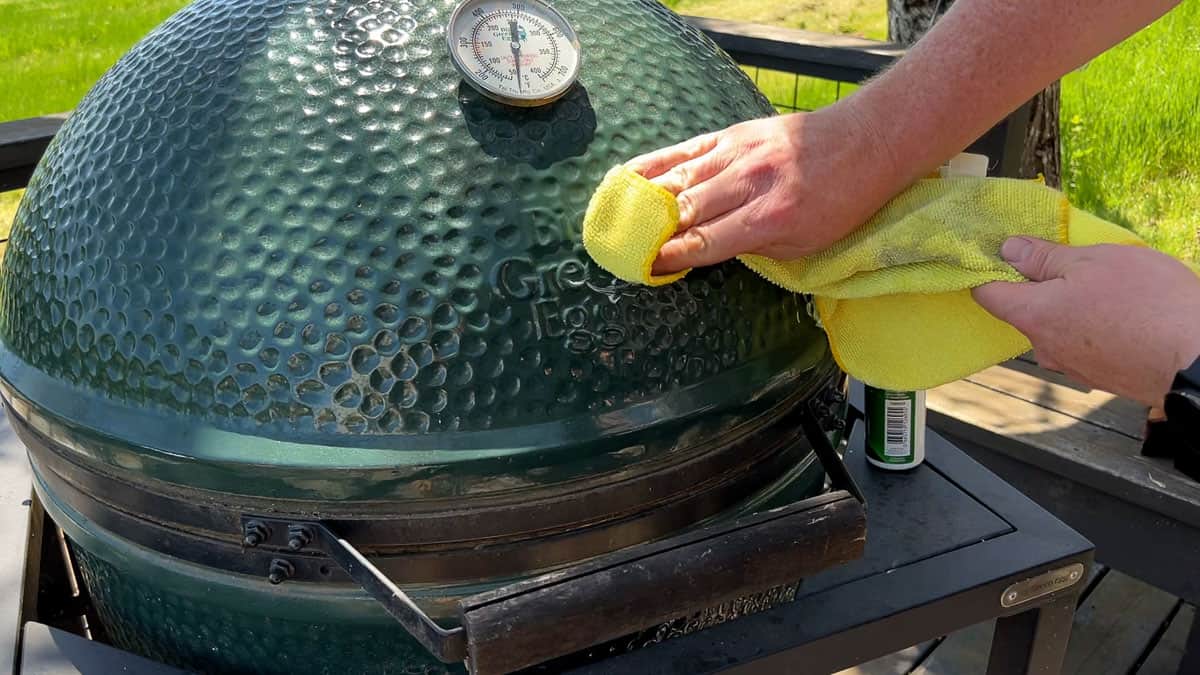
A dirty exterior isn’t just ugly; it can lead to rust over time. Clean the lid and bowl about once a month or as needed. Use a rag with mild dish soap or glass cleaner to restore the glossy finish on porcelain surfaces.
Dry Completely
After wiping, dry the exterior thoroughly with a microfiber cloth. Water spots and lingering moisture speed up corrosion, especially on steel frames. A quick polish adds shine and an extra layer of protection.
Oil and Reassemble the Grill
Season the Grates
Lightly oiling your grates prevents food from sticking, especially when cooking lean meats like chicken or fish. Dip a folded paper towel in vegetable oil, hold it with tongs, and rub it evenly over the dry grates. Use oil sparingly; too much causes dangerous flare-ups.
Reassemble Only When Dry
Wait until every part is completely dry before putting the grill back together. Moisture trapped under grates or inside the bowl leads to rust. Let the grill air-dry fully before covering or firing it up again.
Protect Your Grill with a Cover

Cover Every Single Time
Leaving your grill exposed to the elements is the fastest way to ruin it. Rain, snow, and humidity cause rust within weeks. A high-quality grill cover is non-negotiable. With consistent covering, even budget grills can last six years or more.
Combine Cover and Seasoning for Maximum Protection
A cover shields the grill from the outside, while a seasoned interior defends it from within. Together, they prevent rust, maintain performance, and save you money on replacements.
Troubleshoot Common Grill Problems
Flakes on the Lid Interior
Cause: Smoke and grease deposits, not paint.
Fix: Brush off before grilling and wipe with a soapy cloth after use.
Cement-Like Ash Buildup
Cause: Ash left in damp conditions.
Fix: Empty ash daily and store it in a dry bucket.
Food Sticking to Grates
Cause: Dirty grates or missing oil layer.
Fix: Preheat for 10 to 15 minutes, scrub with a steel brush, and oil lightly if needed.
Rust Formation
Cause: Moisture exposure.
Fix: Dry all parts thoroughly, use a cover, and maintain interior seasoning.
Excessive Flare-Ups
Cause: Too much oil or dripping fat.
Fix: Trim fat from meat, oil grates sparingly, and monitor cooking closely.
Lingering Flavors Between Cooks
Cause: Cross-contamination on grates.
Fix: Deep clean grates with BBQ spray and burn off residues at high heat.
Cleaning Frequency at a Glance
| Component | Frequency | Method |
|---|---|---|
| Cooking Grates | Every use | Scrub with brush; oil if needed |
| Ash Residue | Every use (end of day) | Empty bowl; use One-Touch system |
| Interior Bowl/Lid | Monthly or as needed | Wipe dry debris; preserve seasoning |
| Exterior Surface | Monthly | Clean with soap or glass cleaner |
| Deep Chemical Clean | As needed | Use aerosol foam; 5 to 10 minute dwell time |
Frequently Asked Questions About How to Clean a Charcoal Grill
How often should I clean my charcoal grill?
Clean the cooking grates and empty the ash after every use. Wipe the interior bowl and lid monthly, and deep clean with BBQ spray only when grease buildup is heavy.
Can I clean grill grates with dish soap?
Yes, mild dish soap works well for grates. Apply it with a sponge or steel wool, scrub thoroughly, rinse completely, and dry before reassembling.
What is the white stuff inside my grill lid?
Those flakes are grease and smoke deposits, not peeling paint. They’re non-toxic and brush away easily with a stainless steel brush before grilling.
Should I oil my grill grates after every clean?
Oil grates only when cooking lean meats or when food tends to stick. A thin layer is enough; too much oil causes flare-ups.
Is it safe to use a wire brush on porcelain enamel?
No, wire brushes can scratch porcelain enamel. Use a stainless steel brush only on cooking grates and a soft cloth or mild soap on porcelain lids.
How do I prevent rust on my charcoal grill?
Dry every part thoroughly after cleaning, maintain the interior seasoning, and always cover the grill when not in use.
Key Takeaways for Cleaning a Charcoal Grill Like a Pro
Cleaning a charcoal grill doesn’t have to feel like a punishment. A few minutes of daily maintenance, especially ash removal and grate brushing, prevents the heavy grime that leads to rust and poor performance. Reserve deep cleaning with BBQ spray for when grease truly builds up, and treat the interior bowl like a cast iron skillet by preserving its seasoning. Pair these habits with a quality grill cover, and your grill will deliver smoky, flavorful results for six years or more. Start tonight: empty the ash, brush the grates, and cover up. Your next cook will thank you.