How to Make a Charcoal Grill Hotter
Nothing ruins a good grilling session faster than a charcoal grill that just won’t get hot enough. You’re ready to sear a perfect steak, but the coals are barely glowing, with no sizzle, no crust, and no real flavor. If your grill tops out below 500°F, you’re missing the high-heat cooking your food deserves. The good news? You can fix it. Making a charcoal grill hotter comes down to science, smart setup, and the right fuel choices. With proven techniques, you can push your grill past 1,000°F and achieve restaurant-quality searing.
You’ll learn how to choose the best charcoal, manage vents like a pro, modify your grill setup, and avoid common mistakes that kill heat. Whether you’re using a Weber kettle or a budget model, these strategies work. Let’s turn up the heat.
Maximize Oxygen Flow
:max_bytes(150000):strip_icc()/__opt__aboutcom__coeus__resources__content_migration__serious_eats__seriouseats.com__images__2017__05__seriouseats-grilling-tips-vents-6ad8944a99a1434cb98502f52b21b3e3.png)
Fire needs oxygen, and lots of it, to burn hot. The single most effective way to make a charcoal grill hotter is to open up the airflow. Your grill’s vents act as the master controls for temperature. Most grills have two: one at the bottom and one on the lid. Together, they create a chimney effect that pulls fresh air through the coals and drives combustion.
Open Bottom Vents Fully
The bottom vent feeds oxygen directly to the coals. If it’s closed or blocked, your fire starves. For maximum heat, open the bottom vent all the way. This floods the fire with fresh air, making the coals burn faster and hotter. Never close it completely during cooking, because this suffocates the fire. Even when lowering heat, leave it slightly open.
Keep the charcoal pile at least 1 inch above the vent. If coals or ash block the intake, airflow drops and temperatures plummet. Clear debris before every cook.
Open the Top Vent Completely
The top vent releases hot air and smoke, creating suction that pulls in more oxygen from below. Think of it as the exhaust system. For high heat, open the top vent fully. This maximizes airflow and helps the fire reach its peak temperature.
Once you hit your target heat, you can fine-tune with the top vent. But during preheat and searing, keep it wide open. If your grill has a sliding lid damper, position it so the hole is fully exposed.
Use Both Vents Together
For the hottest fire:
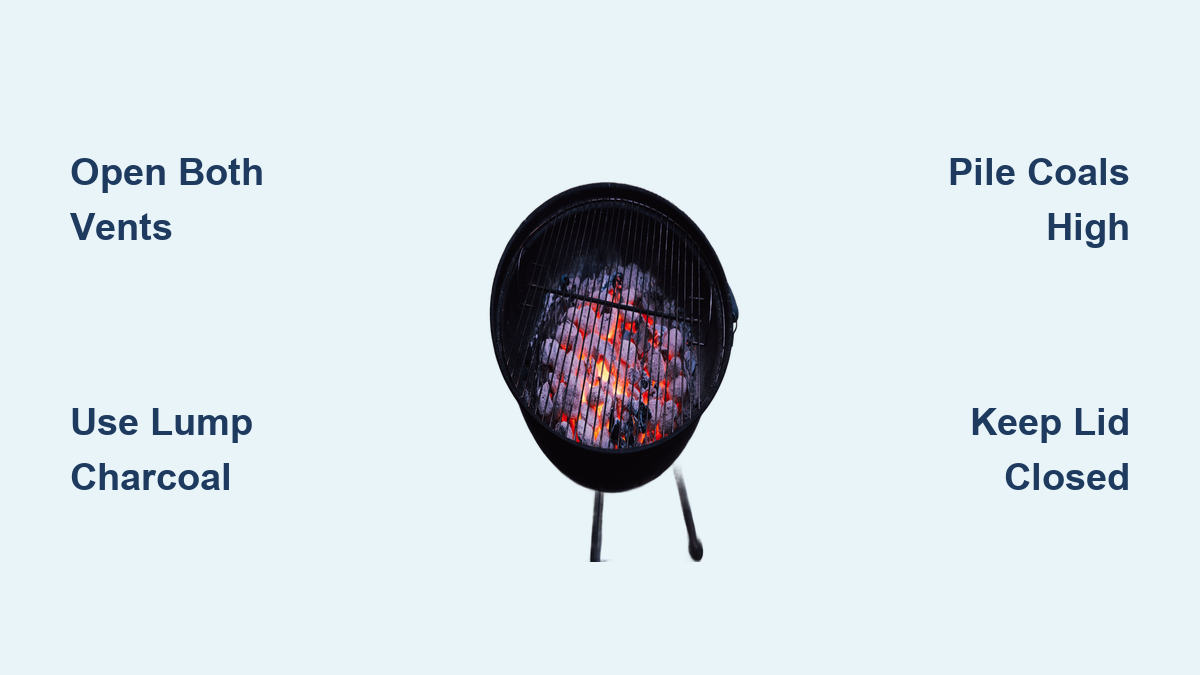
– Open both vents 100%
– Preheat with the lid closed for 10 to 15 minutes
– Monitor grate temperature with a laser thermometer
If heat drops, check for blockages. A clogged vent or ash buildup under the coals can kill airflow fast.
Upgrade Your Cooking Grate
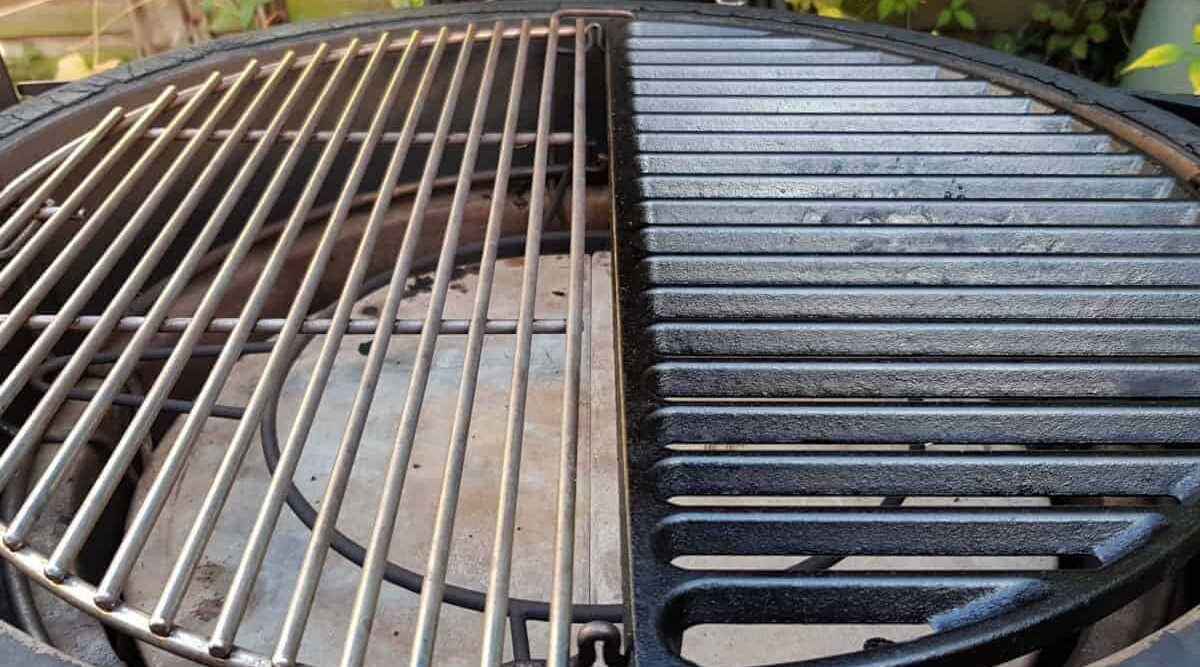
The grate is more than just a shelf. It’s part of the heat transfer system. The material and height make a big difference in how hot your cooking surface gets.
Switch to Cast Iron Grates
Steel grates are common, but they don’t hold heat well. Cast iron grates absorb and retain heat far better, making the cooking surface hotter and more consistent. If your grill allows, swap out steel for cast iron. The difference is immediate: better sear marks, less sticking, and more even cooking.
Clean and season cast iron regularly to prevent rust and maintain performance.
Lower the Grate Height
Heat drops quickly with distance. Every inch between the coals and food reduces temperature. If your grill has adjustable grate levels, set it as low as possible, about 1 inch above the coals. This puts food in the hottest zone, ideal for searing steaks, burgers, or vegetables.
Not all grills allow this. On fixed-grate models, use fire bricks or a charcoal mound to bring the heat source closer.
Choose the Right Charcoal
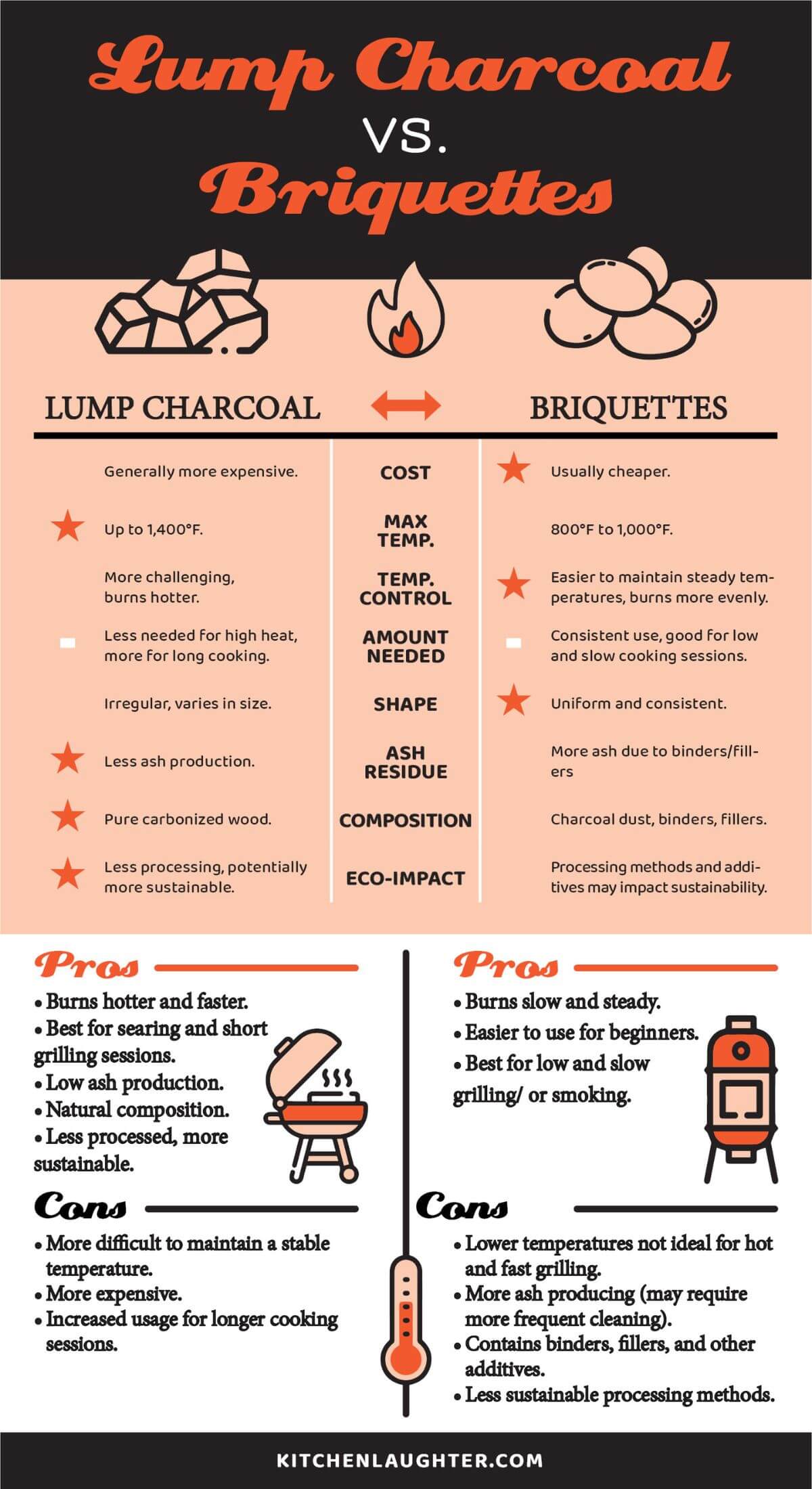
Fuel is the foundation of heat. Not all charcoal is created equal. The type you use can add or subtract hundreds of degrees from your grill’s peak temperature.
Use Lump Charcoal for Maximum Heat
Lump charcoal burns hotter and cleaner than briquettes, often exceeding 1,000°F. Made from pure carbonized wood, it lights fast, burns hot, and produces less ash. It’s the top choice for high-heat grilling.
South American lump charcoal is especially hot-burning, making it ideal for searing. Use a full chimney starter for maximum fuel load. Avoid old or damp charcoal, and store it in a sealed container to keep it dry.
Opt for Kingsford Original Briquettes
If you prefer briquettes, Kingsford Original is the best option for high heat. It burns hotter and more consistently than generic brands. Avoid Match Light briquettes once the fire is lit, because adding them to an active fire can cause flare-ups due to residual lighter fluid.
Never reuse half-burned coals for high-heat sessions. They lack the energy to sustain searing temperatures.
Add Kiln-Dried Wood Chunks
For extra heat and flavor, add dry, kiln-dried wood chunks, not soaked ones. Wet wood cools the fire as it evaporates moisture. Kiln-dried wood lights easily and burns hotter, boosting temperature and adding smoke flavor.
Use small chunks of hickory, oak, or apple. Place them directly on the coals with no soaking required.
Light Charcoal Correctly
How you light the coals matters. A poor start leads to weak heat. The chimney starter is the gold standard for safe, even ignition.
Use a Chimney Starter
Fill the chimney with lump charcoal or briquettes. Place crumpled newspaper or a fire starter cube underneath. Light it, and let the coals burn up.
Critical tip: Don’t wait for 100% ash coverage. If you leave coals in the chimney too long (around 40 minutes), they burn out before hitting the grill. Transfer them when 1/2 to 2/3 of the pile is glowing red and the top is mostly ashed over. This preserves fuel for sustained heat.
Transfer and Fan the Coals
Pour hot coals into the grill and pile them high in the center. Use tongs to shape a mound. Then, gently fan the coals with a hand fan, bamboo tool, or electric fan. This injects oxygen and kicks the fire into high gear.
Avoid lighter fluid because it’s unsafe and leaves chemical flavors. A butane torch works for in-grill ignition if needed.
Build a Hotter Fire Structure
:max_bytes(150000):strip_icc()/__opt__aboutcom__coeus__resources__content_migration__serious_eats__seriouseats.com__images__2016__04__20160415-grilling-vicky-wasik-coal-placement-text1-a697d33865774dbd943807657558b3e0.jpg)
How you arrange the coals can make or break your heat output. Spread-out coals cool fast. Concentrated coals burn hotter and longer.
Pile Coals in a Tall Mound
The mound method brings the heat source closer to the grate. Stack coals 4 to 6 inches high in the center of the grill. This creates a thermal core that radiates intense heat upward.
Place food directly over the mound for searing. Use the outer edges for indirect cooking if needed.
Use Charcoal Baskets
Weber-style charcoal baskets help concentrate heat on one side. Fill both baskets with lit coals and push them together. This creates a powerful hot zone while leaving the other side cool for indirect cooking.
Baskets also make cleanup easier and allow you to reuse partially burned coals.
Try the Minion Method for Sustained Heat
For long cooks that still need high heat, add fresh unlit briquettes on top of lit ones. The burning coals below will ignite the new layer in 10 to 15 minutes. This keeps the fire strong without spiking temperatures.
Add coals to the leeward side (away from wind) to avoid flare-ups.
Modify the Grill Setup

Sometimes, stock parts limit performance. Smart modifications can push your grill beyond its factory limits.
Add Fire Bricks
Fire bricks insulate and reflect heat. Stack them around the coal pile to reduce heat loss and create a tighter, hotter chamber. You can also use them to raise the coal bed closer to the grate.
Bricks also protect the kettle from intense heat and extend grill life.
Use a Chimney for Instant Searing
For ultra-fast, extreme-heat searing, place a small cooking grate on top of a lit chimney starter. Drop steaks or chops directly on it. Temperatures can exceed 1,200°F, which is perfect for 30-second sears.
Use heat-resistant gloves and tongs. This method is fast and intense, so monitor closely.
Lift the Lid Strategically
While keeping the lid closed retains heat, slightly lifting it on one side can boost airflow and temperature during long cooks. This cracked-lid method increases oxygen intake without fully exposing the food.
Use it sparingly, only when heat is dropping and you need a quick boost.
Manage Heat During Cooking
Even the hottest start can fade. Smart cooking habits keep temperatures high and safe.
Keep the Lid Closed
Every time you open the lid, heat escapes fast, up to 100°F in seconds. Resist the urge to peek. Only open to flip or move food. Use long-handled tools to minimize lid time.
Preheat with the lid closed for 10 to 15 minutes after adding coals.
Refuel Without Flame Spikes
To maintain heat:
– Add unlit Kingsford Original briquettes on top of glowing coals
– Or, pour in a fresh chimney of hot coals for an instant boost
Avoid adding Match Light briquettes to an active fire. Never use lighter fluid mid-cook.
Handle Flare-Ups Safely
Flare-ups happen when fat hits fire. Never use water, because it causes ash to splatter and can create steam explosions.
Instead:
– Move food to the cool side
– Close the lid to cut oxygen
– Wait 30 seconds for flames to die
Return food once flames subside.
Try Reverse Searing
For thick cuts like ribeye or tomahawk:
1. Cook indirectly at 225°F until internal temp reaches 120°F
2. Move to direct heat over glowing lump charcoal
3. Sear 1 to 2 minutes per side at 1,000°F or higher
This method locks in juices and creates a perfect crust.
Fix Common Heat Problems
Even with the right setup, issues can arise. Here’s how to troubleshoot.
Grill Won’t Stay Hot
Symptoms: Coals die out fast, especially after closing the lid.
Causes:
– Vents blocked by ash or charcoal
– Cheap grill with poor airflow
– Damp or old charcoal
Fix: Clean vents, use fresh lump charcoal, open all dampers, and fan the fire.
Low Ambient Temperatures
Cold weather steals heat. Preheat longer. Use a lid cover or windbreak. Keep extra coals on hand.
High Altitude Grilling
Above 5,000 feet, lower oxygen reduces combustion. Open all vents fully and keep the grill clean. Use more charcoal to compensate.
Inaccurate Thermometers
Lid thermometers often read low. Use a laser thermometer to check grate surface temperature. Or, use a digital probe like iGrill for food temperature.
Avoid aluminum drip pans, because they block airflow. Use sparingly and position carefully.
Frequently Asked Questions About Making a Charcoal Grill Hotter
What is the hottest a charcoal grill can get?
A charcoal grill can exceed 1,000°F on the cooking surface when using lump charcoal with proper airflow. The fuel core itself can reach 2,000°F to 3,000°F during combustion.
Is lump charcoal hotter than briquettes?
Yes. Lump charcoal burns hotter and cleaner than briquettes, often surpassing 1,000°F. Briquettes burn more evenly but generally at lower temperatures.
How long should coals burn before grilling?
Transfer coals from the chimney starter when 1/2 to 2/3 of the pile is glowing red and the top is mostly ashed over. Waiting for full ash coverage burns up fuel before it reaches the grill.
Why does my charcoal grill not get hot enough?
Common causes include blocked vents, damp or old charcoal, poor airflow design on cheap grills, or coals spread too thin. Clean vents, use fresh lump charcoal, and pile coals high in the center.
Can I add charcoal to an already lit grill?
Yes. Add unlit Kingsford Original briquettes on top of lit coals, or pour in a fresh chimney of hot coals. Never add Match Light briquettes to an active fire.
Does closing the lid make a charcoal grill hotter?
Yes, when vents remain open. Closing the lid traps heat and creates a convection effect that raises cooking surface temperature. Closing vents, however, suffocates the fire.
Key Takeaways for Achieving Maximum Grill Heat
Making a charcoal grill hotter comes down to three core factors: oxygen, fuel, and setup. Open both vents fully, use lump charcoal or Kingsford Original briquettes, and pile coals high in the center. Light with a chimney starter and transfer early, before coals burn out. Switch to cast iron grates and lower them to about 1 inch above the coals when possible.
Keep the lid closed during cooking, refuel with unlit briquettes or fresh chimney coals, and manage flare-ups by moving food to a cool zone. Clean your grill after each use, store charcoal in a dry place, and monitor heat with a laser thermometer for accuracy. Apply these techniques consistently, and you’ll hit 500°F to 1,000°F on every cook, searing like a professional.