
How to Use a Smoke Tube on a Pellet Grill
If your pellet grill produces meat that tastes more like roasted than smoked, the problem is not your technique. It is your grill. Pellet grills generate rich smoke during startup, but once temperatures climb above 250°F, smoke output drops to a trickle. A smoke tube solves this problem by producing 2 to 5 hours of steady smoke, independent of your grill’s temperature.
Adding a smoke tube to your pellet grill setup is one of the cheapest upgrades you can make. For around $15 to $20, you can achieve the deep flavor and smoke ring typically reserved for offset smokers. This guide covers tube selection, lighting methods, pellet choices, placement strategies, and troubleshooting tips to help you get the most out of every cook.
Choose the Right Smoke Tube for Your Cook

Pick a Stable Hexagonal or Octagonal Shape
Flat-sided tubes outperform round ones because they stay put on your grates. Rolling tubes lose contact and disrupt airflow. Stainless steel construction with evenly spaced perforations along the entire length delivers the most consistent smoke release.
Match Tube Size to Cook Duration
A 6-inch tube burns for 2 to 3 hours, making it ideal for poultry, fish, or quick smokes. A 12-inch tube runs 4 to 5 hours, which suits brisket, pork shoulder, and ribs. Choose based on how long you plan to cook, not how much meat you have.
Use Premium Hardwood Pellets in the Tube
Avoid Cheap, Sawdust-Based Pellets
Generic pellets from big-box stores tend to be fine, uniform, and prone to crumbling. They burn too fast, produce excess ash, and generate thin smoke that fades quickly. These pellets often fail to sustain a smolder inside the tube.
Choose Dense, High-Grade Hardwood Pellets
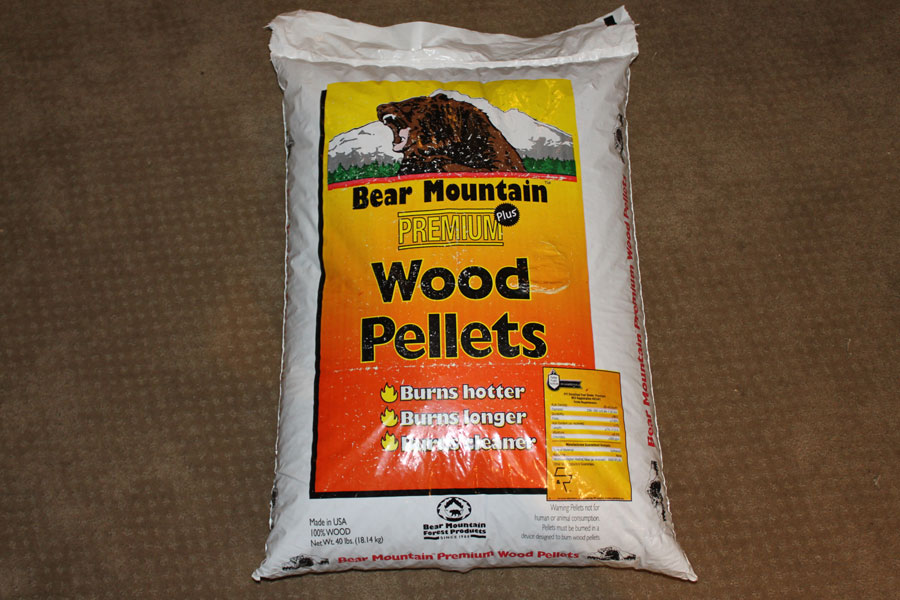
Premium pellets feature irregular shapes, varied color, and high density. They resist crumbling, burn slowly, and produce thick, flavorful smoke. Brands like Knotty Wood and Bear Mountain are known for these qualities.
Save Money with Strategic Fuel Use
You do not need premium pellets in your hopper. Use budget pellets for heat and reserve premium pellets exclusively for the smoke tube. This approach maximizes flavor without inflating your fuel costs.
Fill the Tube for Maximum Burn Time
Pack Pellets Tightly from End to End
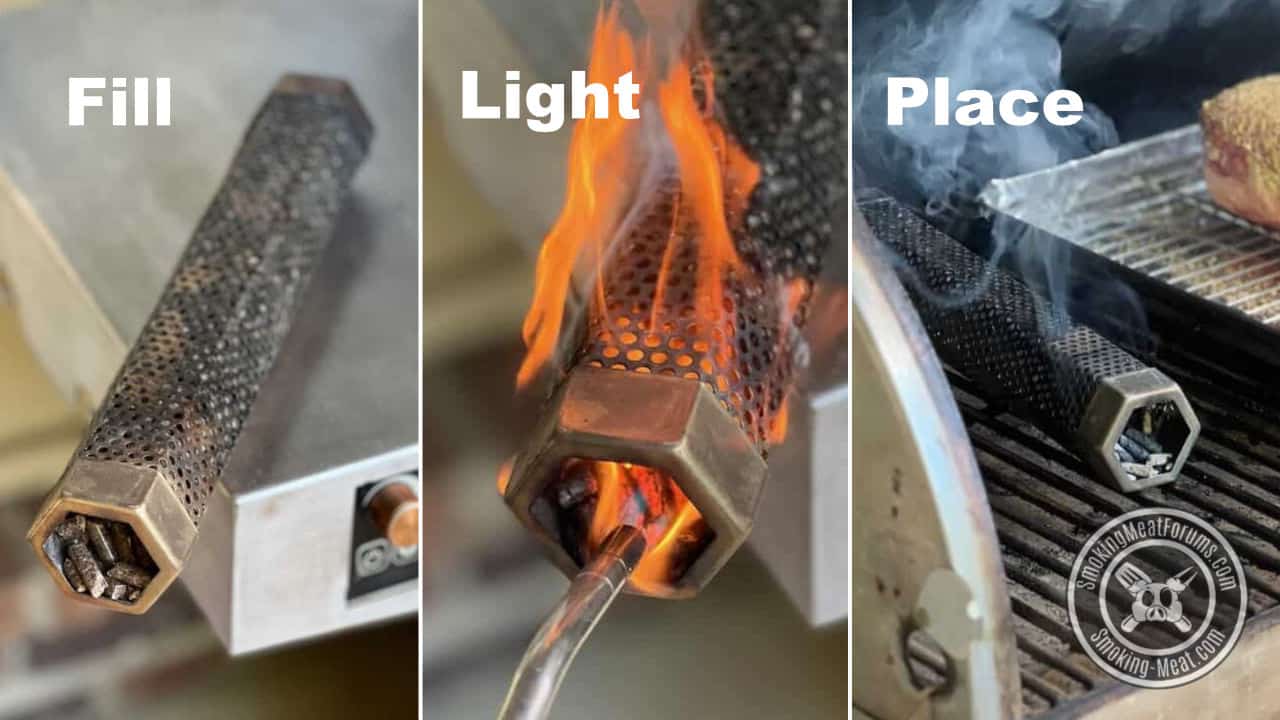
Loose pellets create air gaps that interrupt smoldering. Fill the tube completely and tamp the pellets down with a rod or spoon. Tight packing sustains combustion longer and burns more evenly.
Adjust Fill for Short Cooks
For cooks under 2 hours, a partial fill works fine. For anything longer, a full tube is standard practice.
Layer Pellets and Chips for Complex Flavor
Optional layering lets you blend wood flavors. Try a base of apple pellets, a middle layer of hickory chips, and a top layer of cherry pellets. Always finish with pellets on top for easier ignition.
Light the Smoke Tube the Right Way
Use a Propane or Butane Torch
Standard lighters cannot ignite compressed hardwood pellets. A plumber’s torch, MAP gas torch, or Bernzomatic delivers the intense heat needed. Crème brûlée torches work but require more time.
Apply Flame for 45 to 120 Seconds
Hold the torch to one end of the tube and rotate it around the edges. Your goal is to ignite the lower pellets and create a deep coal bed, not just scorch the surface.
Let It Burn Open for 5 to 7 Minutes
After initial torching, let the tube burn with visible flame for 5 to 7 minutes. This step establishes a self-sustaining smolder. Skipping it is the most common reason tubes go out prematurely.
Blow Out the Flame to Begin Smoldering
Once coals are glowing deep inside, gently blow out the open flame. The tube should continue producing steady smoke on its own.
Position the Tube for Maximum Airflow
Place It Near a Vent or Air Inlet
Oxygen keeps the smolder alive. Position the tube next to the probe hole, grease drain, or air vent. On RecTec grills, place it left of the probe hole. On Masterbuilt electric smokers, position it by the wood chip chute and keep the chute open.
Keep It Away from the Temperature Probe
Radiant heat from the tube can distort probe readings. Push the tube toward the back or side of the grill with the lit end facing away from the probe.
Lay It Horizontally on the Cooking Grate
Once lit, lay the tube flat across the grate. Horizontal placement maximizes smoke exposure to your food. Vertical orientation is only useful during the initial lighting phase.
Skip the Water Pan
Moisture from a water pan can extinguish the smolder. Leave the water pan dry or remove it entirely when using a smoke tube.
Maintain Smoke Output Throughout the Cook
Rotate the Tube Midway Through
Flipping or repositioning the tube halfway through the cook exposes unburned pellets to fresh oxygen. This prevents one-sided burnout and keeps smoke flowing evenly.
Watch for Smoke Drop-Off
If smoke weakens after 2 to 3 hours, check for these issues:
– The tube may be in a dead air zone
– Pellets may be damp or low quality
– One end may have burned out completely
Reposition the tube or add fresh pellets as needed.
Refuel for Extended Cooks
For cooks lasting more than 5 hours, refill the tube once the first batch has fully smoldered. Pre-light a second tube so you can swap it in without losing smoke.
Troubleshoot Common Smoke Tube Problems
Tube Goes Out After Lighting
Damp pellets are a frequent cause. Microwave pellets for 1 to 2 minutes before loading them into the tube.
Insufficient burn-in time also causes outages. Torch for at least 45 seconds and let the flame burn for 5 to 7 minutes before blowing it out.
Poor airflow can starve the smolder. Move the tube closer to a vent or open hole.
Loose packing disrupts combustion. Compress pellets tightly before lighting.
Weak or No Smoke Output
Low-quality pellets often produce thin smoke. Switch to dense, premium hardwood pellets for richer output.
Clogged perforations restrict airflow. Clean the tube after every use with a brush or compressed air.
Boost Flavor with Pro Techniques
Start Smoking Cold and Wet
Apply the smoke tube at the very beginning of your cook. Smoke adheres best to raw, moist surfaces. Once a bark forms, absorption drops significantly.
Mix Wood Flavors for Layered Taste
Combining pellet types creates complex profiles:
– Apple + Hickory delivers sweet and bold flavor for pork
– Cherry + Oak adds fruity depth with structure for beef
– Pecan + Maple offers nutty, mild aroma for poultry
Use the Tube for Cold Smoking
Turn off the grill’s heat and use the smoke tube for cold smoking under 100°F. This method works well for:
– Cheese such as cheddar, gouda, and mozzarella
– Chocolate or caramel
– Fish jerky, dried tomatoes, or nuts
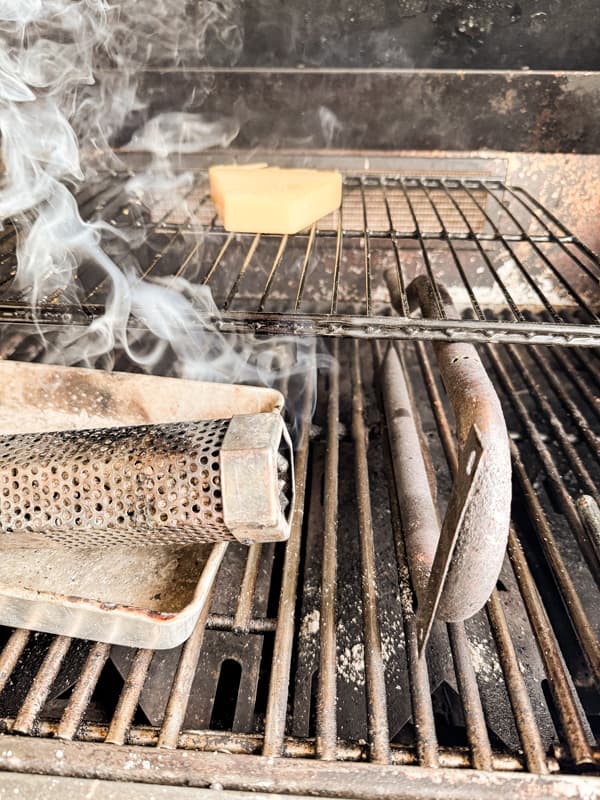
Place the lit tube in the grill with no heat source running.
Clean and Store the Tube for Long-Term Use
Remove Ash After Every Cook
Ash buildup clogs perforations and restricts airflow. Use the included cleaning brush or compressed air to clear all holes while the tube is cool.
Store in a Dry Location
Keep the tube in a sealed container or zip bag to prevent rust and moisture contamination. A dry tube ensures reliable ignition next time.
Reuse Unburned Pellets
After cooking, the far end of the tube may still contain unlit pellets. Once cooled, collect and reuse them, especially if you invested in premium blends.
Frequently Asked Questions About Smoke Tubes on Pellet Grills
Do smoke tubes really make a difference on pellet grills?
Yes. Pellet grills produce significant smoke only during startup or pellet drops. At cooking temperatures above 250°F, smoke output drops sharply. A smoke tube delivers continuous smoke for 2 to 5 hours, creating deeper flavor and a visible smoke ring.
How long does a smoke tube last?
A 6-inch tube burns for 2 to 3 hours. A 12-inch tube lasts 4 to 5 hours when fully packed with dense pellets.
Can I use wood chips instead of pellets?
Yes, but chips alone may smolder inconsistently. Layering chips between pellet layers works best. Always top the tube with pellets for easier ignition.
Where should I place the smoke tube in my grill?
Place it near an air inlet, vent, probe hole, or grease drain. Avoid dead zones with poor circulation. Keep it away from the temperature probe to prevent inaccurate readings.
Why does my smoke tube keep going out?
Common causes include damp pellets, insufficient burn-in time, poor airflow, or loose packing. Dry your pellets, torch for 45 to 120 seconds, let the flame burn for 5 to 7 minutes, and position the tube near a vent.
Can I use a smoke tube for cold smoking?
Yes. Smoke tubes generate smoke without significantly raising grill temperature. They work well for cold smoking cheese, chocolate, fish jerky, and nuts at temperatures under 100°F.
Key Takeaways for Getting the Most from Your Smoke Tube
A smoke tube is the simplest way to transform a pellet grill from a convenient cooker into a true smoke machine. Choose a hexagonal stainless steel tube, fill it with dense hardwood pellets, and light it with a torch for at least 45 seconds before letting it burn openly for 5 to 7 minutes. Position it near airflow, away from your temperature probe, and rotate it halfway through the cook for even smoke distribution.
Your next step is simple: pick up a 12-inch smoke tube and a bag of premium pellets, and try it on your next brisket or pork shoulder. You will see a deeper smoke ring and taste the difference from the very first bite.


