
How to Smoke on a Grill: Quick Steps
You’ve got a grill, and now you can turn it into a smoker that delivers tender, smoky barbecue without buying specialty equipment. Learning how to smoke on a grill is practical, accessible, and wildly effective when you follow proven techniques. Whether you own a charcoal kettle or a standard gas grill, the right setup transforms your backyard into a pit-smoker’s dream.
Smoking works by surrounding meat with aromatic smoke at low heat, typically between 225°F and 250°F, over several hours. This gentle process breaks down tough collagen in brisket and pork shoulder, turning them into juicy, pull-apart masterpieces. Unlike grilling over direct flame, smoking relies on indirect heat so your food cooks slowly without charring. In this guide, you’ll learn how to set up both gas and charcoal grills, choose the right wood, maintain clean smoke, and nail the timing for flavorful results every time.
Set Up Indirect Heat Zones
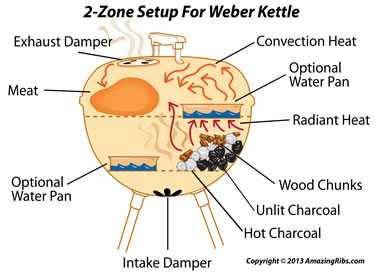
To smoke on any grill, you must create an area where food cooks away from direct flame or hot coals. This indirect heat zone prevents burning and allows for even, slow cooking.
Charcoal: One-Sided Coal Bed
Dump all lit charcoal onto one side of the grill. Place the meat on the opposite, empty side. This creates a hot zone over the coals and a cool, indirect cooking zone for your food.
- Use a full chimney starter (about 80 briquettes) for long cooks.
- Position the lid vent directly over the meat to pull smoke across the food.
- Add wood chunks on top of the coals for flavor.
Gas: Turn Off Burners Under Food
Turn off one or more burners depending on your grill layout. For 3-burner grills, light only the left and right and leave the center off. For 2-burner grills, light only one side.
Place the food over the unlit burner(s). Put your smoke source, such as a foil packet or smoker box, over the active burner to generate smoke.
Why Indirect Heat Matters
Direct heat sears and chars, which works great for steaks but ruins long smokes. Indirect heat gently raises the internal temperature of the meat, breaking down collagen without drying it out. It’s essential for ribs, brisket, whole chickens, and pork butts.
Choose the Right Wood for Flavor
The wood you use defines your barbecue’s taste. Match the wood to your meat to avoid overpowering or under-seasoning the final dish.
Best Wood Pairings by Meat
| Meat Type | Recommended Woods |
|---|---|
| Beef (Brisket, Ribs) | Hickory, Oak, Mesquite, Pecan |
| Pork (Shoulder, Ribs) | Apple, Cherry, Hickory, Pecan |
| Poultry (Chicken, Turkey) | Apple, Cherry, Alder |
| Fish (Salmon, Trout) | Alder, Apple, Cherry |
| Cheese, Nuts | Pellets (oak, apple), mild fruit woods |
Wood Forms: Chunks, Chips, or Pellets
Wood Chunks (Charcoal Grills): Sized like an egg (2–4 oz), chunks burn slow and steady. Place them directly on hot coals for long cooks.
Wood Chips (Gas Grills): Small, dry chips work best. Use them in foil packets or smoker boxes over active burners. Replace every 45–60 minutes for continuous smoke.
Pellets (Cold Smoking or Tube Smokers): Compressed sawdust burns clean. Use them in a pellet tube for cold smoking cheese or salmon.
Never Use These Woods
Avoid pine, cedar (unless for planking), treated lumber, or any wood not labeled for cooking. These release toxic fumes and create bitter, acrid flavors.
Use Dry Wood, Not Soaked
Soaking wood chips is a common myth. Dry wood produces better smoke and cleaner flavor.
- Dry chips ignite faster and produce clean, thin blue smoke, the kind that adds flavor without bitterness.
- Soaked chips steam before smoking, creating thick white smoke that coats meat with a harsh, chemical-like taste.
Pro Tip: For gas grills, always use dry chips in foil packets. For charcoal, dry chunks on the fire work best.
If you’re worried about wood burning too fast, use larger chunks or partially close the grill vents to reduce oxygen flow rather than adding water.
Build a Charcoal Snake for Hands-Off Smoking
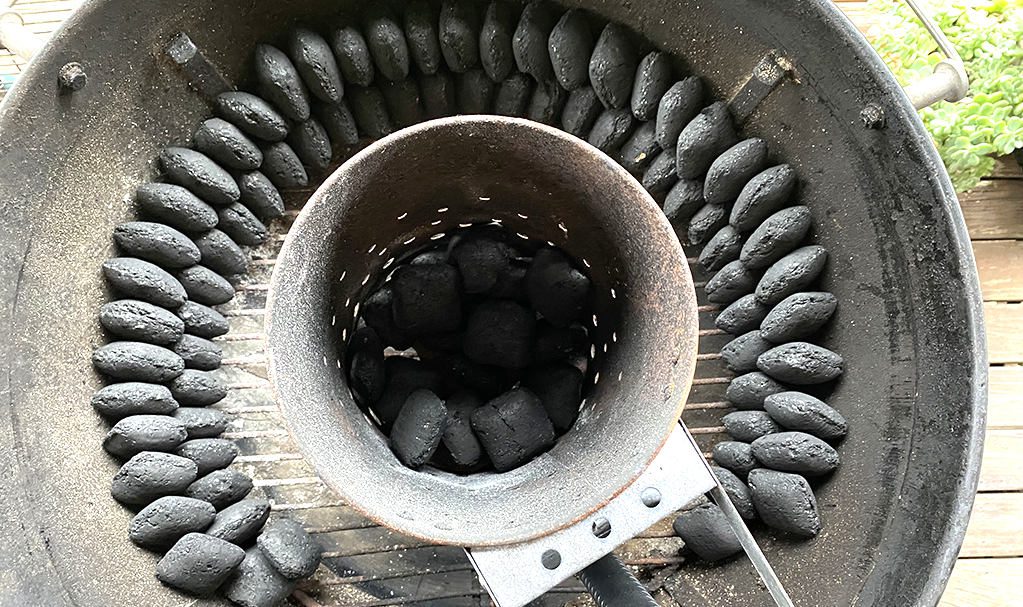
Want to smoke for 6+ hours with minimal babysitting? The Charcoal Snake Method turns your kettle grill into a self-feeding smoker.
How to Build the Snake
- Arrange charcoal briquettes in a C-shaped ring around the inner wall of the grill.
- Stack a second layer on top (2 high x 2 wide).
- Nestle wood chunks every few inches along the ring.
- Fill a chimney starter 1/3 full, light it, and pour hot coals onto one end of the snake.
The fire slowly travels around the ring, igniting briquettes and wood in sequence. You won’t need to open the lid or add fuel for most of the cook.
Snake Size by Cook Time
| Meat | Snake Length | Briquettes (per layer) |
|---|---|---|
| Ribs (4–5 hrs) | Half ring (50%) | ~40 |
| Pork Butt (6–7 hrs) | 2/3 ring | ~60 |
| Brisket (8–9 hrs) | 3/4 ring | ~75+ |
Note: Brisket may need a mid-cook coal addition when it hits 180°F during the stall phase.
Smoke on a Gas Grill with Foil Packets

Gas grills offer precise heat control, perfect for beginners. The challenge is adding smoke since gas burns clean and flavorless.
Make a DIY Foil Packet
- Layer two sheets of heavy-duty aluminum foil (12″x18″).
- Add 2 cups of dry wood chips in the center.
- Fold long sides up and crimp, then roll ends to seal.
- Poke 6–8 holes in the top with a knife or skewer.
Place the packet directly over the lit burner. It will start smoking within 5–10 minutes.
How Long Does It Last?
- Foil packets burn for 45 minutes to 1 hour.
- Replace every hour if you want continuous smoke, though meat stops absorbing smoke after 2–3 hours.
- For longer cooks, keep 2–3 pre-made packets ready.
Alternative: Use a metal smoker box, which is reusable and more durable than foil.
Maintain Clean, Blue Smoke
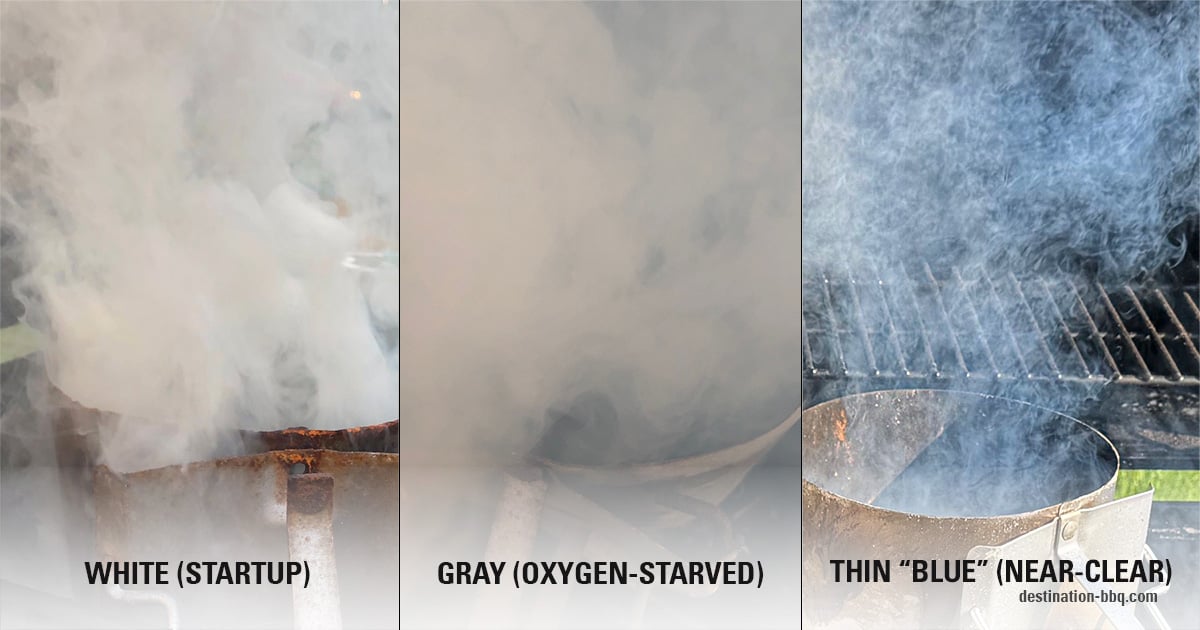
Smoke color tells you everything about flavor quality.
Clean Smoke Means Good Flavor
- Thin, pale blue, almost invisible.
- Produced by dry wood, good airflow, and complete combustion.
- Smells sweet and woodsy.
Dirty Smoke Means Bitter Meat
- Thick, white or gray, heavy.
- Comes from wet wood, poor airflow, or smoldering.
- Smells acrid and leaves a bitter aftertaste.
How to Fix Dirty Smoke
- Open the vents (charcoal) to increase oxygen.
- Ensure wood is dry with no soaking.
- Wait 10–15 minutes after lighting before adding meat so the initial thick smoke clears.
Rule of thumb: If you can see thick smoke pouring out, don’t put the meat in yet.
Control Temperature Like a Pro
Stable temperatures are critical. Fluctuations cause uneven cooking and dry meat.
Charcoal: Use the Vents
- Top and bottom vents control airflow and heat.
- Open vents mean hotter temperatures (more oxygen).
- Closed vents mean cooler temperatures (less oxygen).
- Adjust incrementally since small changes make a big difference.
Place a water pan on the grill over the indirect zone to stabilize temperature and add moisture.
Gas: Adjust Burner Knobs
- Turn the lit burner to low or medium-low.
- Use the dome thermometer to monitor ambient temperature.
- Make small adjustments since gas responds slowly.
Pro Tip: Place an oven thermometer near the meat for accurate readings. Grill thermometers can be off by 25°F or more.
Follow the 2–3 Hour Smoke Rule

Meat only absorbs smoke flavor during the first part of the cook.
- Smoke absorption stops at roughly 140°F–160°F, when the meat’s surface dries and forms a bark.
- After that, adding wood won’t increase flavor, only prolong cook time.
Save your wood: No need to refill chips or chunks after 3 hours unless you need heat.
Monitor Internal Temperatures
Guessing doesn’t win prizes. Use a meat thermometer to know when your food is done.
Key Doneness Temperatures
| Meat | Target Internal Temp |
|---|---|
| Steaks, Chops | 145°F (medium) |
| Whole Chicken | 165°F (thickest part) |
| Pork Shoulder (Pulled) | 203°F–205°F |
| Brisket (Sliced or Pulled) | 190°F–205°F |
| Fish (Salmon) | 125°F–130°F |
Never rely on color or time alone. Every cook turns out different.
Rest Meat Before Slicing
Resting is non-negotiable for juicy results.
- Small cuts like chops and fillets rest 5–10 minutes, tented with foil.
- Large cuts like brisket and pork butt rest 30 minutes to 2 hours.
Resting allows juices to reabsorb into the meat. Cut too soon and all that moisture runs out onto your cutting board.
Faux Cambro for Extended Rest
For competition-style tenderness:
- Wrap meat in foil, then in a towel.
- Place in an empty cooler.
- Rest for 1–2 hours.
This keeps meat hot and lets connective tissues fully relax.
Sauce at the End
Applying sauce too early leads to burning, especially with sugar-heavy BBQ sauces.
- Add sauce in the last 15 minutes of cooking.
- Use a brush to coat evenly.
- For sticky glaze, open the lid and let it caramelize.
Tip: Serve extra sauce on the side so people can choose their flavor level.
Try Regional Styles on Your Grill

You can replicate famous barbecue styles with simple tweaks.
Texas-Style Brisket
- Wood: Oak, Pecan, or Hickory.
- Rub: Coarse salt and black pepper (Dalmatian rub).
- Sauce: Served on the side, if at all.
- Smoke temp: 225°F for 8–12 hours.
Memphis-Style Pork Ribs
- Wood: Apple, Cherry, Hickory.
- Rub: Brown sugar, paprika, garlic, chili powder.
- Sauce: Tomato- or vinegar-based, applied at the end.
- Cook: 225°F for 5–6 hours.
Carolina Pulled Pork
- Wood: Hickory or Oak.
- Meat: Whole pork shoulder (8–10 lbs).
- Smoke: 225°F for 1.5 hours per pound.
- Finish: Shred and mix with vinegar-based sauce.
Troubleshoot Common Problems
Lid Lifting Too Often
Every time you open the lid:
- Heat drops 25°F–50°F.
- Smoke escapes.
- Cook time increases.
Use a thermometer and resist the urge. Trust the process.
Grill Runs Too Hot
- Charcoal: Close bottom and top vents slightly.
- Gas: Turn down the burner.
- Move meat further from the heat source.
Grill Isn’t Hot Enough
- Charcoal: Open vents or add pre-lit coals.
- Gas: Turn up the burner slightly.
- Check for wind and use a wind shield if needed.
Cold Smoke for Cheese and Salmon
Cold smoking adds flavor without cooking, perfect for cheeses, nuts, or cured salmon.
How to Cold Smoke on a Grill
- Use a pellet tube smoker (stainless steel tube filled with pellets).
- Light one end with a torch until it glows, then blow out the flame.
- Place in the grill with the food.
- Keep grill temp below 80°F, best done in cool weather.
Ideal for: Cheddar, gouda, salmon fillets, almonds.
Clean and Maintain After Smoking
A dirty grill ruins your next cook.
Post-Smoke Cleanup
- Scrape grates while warm.
- Empty ash tray (charcoal).
- Remove water pan and discard liquid.
- Wipe interior if greasy.
Clean grates ensure better heat transfer and prevent off-flavors.
Frequently Asked Questions About Smoking on a Grill
Can you smoke meat on a regular gas grill?
Yes, you can smoke on a gas grill by setting up a two-zone fire. Turn off the burners on one side and place wood chips in a foil packet or smoker box over the lit burner. This creates indirect heat and smoke for low-and-slow cooking.
What temperature should you smoke at on a grill?
The ideal smoking temperature is between 225°F and 250°F. This range allows meat to cook slowly, break down collagen, and absorb smoke flavor without drying out or burning.
How long does smoke flavor take to penetrate meat?
Meat absorbs smoke flavor during the first 2–3 hours of cooking. After the internal temperature reaches roughly 140°F–160°F and the bark forms, the surface stops taking on additional smoke.
Should you soak wood chips before smoking?
No, dry wood produces better results. Soaked chips steam before smoking, creating thick white smoke that tastes bitter and acrid. Dry chips ignite faster and produce clean, thin blue smoke.
What is the charcoal snake method?
The charcoal snake is a hands-off smoking technique where briquettes are arranged in a C-shaped ring around the grill’s perimeter. Wood chunks are nestled along the ring, and lit coals are poured onto one end. The fire slowly travels around the ring, maintaining steady heat for 6+ hours without refueling.
Can you cold smoke on a grill?
Yes, you can cold smoke on a grill using a pellet tube smoker. Keep the grill temperature below 80°F, which is easiest in cool weather. This method works well for cheese, nuts, and cured salmon.
Key Takeaways for Smoking on a Grill
Mastering how to smoke on a grill comes down to three essentials: indirect heat, dry wood, and patience. Set up a two-zone fire on either charcoal or gas, pair your wood to the meat, and maintain clean blue smoke at 225°F–250°F. Remember that smoke absorption stops after 2–3 hours, so don’t waste fuel chasing flavor that won’t stick.
Start with a forgiving cut like pork shoulder or ribs for your first attempt. Use a reliable meat thermometer, resist the urge to peek, and always rest the meat before slicing. With these techniques locked in, your grill becomes a full-time smoker capable of competition-worthy barbecue.
Fire up the grill, add your wood, and start smoking like a pro.