Fix Weber Grill No Gas Flow
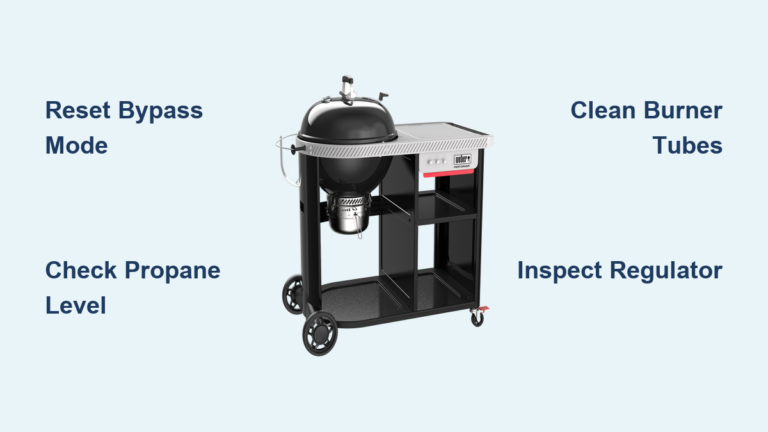
You turn the knob, press the igniter, and… nothing. No flame. No heat. Your Weber grill isn’t getting gas, and dinner’s on hold. If your grill lights weakly or not at all, especially after changing propane tanks, you’re likely dealing with a safety-triggered gas restriction, not a broken grill. This is one of the most common issues Weber owners face: no gas flow due to the regulator’s built-in safety device.
This federally mandated feature, active in all Weber propane grills made since 1995, shuts down gas flow if it detects a sudden pressure surge, like what happens when you open the tank valve too fast. The result? Your grill enters bypass mode, allowing only about 10% of normal gas flow. That means no ignition or barely warm burners, even on “High.” But here’s the good news: in most cases, this isn’t a hardware failure. It’s a simple fix using the correct reset procedure.
In this guide, you’ll learn how to diagnose, reset, and restore full gas flow to your Weber grill. We’ll cover the exact lighting sequence to prevent bypass mode, how to perform a full regulator reset, and what to do if the problem persists, pointing to deeper issues like clogged burners or faulty manifolds. You’ll also discover cold-weather tips, leak-testing steps, and when to contact Weber support. Let’s get your grill back to searing steaks in under 15 minutes.
Decode the Safety Shutoff

What Triggers Gas Lockout
Your Weber grill’s gas isn’t truly “off.” It’s restricted by a built-in safety device inside the regulator. This Overfill Protection Device (OPD) activates when it senses a rapid pressure rise, mimicking a gas leak. Opening the propane tank valve too quickly is the most common trigger. When that happens, the regulator clamps down, limiting gas flow to 10% of normal. That’s why your grill may click but not light, or produce only tiny flames that won’t heat up.
This isn’t a defect. It’s required by federal law for all propane regulators since 1995. But it means your lighting routine matters. Even a perfectly good tank and grill can fail to ignite if you skip the pressure-equalization step.
Bypass Mode vs Real Blockage
Not all no-gas issues are the same. Bypass mode usually follows a tank swap or sudden valve opening. The grill might make a faint hiss, but no flame forms. If you’ve ever changed tanks and lit immediately, you’ve probably triggered it.
True gas blockages show different signs. You might get partial flames, where only half the burner lights, or no sound at all. This points to physical obstructions like spider webs in burner tubes or internal manifold clogs. Bypass mode affects total flow. Blockages affect distribution.
One key test: if the grill works with a small 1 lb propane canister but not a 20 lb tank, the issue is likely regulator-related, not internal. That tells you the safety device is tripped or the hose/regulator assembly is faulty.
Follow the Correct Lighting Sequence
Open Lid, All Knobs Off
Before touching the propane tank, open the grill lid and ensure all control knobs are turned off. This is critical. An enclosed space with gas buildup could lead to a flash fire if ignited. Weber requires this step for safe startup. It also gives the system a clean state before introducing gas.
Turn every knob to the “Off” position, including side burners if your model has them. Double-check, because misaligned knobs are a common oversight. Only then should you move to the tank.
Slowly Open Tank Valve
Now, go to the propane tank. Turn the valve counterclockwise, very slowly. Don’t crank it open. The goal is a gradual pressure increase so the regulator doesn’t mistake it for a leak.
Use a smooth, controlled motion. Think “crack it open,” then pause, then finish. This small delay prevents the OPD from activating. Rushing this step is the number one cause of no-gas flow.
Wait 30–60 Seconds Before Igniting
After opening the tank, wait at least 30 to 60 seconds before trying to light. This pause allows gas pressure to stabilize through the hose and regulator. During this time, the safety device senses steady pressure and resets itself, clearing the way for full flow.
In cold weather, extend this wait. Below 40°F, pressure builds slower. Wait 2 full minutes if necessary. Skipping or shortening this step often results in weak ignition or no flame, even with everything else correct.
Once the wait is over, turn one burner knob to “Start/High,” press the igniter, and light the grill. Repeat for other burners. Close the lid and let it run 10–15 minutes. If it hits 500–550°F, the system is working.
Perform a Full Regulator Reset

Shut Off Tank and Disconnect Hose
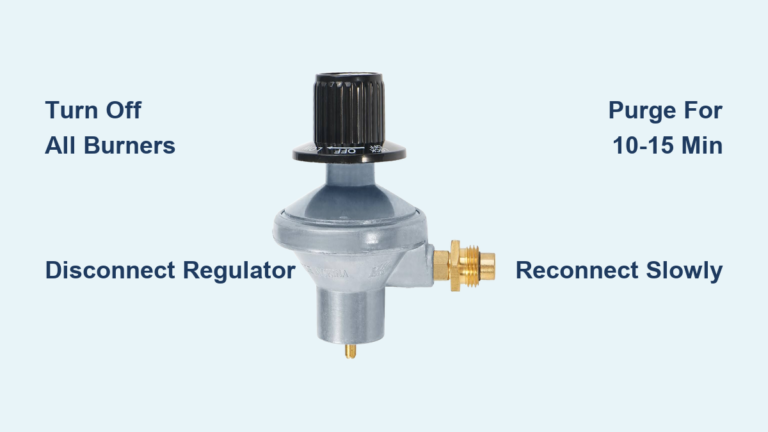
If your grill still won’t light, the safety device is likely still locked. Do a full system reset. First, turn all burner knobs to “Off.” Then, close the propane tank valve completely.
Next, disconnect the hose from the grill’s gas inlet (the manifold). This breaks the pressure seal and allows residual gas to escape. Leave it disconnected for 2–3 minutes. This gives the regulator time to fully depressurize and reset its internal mechanism.
Reconnect and Reopen Slowly
After waiting, reconnect the hose firmly to the manifold. Make sure it’s hand-tight, no tools needed. Then, slowly reopen the tank valve using the same gradual turn as before.
Once the tank is open, turn on one burner knob and wait 30 seconds before attempting ignition. This second wait lets gas refill the lines safely. Try lighting now. If flames ignite and grow strong, the reset worked.
If not, repeat the process once more. Two full resets usually clear persistent lockouts, especially after repeated failed ignition attempts.
Test the Fuel Source First

Swap in a Full Propane Tank
A bad tank can mimic regulator failure. To rule this out, replace your current tank with a known full one. Use a Blue Rhino, Coleman exchange, or freshly filled tank. Even if your tank feels heavy, the valve or dip tube could be faulty.
Reconnect the full tank and follow the correct lighting sequence. If the grill lights now, the original tank was the issue. If not, the problem lies in the grill system.
Try a 1 lb Canister (If Compatible)
For Q-series and select models, test with a 1 lb propane canister using a compatible adapter. These bypass the standard hose and connect directly.
If the grill lights and heats normally with the small canister, the issue is upstream, likely the regulator, hose, or how the 20 lb tank interacts with the system. This test isolates whether the problem is fuel delivery or internal blockage.
Note: Some modifications disable 1 lb canister use. If it doesn’t fit, your setup may have an external regulator (see below).
Inspect for Internal Blockages

Clean Clogged Burner Tubes
If gas reaches the grill but flames are weak or uneven (say, only half the burner lights), you likely have a clogged burner tube. Spiders, grease buildup, or debris often block the small gas ports.
Remove the cooking grates, flavorizer bars, and burner covers. Take out the burner tube. Inspect each hole along its length. Use a pipe cleaner, paper clip, or burner cleaning tool to poke through every port.
Blow out debris with compressed air if possible. Reinstall and test. Clear ports mean even flame distribution. If only the inlet side lights, cleaning is essential.
Check for Manifold Failure
When a new regulator, full tank, and clean burners still yield no gas flow, the fault may be the gas manifold, the internal component that splits gas to each burner.
Rare but documented, manifold defects can block flow entirely. Users of models like the S-335 have reported replacing regulators and hoses with no fix, only to resolve it by replacing the manifold.
If all else fails and you smell no gas at the burners, contact Weber support. This level of repair often requires professional diagnosis or parts replacement.
Prevent Cold-Weather Issues
Extend Wait Time Below 40°F
Cold temperatures slow propane vaporization and pressure buildup. In winter, the standard 30-second wait may not be enough.
Below 40°F, increase your wait to 60–120 seconds after opening the tank. This gives the regulator time to sense stable pressure without triggering bypass mode.
Never warm the tank with heat sources, as this is dangerous. Instead, store it in a garage or sheltered area before use to reduce thermal shock.
Shield Grill from Wind Gusts
Strong wind can cool the regulator and hose, affecting pressure readings. Position your grill out of direct wind when possible. Use a wind guard if needed, but keep it away from flammable materials.
A steady, sheltered environment helps maintain consistent gas flow and prevents false safety triggers.
Replace Faulty Components
Upgrade the Regulator and Hose
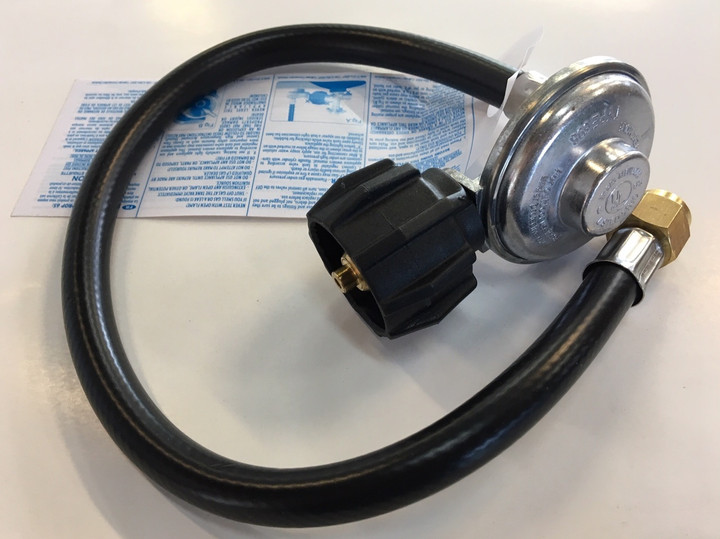
If resets and tank swaps fail, the regulator or hose assembly may be defective. These are wear items, especially in Q-series grills, where premature failure is reported.
Purchase a Weber-approved replacement hose and regulator. Avoid generic parts, as they may not meet safety specs. Install it by disconnecting from the tank and manifold, then attaching the new unit hand-tight.
Even with a new regulator, follow the lighting sequence. A fresh unit can still trip if the tank valve opens too fast.
Confirm OEM vs Aftermarket Parts
Weber recommends original equipment (OEM) parts for safety and compatibility. Aftermarket regulators may lack the correct OPD calibration or pressure output.
Check part numbers against Weber’s official site. Using non-OEM parts can void warranties and increase risk of improper gas flow or leaks.
Modify for Problem-Prone Setups
Use External Regulator for Long Hoses
If you use an extension hose, the added gas volume between the tank and regulator increases surge risk. To prevent repeated trips, switch to an external regulator system.
Install a tank-mounted regulator that outputs low-pressure gas. Then, run a non-regulating hose from there to the grill’s manifold. This eliminates the built-in regulator and bypass risk.
Warning: Do not use high-pressure construction-style regulators. They deliver unsafe pressure levels for grills. Only use low-pressure (11″ WC) regulators rated for appliances.
Avoid Extension Hoses When Possible
Extension hoses increase complexity and failure points. If you must use one, always open the tank valve slowly and extend the wait time.
Better yet, reposition your grill closer to the tank or use a longer single hose designed for grills. Fewer connections mean fewer leaks and fewer pressure issues.
Conduct a Leak Test Immediately
Apply Soapy Water to All Joints
Before assuming a part is broken, test for leaks. A real leak can trigger the safety device and prevent flow.
Mix dish soap and water. With the tank valve open and burners off, apply the solution to:
- Tank valve connection
- Regulator inlet
- Hose connections
- Manifold inputs
Watch for bubbling. Bubbles mean gas is escaping. If found, turn off the tank immediately.
Respond to Leaks Properly
Do not light the grill if you detect a leak. Tighten connections by hand and retest. If bubbles persist, stop use and contact Weber support.
Leaks compromise safety and performance. Even small ones can trigger the OPD and mimic “no gas” symptoms.
Contact Weber Support When Needed
When to Call for Help
Seek professional help if:
- Multiple resets fail
- New regulator and tank don’t restore flow
- You suspect manifold or valve failure
- Leak tests show persistent bubbling
Weber’s support team can guide diagnostics, order parts, and advise on warranty coverage, even for older models.
Provide Serial Number for Faster Service
Have your grill’s serial number ready. It’s usually on a tag near the fuel inlet or back panel. Registration speeds up support and verifies warranty status.
Weber Support:
- Phone: 1-800-446-1071 (7 days/week)
- Email: support@weberstephen.com
They’ve helped users replace manifolds on 6-month-old grills and regulators on 4-year-old Q models, often at low or no cost.
Frequently Asked Questions About Weber Grill Gas Flow
Why Does My Weber Grill Suddenly Stop Getting Gas After a Tank Swap?
This is almost always the OPD tripping into bypass mode. Opening the tank valve too quickly creates a pressure surge that the regulator interprets as a leak. The safety device then restricts flow to about 10% of normal. A full reset and slower valve opening will usually fix it.
How Long Should I Wait After Opening the Propane Tank Before Lighting?
Wait at least 30 to 60 seconds in normal weather. Below 40°F, extend this to 60–120 seconds. This allows pressure to equalize gradually so the safety device recognizes a stable supply rather than a leak.
Can a Spider Web Really Stop Gas Flow in My Burner?
Yes. Spider webs, grease, and debris commonly block the small ports in burner tubes. This causes partial flames where only part of the burner lights. Removing the tube and clearing each port with a pipe cleaner or compressed air restores even flow.
How Do I Know If My Regulator Is Bad vs Just Tripped?
If a full reset, new tank, and clean burners still produce no flow, the regulator is likely defective. Regulators are wear items, especially on Q-series grills. Replace with a Weber OEM part and test. If the problem persists, suspect the manifold.
Is It Safe to Bypass the Built-In Regulator on My Weber Grill?
Only with a low-pressure (11″ WC) external regulator mounted at the tank. Never use high-pressure construction regulators. This setup helps users with long extension hoses avoid repeated OPD trips, but it eliminates compatibility with 1 lb canisters.
What Temperature Should My Weber Grill Reach on High?
A properly functioning Weber grill should reach 500°F to 550°F within 10–15 minutes of lighting all burners on high with the lid closed. If temperatures stay low even after a reset, the grill is still in bypass mode or has a blockage.
Key Takeaways for Restoring Gas Flow to Your Weber Grill
Most “no gas flow” problems trace back to the regulator’s safety device, not broken hardware. The fix is almost always a matter of following the correct lighting sequence: lid open, knobs off, slow tank valve, and a 30–60 second wait before ignition. This prevents bypass mode 90% of the time.
When symptoms persist, perform a full regulator reset by disconnecting the hose for 2–3 minutes. Test with a known full tank and a 1 lb canister to isolate whether the issue is fuel delivery or internal blockage. Clean burner tubes if flames are uneven, and always run a soap-and-water leak test before assuming a part has failed.
If all else fails, replace the regulator and hose with Weber OEM parts, or contact support at 1-800-446-1071 with your serial number ready. For long extension hoses, consider an external low-pressure regulator to avoid repeated trips. With these steps, your grill will be back to full heat fast, no guesswork required.