Fix Weber Grill Starter Not Working
Is your Weber grill starter not working? You’re not alone. When you’re ready to fire up the barbecue and the igniter fails (no click, no spark, no flame), it’s frustrating. The good news: most ignition problems are easy to fix with basic tools and a few minutes of troubleshooting. This guide walks you through exactly what to check, in the right order, so you can get your grill back online fast.
The phrase “Weber grill starter not working” usually points to one of five common culprits: dead battery, dirty electrode, loose wire, blocked burner, or moisture interference. Rarely, it’s a failed ignition module. By following this step-by-step process, starting with the manual lighting test, you’ll quickly isolate the real issue and apply the correct fix. No guesswork. No wasted time. Let’s get your Weber sparking again.
Confirm It’s an Igniter Issue
Before diving into electronics, verify the problem is actually with the starter, not the gas.
Test With a Lighter First
Use a long-reach lighter or match to manually light one burner while turning the knob to the “start” position.
- If it lights: Gas flow is good. Your igniter system (battery, wires, electrode, or module) is the culprit.
- If it doesn’t light: The issue is fuel-related (empty tank, closed valve, clogged hose, or blocked burner). Fix gas flow first.
This simple test saves time and prevents unnecessary part replacements.
Check Propane Supply
Even if the igniter clicks, gas must be flowing.
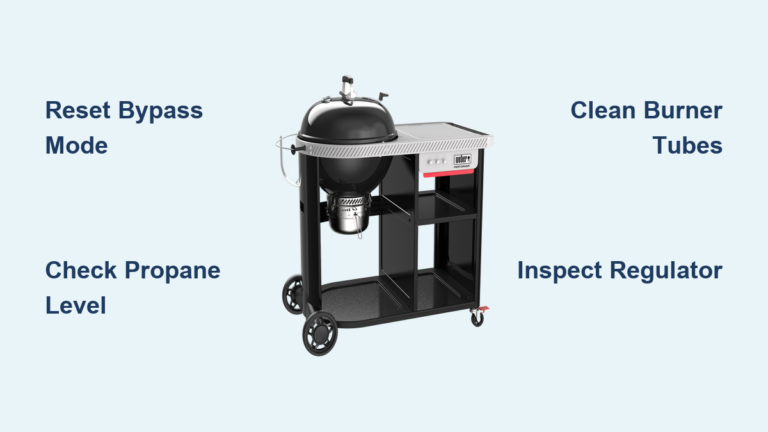
- Ensure the propane tank isn’t empty.
- Turn the valve fully counterclockwise to open.
- Listen for a hiss or smell gas near the burner when the knob is on.
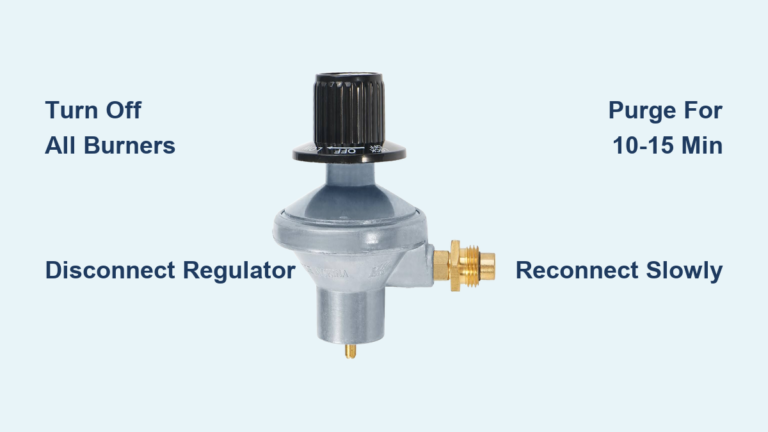
- If no gas flows, check for kinks in the hose or a faulty regulator.
Gas must be present for any ignition method to work.
Replace the Igniter Battery

A weak or dead battery is the most common cause of a non-working Weber starter.
Locate and Swap the Battery
The battery sits in a compartment near the control panel.
- Remove the screw and open the cover.
- Take out the old AA battery, even if it looks fine.
- Insert a fresh alkaline AA battery.
Try Both Battery Orientations
Some Weber models are sensitive to contact alignment.
- If it doesn’t work one way, flip the battery and try again.
- Ensure metal contacts are clean and springy.
Pro Tip: Always carry a spare battery in your grilling toolkit. It takes 30 seconds to replace and solves half of all starter failures.
Clean the Ignition Module
Grease, dirt, or moisture in the battery housing can block electrical contact.
Dry and Wipe the Compartment
Use a cotton swab to clean inside the module.
- Remove grime from contact points.
- Check for rust or corrosion.
- Dry thoroughly if the grill was exposed to rain or humidity.
Moisture can short the circuit, even with a new battery. Let the compartment air out for 10 to 15 minutes if damp.
Reconnect the Igniter Wires

Loose wiring is a frequent but overlooked issue.
Inspect and Reset All Connections
Follow the wires from the ignition module to the burner electrodes.
- Look for frayed, cracked, or disconnected wires.
- Unplug and firmly reconnect each wire at both ends.
- Ensure metal prongs are fully seated and not bent.
A slight tug on each wire should confirm it’s secure. Loose wires mean no spark.
Clean the Spark Electrode and Burner Tube
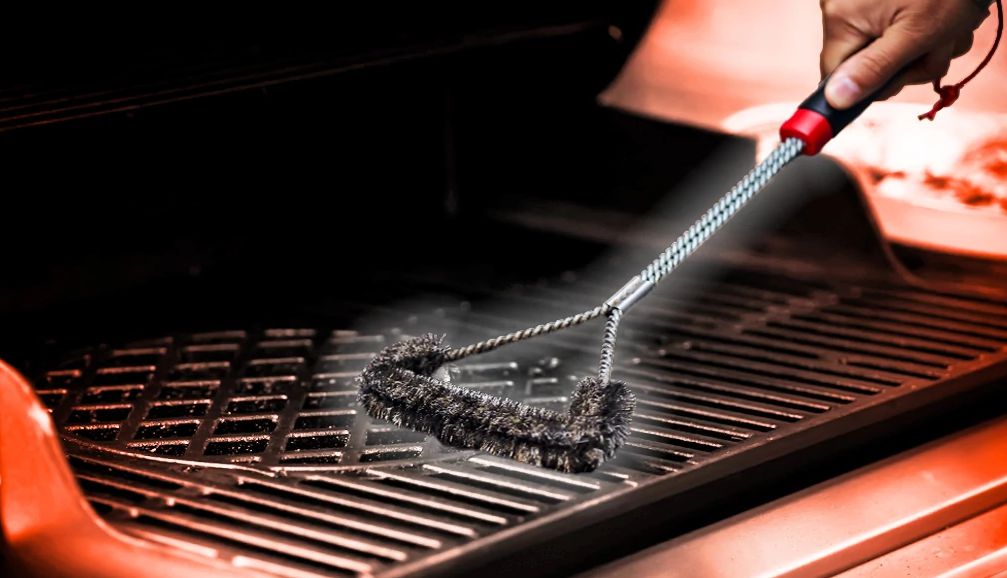
A dirty spark gap prevents ignition, even with a working igniter.
Find the Electrode
Locate the small metal tip near the burner (usually on the left side). This is where the spark jumps to the burner tube.
Remove Blockages
Use a wire brush to clean:
- The electrode tip
- The surrounding burner tube
- Nearby burner ports
Debris, spider webs, or grease buildup can absorb the spark or block gas flow. You should see a clear 1/8-inch gap between the electrode and metal burner with no obstructions.
Diagnose a Failed Ignition Module
If you’ve replaced the battery, cleaned the module, reconnected wires, and cleaned the electrode, but hear no clicking sound, the module itself is likely dead.
Confirm No Click, No Spark
- Press the igniter button firmly.
- Listen closely. Silence means no signal from the module.
- If you hear a click but no spark, the issue may be electrode gap or moisture.
Replace the Module
Weber ignition modules are replaceable.
- Order the correct model-specific part from weber.com or an authorized retailer.
- Disconnect old wires and attach them to the new module.
- Mount securely and test.
Time Estimate: 10 minutes with basic tools.
Difficulty: Easy.
Rule Out Environmental Factors

Weather and storage conditions impact performance.
Address Moisture Exposure
Rain, morning dew, or high humidity can disable the spark.
- Wipe down the igniter housing.
- Remove the battery and let the compartment dry in sunlight or with a hairdryer (cool setting).
- Wait 15 to 30 minutes before retesting.
Never attempt to light a wet grill. Safety first.
Prevent Future Moisture Buildup
- Use a fitted grill cover.
- Store in a dry area if possible.
- After use, leave the lid open slightly to ventilate moisture.
Follow the Quick Fix Checklist
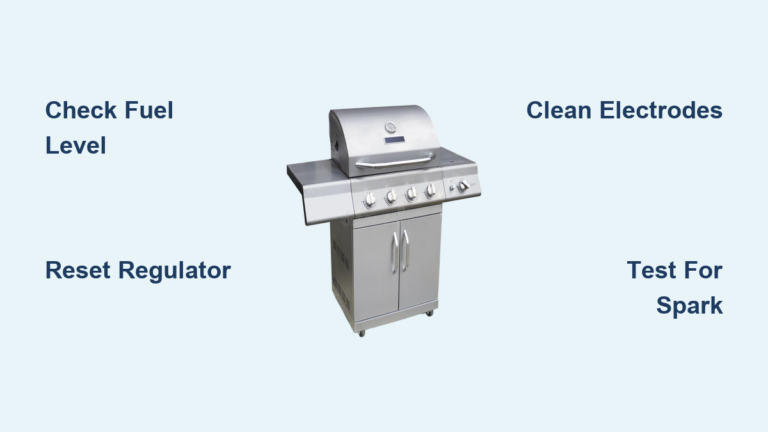
Still stuck? Run through this 6-step checklist:
- Manual light with a match?
– No? Fix gas flow (tank, hose, burner).
– Yes? Move to step 2. - New battery installed?
– Try both orientations. - Battery compartment clean and dry?
– Use a Q-tip to clean contacts. - Igniter wires reconnected?
– Unplug and reseat each one. - Electrode and burner cleaned?
– Brush away debris near the spark tip. - Clicking sound when pressed?
– No click? Replace the ignition module.
– Click but no spark? Recheck gap, cleanliness, and moisture.
This sequence covers 95% of Weber starter failures.
When to Contact Weber Support
If all steps fail, it’s time for expert help.
Contact Weber Directly
- Phone: 800-446-1071 (Mon–Fri, 8am–8pm CST)
- Email: support@weberstephen.com
Have your grill’s model number ready (usually on a label near the side shelf or back).
Seek Professional Repair
If you’re uncomfortable handling gas lines, electrical parts, or suspect a leak, call a certified technician. Never force connections or bypass safety features.
Prevent Future Igniter Failures
Keep your Weber starter working season after season.
Monthly Maintenance Tips
- Test the igniter monthly, even in winter.
- Clean electrodes after heavy use or sugary marinades.
- Replace the battery annually, or before peak grilling season.
- Inspect wires for rodent damage (common in stored grills).
Use the Right Tools
- Keep a long-reach lighter on hand as a backup.
- Store a wire brush and spare AA battery in your grilling caddy.
A well-maintained Weber igniter can last years with minimal care.
Frequently Asked Questions About Weber Grill Starter Problems
Why is my Weber grill igniter clicking but not lighting?
A clicking sound means the battery and module are generating a spark, but something is blocking ignition. Common causes include a dirty electrode, debris in the burner tube, insufficient gas flow, or moisture in the system. Clean the electrode tip and burner ports first, then verify your propane supply.
How do I know if my Weber igniter battery is dead?
The most obvious sign is no clicking sound when you press the igniter button. A weak battery may produce a faint or slow click. Since batteries can lose charge without visible signs, always try a fresh AA battery before troubleshooting other components.
Can rain cause my Weber grill starter to stop working?
Yes. Moisture from rain, dew, or high humidity can short-circuit the ignition system or prevent the spark from jumping properly. Remove the battery, dry the compartment thoroughly, and let the grill air out for 15 to 30 minutes before retrying.
Where is the battery located on a Weber grill?
The battery compartment is typically found near the control panel. Unscrew the cover to access the AA battery inside. On some models, it may be integrated into the igniter button housing.
What tools do I need to fix a Weber igniter?
Most fixes require only basic items: a screwdriver to open the battery compartment, a cotton swab for cleaning contacts, and a wire brush for clearing debris from the electrode and burner tube. A long-reach lighter is helpful for the initial diagnostic test.
When should I replace the entire ignition module?
Replace the module if you’ve installed a fresh battery, cleaned the housing, reconnected all wires, and cleaned the electrode, yet still hear no clicking sound. This indicates internal module failure. Order a model-specific replacement from Weber or an authorized retailer.
Key Takeaways for Fixing Your Weber Grill Starter
A Weber grill starter not working is rarely a major issue. In most cases, the culprit is a dead battery, dirty spark tip, or loose wire, all simple fixes anyone can handle. Start with the manual lighting test to confirm gas flow is working, then move through battery replacement, module cleaning, wire reconnection, and electrode cleaning in that order. If you hear no click after all these steps, the ignition module needs replacement.
Save time, skip the service call, and get back to grilling with confidence. Keep a spare AA battery and wire brush in your grilling toolkit so you’re ready for the next cookout.