How Hot Does a Gas Grill Get?
You fire up your gas grill, turn all the knobs to high, and wait, but something feels off. The steaks aren’t searing right, and you start wondering how hot this thing actually gets. The answer might surprise you, especially if you’ve been chasing more BTUs for years.
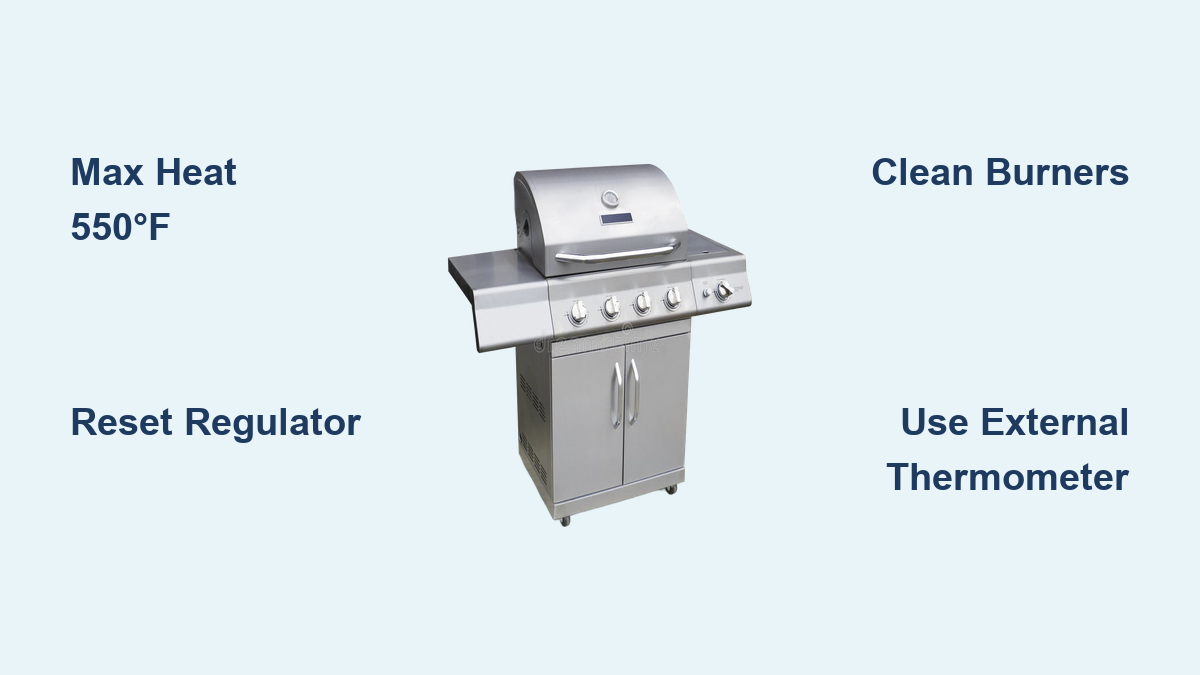
Most gas grills reach a maximum of 500°F to 550°F (260°C–288°C) at the cooking grate, whether powered by propane or natural gas. This is the peak temperature after preheating for 10 to 15 minutes with the lid closed. Higher BTU ratings don’t translate to higher heat. They simply provide more fuel output for larger cooking chambers and extra features like side burners.
In this guide, you’ll learn exactly how hot gas grills get across different settings, why your grill might be underperforming, and how gas compares to charcoal for searing power. You’ll also discover how to set up two-zone cooking, troubleshoot low heat problems, and maintain peak performance for every cookout.
Max Heat: 500°F to 550°F
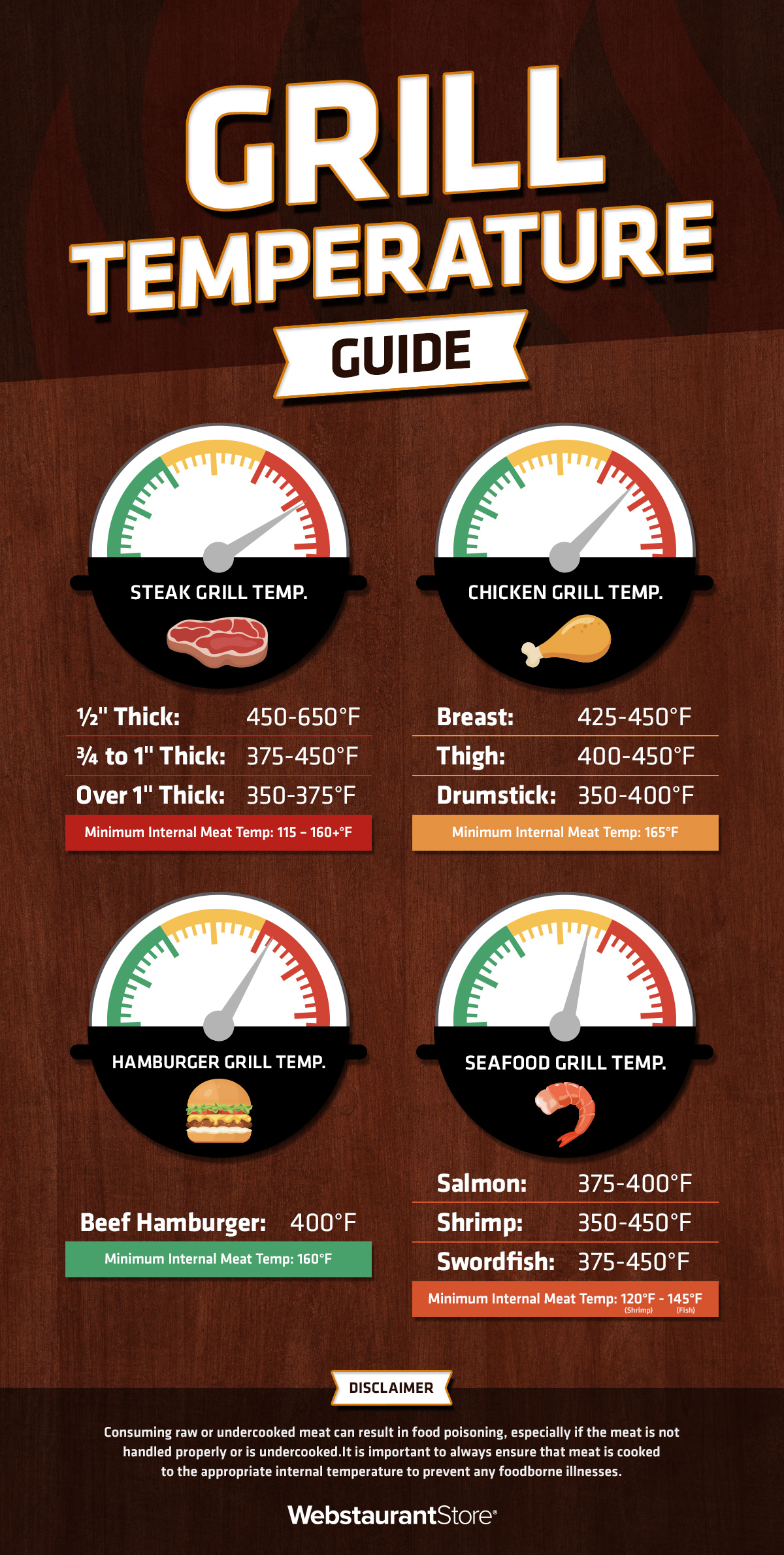
Gas grills are engineered with a thermal ceiling of 500°F to 550°F, regardless of size or fuel type. This range delivers optimal searing without risking flare-ups or structural damage.
Why 550°F Is the Upper Limit
Manufacturers cap temperatures around 550°F for safety and component longevity. Exceeding this threshold can warp grates, degrade internal seals, or create dangerous flare-ups. Even high-BTU models with 60,000+ BTUs don’t surpass this ceiling. They just heat larger chambers faster.
Time to Reach Peak Temperature
A clean, well-maintained gas grill reaches maximum heat in 10 to 15 minutes with all burners on high and the lid closed. If your grill takes longer or stalls below 400°F, a mechanical issue is likely the culprit.
Pro Tip: Always preheat with the lid closed. Leaving it open can add 5 to 10 minutes to warm-up time due to heat loss.
Heat Settings and Cooking Zones
Gas grills offer precise temperature control through knob settings, creating distinct cooking zones for different foods.
High Heat: 450°F–650°F
Set all burners to high for searing. The actual grate temperature stabilizes around 500°F to 550°F, though brief spikes may occur.
- Best for: Steaks, burgers, tuna, and cleaning grates
- Hand test: 2 to 3 seconds before discomfort
- Lid position: Closed for even heat, open for direct flame exposure
Warning: Food chars quickly at this range. Monitor closely to avoid overcooking.
Medium-High: 375°F–450°F
This range balances browning with thorough cooking.
- Best for: Chicken breasts, sausages, vegetables, fish fillets
- Hand test: 4 to 5 seconds
- Duration: Sustains 10 to 15 minutes with the lid open
Medium: 325°F–375°F
Used for indirect cooking with the lid closed.
- Best for: Whole chickens, ribs
- Hand test: 6 to 7 seconds
- Lid required: Yes, without it, ambient temperatures drop too low
This range mimics oven roasting, browning the exterior while gently cooking the interior.
Low and Medium-Low: 225°F–325°F
Gas grills struggle to maintain true low-and-slow temperatures, but with diligence, you can simulate barbecue conditions.
- Medium-Low (250°F–325°F): Hand test 8 to 10 seconds
- Low (225°F–250°F): Hand test 11 to 15 seconds
- Best for: Brisket, keeping food warm
Challenge: Most gas grills cycle on and off, causing temperature swings. Use a dual-probe thermometer and adjust burners frequently to stabilize heat.
Lid Closed vs. Lid Open: The Game Changer
The lid transforms your grill from a broiler into an oven.
Lid Closed: Oven-Like Convection
- Traps heat and smoke
- Raises indirect-side temperature to 325°F to 400°F
- Enables roasting, smoking, and even baking
- Reduces cook time by up to 30%
Lid Open: Direct Heat Only
- Heat escapes rapidly
- Indirect side drops to approximately 110°F, too cool for cooking
- Recovery time after placing food is slower
Rule of thumb: If the lid doesn’t close, you’re not grilling. You’re broiling.
Two-Zone Cooking Setup
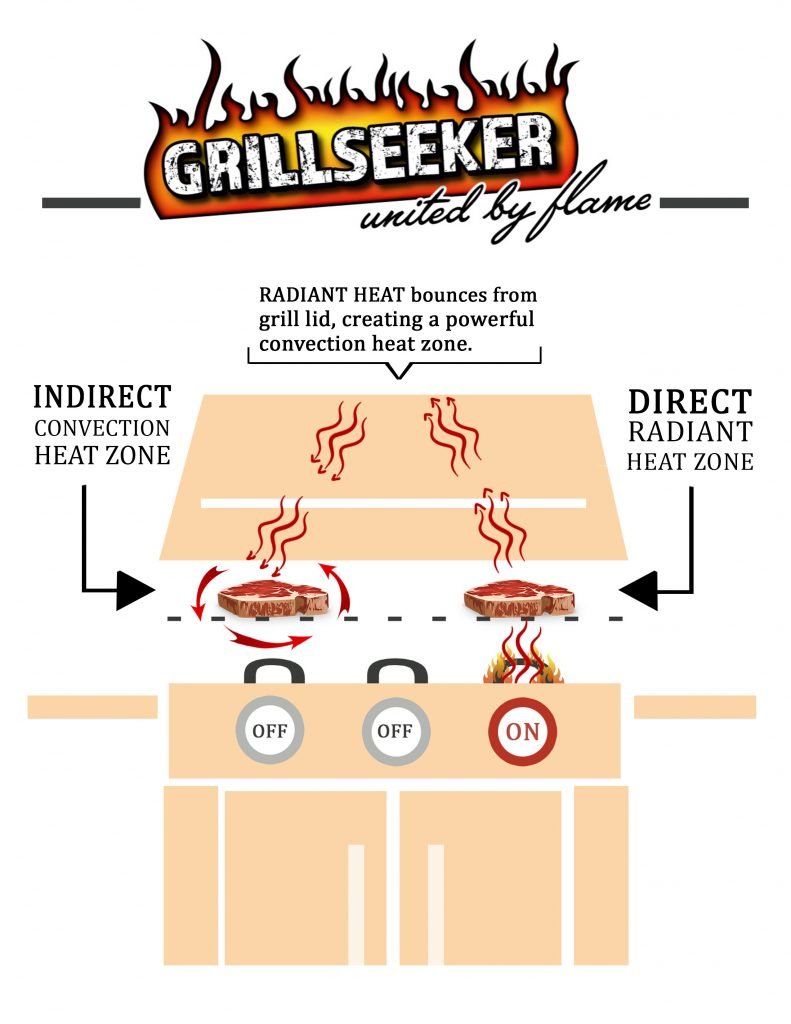
Gas grills excel at two-zone cooking, which creates hot and cool zones for better control.
How to Set It Up
- Turn on one side’s burners to high for direct heat
- Leave the opposite side off or on low for indirect heat
- Close the lid
Thermal Zones Explained
| Zone | Burner Setting | Grate Temp (Lid Closed) | Use Case |
|---|---|---|---|
| Direct (Hot) | High | 500°F–550°F | Searing, quick cooks |
| Indirect (Cool) | Off/Low | 325°F–400°F | Roasting, finishing |
Why It Works
- Move food to the cool side to finish cooking without burning
- Reverse sear thick steaks by slow-roasting first, then searing
- Escape flare-ups instantly by relocating food
Pro Tip: Use thermal imaging or a laser thermometer to map hotspots. Most grills run hotter in the center.
Gas vs. Charcoal: Who Gets Hotter?
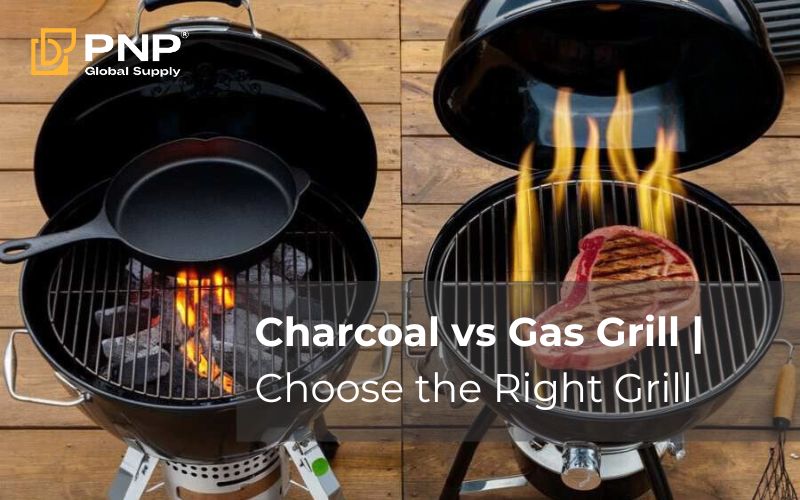
Max Temperature Comparison
| Fuel Type | Max Grate Temp | Fuel Source Temp |
|---|---|---|
| Gas | 500°F–550°F | ~700°F (burner) |
| Charcoal | 600°F–650°F | ~1200°F (coals) |
Charcoal wins for pure heat. Kettle grills with closed lids can surpass gas grills by more than 100°F, making them ideal for restaurant-style searing.
Control and Stability
- Gas: Instant, precise control via knob adjustment. Stable for hours.
- Charcoal: Heat degrades over time. Requires vent adjustments and fuel additions.
Best Use Cases
- Gas: Weeknight dinners, roasting, consistent grilling
- Charcoal: Searing steaks, smoky flavor, traditional barbecue
Hybrid Solution: Use a charcoal insert in your gas grill for higher heat and smoke flavor.
Why Your Grill Isn’t Getting Hot Enough
If your gas grill stalls at 200°F to 300°F, don’t assume it’s broken. Diagnose these common issues first.
Faulty Temperature Gauge
Built-in lid thermometers are often 50°F to 75°F too low because they’re positioned away from the cooking surface.
- Fix: Use a probe thermometer placed one inch above the grate
- Compare readings. If off by more than 25°F, replace the gauge or ignore it
Regulator Problems
The regulator is the number one cause of low heat.
Symptoms:
– Weak, yellow or orange flames
– Popping sounds during ignition
– Only one burner lights properly
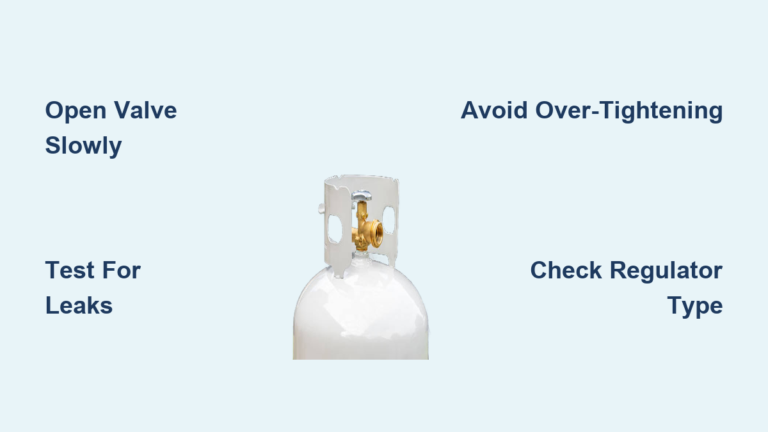
Reset the Regulator:
1. Turn all knobs to OFF
2. Close the propane tank valve
3. Disconnect the regulator from the tank
4. Wait 60 seconds
5. Reconnect the regulator
6. Open the tank valve slowly over 30 seconds
7. Wait 60 seconds before lighting
Why slow? Opening too fast trips the safety valve, restricting gas flow.
Low or Empty Propane Tank
A nearly empty tank can’t vaporize enough fuel for high heat.
Test: Pour hot water down the tank’s side. Feel for a cold line, which indicates the propane level. If the tank is mostly warm, it’s time to refill.
Gas Leaks
Leaks reduce performance and pose serious safety risks.
Check for leaks:
1. Mix one part dish soap with one part water
2. Apply to hose, regulator, and tank valve
3. Open the valve slowly
4. Bubbles indicate a leak
If you find a leak, shut off the gas immediately, don’t light the grill, and repair before use.
Burner and Maintenance Issues
Even with proper gas flow, blockages can kill performance.
Clogged Burner Tubes
Spiders, grease, and debris block gas ports over time.
Signs:
– Uneven flames
– Burners light in sections
– Low heat on one side
Fix:
1. Remove grates and flavor bars
2. Pull out burner tubes
3. Clean with a wire brush and pipe cleaner
4. Reinstall and test
Prevention: Cover your grill when not in use and install spider guards on burner ports.
Ignition Knob Misuse
Some users stop turning at “start,” but that’s not the high setting.
- Turn the knob past start to reach high
- On many models: Right equals High, then Medium, then Low
Factors That Affect Grill Temperature
Several variables impact how hot your grill runs:
| Factor | Impact |
|---|---|
| Cold weather | Increases warm-up time and reduces heat retention |
| Wind | Blows heat away, especially with the lid open |
| Grease buildup | Insulates burners and reduces efficiency |
| Old grill | Rust, worn seals, and degraded parts reduce max temp |
| Heavy food load | Cold meat drops temperature temporarily |
Pro Tip: In winter, preheat 5 to 10 minutes longer and keep the lid closed.
When to Repair vs. Replace
Gas grills last 5 to 15 years with proper maintenance. Consider replacement when:
- The firebox is cracked or heavily rusted, allowing heat to escape
- Burners won’t stay lit despite cleaning and regulator reset
- Repeated part failures make repairs costly
- The design is outdated with poor heat distribution
Warranty tip: Use manufacturer-approved parts only. Burners, grates, and regulators are usually replaceable.
Safety: Know the Risks
Gas Leak Response
If you smell gas:
1. Turn off the tank valve
2. Move away from the grill
3. Don’t attempt to light it
4. Call a professional
Never use a match to check for leaks.
Flame Color Matters
- Blue flames: Indicate good combustion
- Yellow or orange flames: Signal incomplete burn. Clean burners or check gas flow
Thermometer Cable Safety
Standard probe cables melt at 644°F (340°C).
- Keep cables off grates and away from flames
- Route over diffuser legs or use a heat shield
- Never let cables dangle over burners
Final Tips for Maximum Heat
- Preheat with the lid closed for 10 to 15 minutes
- Clean burners annually to prevent clogs
- Use a reliable external thermometer instead of the built-in gauge
- Reset the regulator if heat drops unexpectedly
- Avoid cheap aftermarket parts that can cause leaks
Frequently Asked Questions About Gas Grill Temperatures
What is the maximum temperature a gas grill can reach?
Most gas grills max out between 500°F and 550°F at the cooking grate, regardless of whether they use propane or natural gas. This ceiling exists for safety and component longevity.
How long does it take a gas grill to heat up?
A well-maintained gas grill reaches maximum temperature in 10 to 15 minutes with all burners on high and the lid closed. If it takes longer, check for regulator issues or clogged burners.
Do more BTUs mean a hotter grill?
No. Higher BTU ratings don’t produce higher temperatures. They simply provide more fuel output to heat larger grill chambers and power additional features like side burners.
Why is my gas grill not getting hot enough?
Common causes include a tripped regulator, clogged burner tubes, low propane, gas leaks, or an inaccurate built-in thermometer. Start with the regulator reset procedure, which solves most low-heat issues.
Is charcoal hotter than gas?
Yes. Charcoal grills can reach 600°F to 650°F at the grate, with coals burning at approximately 1200°F. Gas grills cap at 500°F to 550°F, but they offer superior temperature control and stability.
How do I check if my grill thermometer is accurate?
Place a probe thermometer one inch above the grate and compare readings. Built-in gauges are often 50°F to 75°F too low. If the discrepancy exceeds 25°F, rely on the external probe instead.
Key Takeaways for Reaching Maximum Grill Heat
A healthy gas grill gets hot enough, hitting 500°F to 550°F, to sear, roast, and grill almost anything. If yours isn’t reaching that range, the fix is usually simple: reset the regulator, clean the burners, or check your fuel level.
Start by preheating with the lid closed for 10 to 15 minutes and verifying temperatures with an external probe thermometer. With proper care, your grill will deliver consistent high heat for years, making every cookout a success.