
How to Prevent Grill Flare Ups
You’re grilling a juicy steak, the smell is perfect, and then a sudden fireball erupts, charring your food and threatening safety. This is a grill flare-up, and it is more than just dramatic. It can ruin meals and create real danger. Flare-ups happen when fat or oil drips onto hot coals or gas burners, igniting into sudden flames. The good news is that most flare-ups are preventable with the right techniques. In this guide, you will learn how to stop flare-ups before they start, how to respond if they happen, and what to do in emergencies so you can grill confidently and safely.
Master Pre-Grill Preparation

Trim Excess Fat from Meat
Before placing any meat on the grill, trim visible fat from steaks, burgers, chicken, and chops. While fat enhances flavor, excess fat renders quickly and drips into the fire, becoming fuel for flare-ups. Use a sharp knife to remove thick edges or pockets of fat, especially on ribeyes, sausages, or chicken thighs. This simple step drastically reduces dripping and flare-up risk.
Oil the Food, Not the Grates
A common mistake is brushing oil directly onto hot grates to prevent sticking. This excess oil drips down and ignites. Instead, lightly coat the food with oil using your hands or a brush. This protects the meat, aids searing, and minimizes flammable drips. For extra safety, use high-smoke-point oils like canola or avocado instead of olive oil.
Delay Sugary Sauces Until the End
Barbecue sauce, teriyaki, and other sugar-rich marinades burn fast. When applied too early, they drip and ignite, causing sudden, intense flames. Apply sugary sauces only in the last 5–10 minutes of cooking. For marinades, pat food dry before grilling to reduce dripping, or use oil-based blends instead of sugar-heavy ones.
Clean Your Grill Religiously
Scrape Grates Before and After Use
Grease buildup on grates is a primary flare-up trigger. Always preheat your grill for 10–15 minutes, then scrub the grates with a sturdy grill brush while they are hot. This removes carbonized residue that can ignite. After grilling, repeat the process once the grill cools slightly. For deep cleaning, wipe grates with soapy water when completely cool.
Empty and Clean the Drip Tray Weekly
The drip tray collects rendered fat. If ignored, this grease can overheat and ignite. Check and clean the drip pan every few uses, or weekly if you grill often. Remove the tray, scrape out solidified grease with a spatula, wash with warm soapy water, rinse, and dry fully before reinstalling. Never let it fill more than halfway.
Use Proper Foil Liners
Lining the drip tray with manufacturer-approved foil liners simplifies cleanup and prevents grease overflow. Avoid generic aluminum foil unless it fits perfectly, because loose foil can block vents or trap heat, creating hazards. Replace liners when full or damaged.
Set Up a Two-Zone Fire
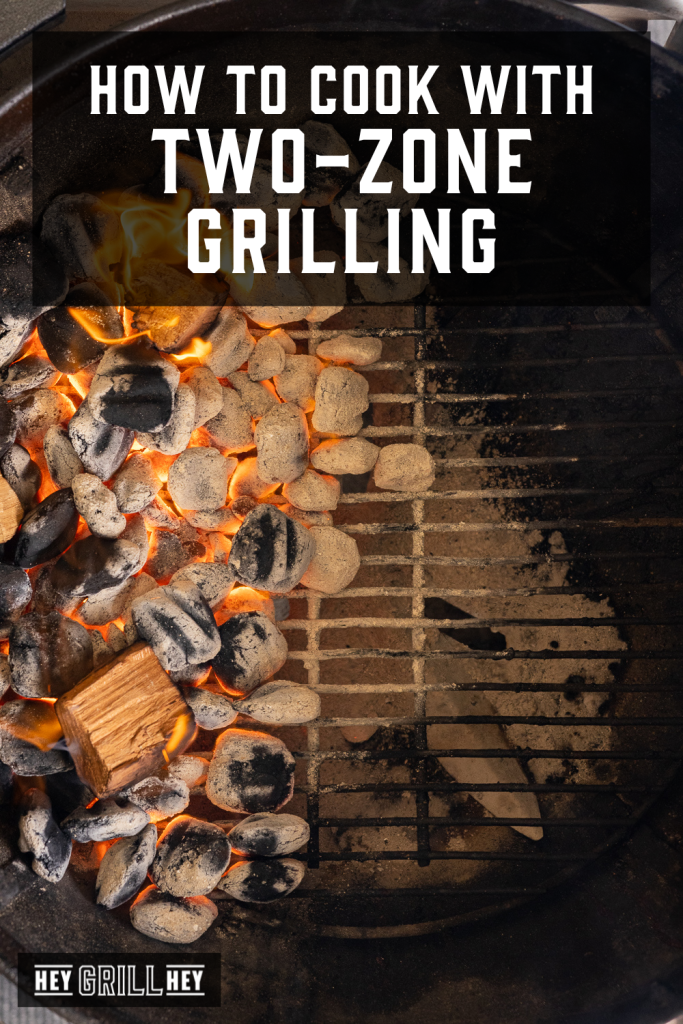
Create Direct and Indirect Zones
A two-zone fire is the number one technique used by pros to manage flare-ups. On a charcoal grill, pile coals on one side. On a gas grill, light only the burners on one side. This gives you:
- Direct heat zone for high-heat searing
- Indirect heat zone as a safe area to move food during flare-ups
This setup lets you control cooking and escape sudden flames without stopping the process.
Adjust Grate Height When Possible
If your grill allows, raise the cooking grates slightly to increase distance from the heat source. This reduces the intensity of drips hitting the flames, giving you more time to react. Even an inch can make a difference in flare-up frequency.
Avoid Overcrowding the Grill
Packing food tightly restricts airflow and concentrates dripping fat in one area. Leave at least 1 inch between items to ensure even cooking and reduce flare-up triggers. Use a larger grill or cook in batches if needed.
Control Your Environment
Grill in a Sheltered Area
Wind fans flames by increasing oxygen flow. Avoid grilling in open, windy spaces and use a backyard corner, patio wall, or windbreak instead. If you must grill outside in wind, position the grill so the wind hits the side, not the front or back vents on charcoal models.
Preheat the Grill Fully
Always preheat for 10–15 minutes with the lid closed. This burns off residual grease, stabilizes temperature, and ensures even heat distribution. A properly preheated grill reduces cold spots where fat can pool and ignite.
Respond Immediately to Flare-Ups
Move Food to the Cool Zone
When flames rise, use long-handled tongs to move food to the indirect zone. This stops dripping and halts the flare-up. Wait 30–60 seconds for flames to die down, then return food to direct heat if needed. This method keeps cooking on track without charring.
Cover the Grill to Cut Oxygen
If flames are high or spreading, close the lid immediately. This starves the fire of oxygen and extinguishes it within seconds. On gas grills, turn off burners if safe. On charcoal, close air vents to suffocate the fire. Do not open the lid until flames are fully gone.
Combine Methods for Severe Flares
For large flare-ups, move food and close the lid. This dual action protects your meal and stops the fire fast. Never leave the grill unattended during this process.
Handle Grease Fires Safely
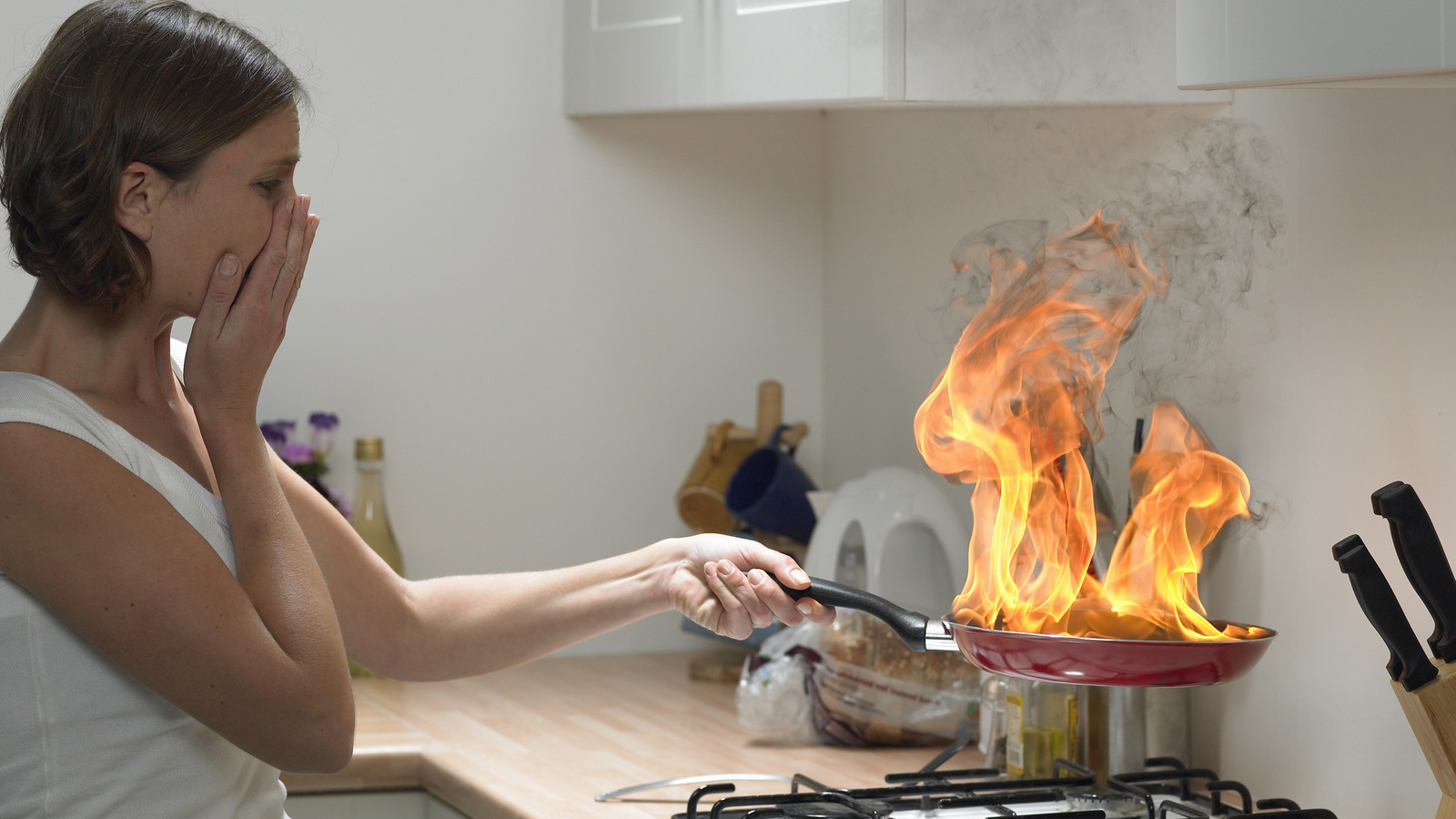
Shut Off Fuel and Smother the Fire
If a sustained grease fire erupts with flames coming from the drip tray rather than just drips, act fast:
- Gas grills: Turn off burners and gas tank.
- Charcoal grills: Close all vents and lid.
- Smother flames with baking soda or salt. Never use water.
Baking soda releases carbon dioxide, smothering the fire safely. Keep a box near your grill for emergencies.
Never Use Water or Flour
Water causes explosive steam, spreading burning grease. Flour, sugar, or baking powder are flammable and can ignite. These substances make fires worse. Only use baking soda, salt, or a Class B/K fire extinguisher.
Keep a Fire Extinguisher Nearby
Store a Class B or K fire extinguisher within arm’s reach of your grill. Test it monthly and replace if expired. It is your last line of defense in a worst-case scenario.
Maintain Long-Term Grill Safety
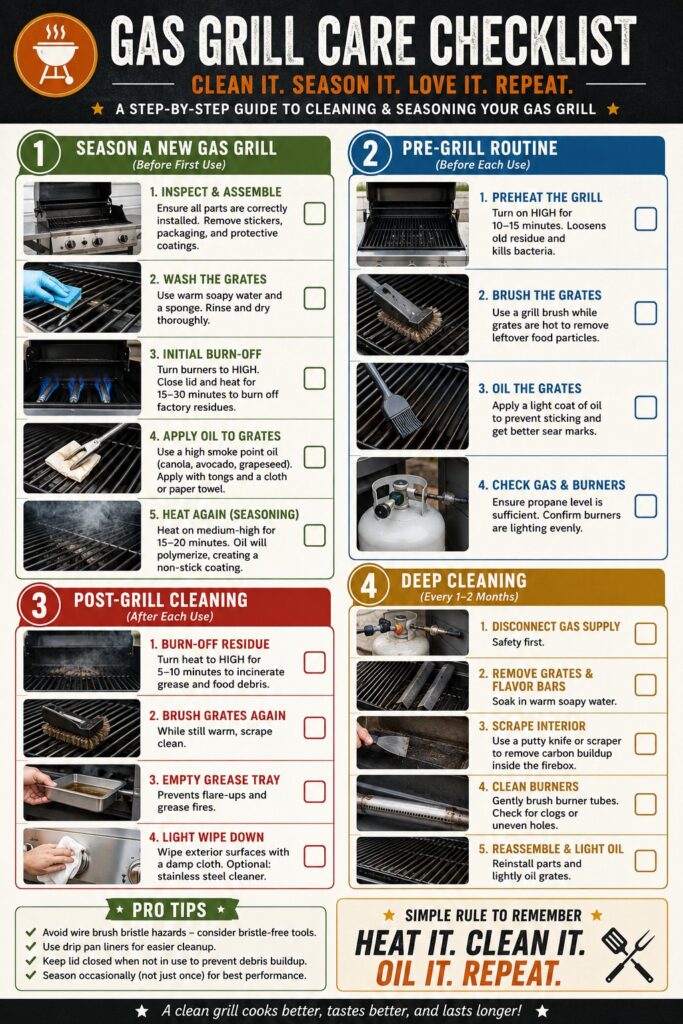
Follow a Cleaning Schedule
| Component | Frequency | Action |
|---|---|---|
| Grill Grates | Before and after every use | Scrape hot, deep clean weekly |
| Drip Pan | Every 2–3 uses | Empty, wash, dry |
| Interior Walls | Monthly | Scrape carbon buildup |
| Exterior | As needed | Wipe with mild soap |
Sticking to this routine prevents dangerous grease accumulation and extends your grill’s life.
Know the Difference Between Flare-Ups and Grease Fires
- Flare-up: Brief flame from dripping fat. Manage with lid or relocation.
- Grease fire: Sustained fire from pooled grease. Requires fuel cutoff and smothering.
Recognizing the difference helps you respond appropriately.
Avoid Common Myths
“Flare-Ups Add Flavor” Is False
While a quick sear enhances taste, uncontrolled flare-ups deposit soot and bitter smoke, ruining food. Real grill flavor comes from smoke and the Maillard reaction, not charred fat.
“Oiling Grates Prevents Sticking Safely” Is Risky
Oiling grates adds unnecessary fuel. Oil the food instead, and ensure grates are clean and hot to prevent sticking naturally.
“A Little Water Cools the Fire” Is Dangerous
Never use water on a grease fire. It vaporizes instantly, causing an explosive spray of burning oil. This is a leading cause of grilling injuries.
Frequently Asked Questions About Grill Flare-Ups
What causes grill flare-ups in the first place?
Flare-ups happen when fat, oil, or grease drips from food onto hot coals or gas burners and ignites. Sugar-based sauces and untrimmed fat increase the risk significantly.
How do I stop a flare-up while cooking?
Move the food to the indirect heat zone using long-handled tongs, or close the grill lid to cut off oxygen. For severe flare-ups, do both at the same time.
Can I use water to put out a grease fire on my grill?
No. Water is denser than oil and will vaporize instantly, causing an explosive spray of burning grease. Use baking soda, salt, or a Class B/K fire extinguisher instead.
How often should I clean my drip tray?
Clean the drip tray every few uses, or weekly if you grill frequently. A full or overflowing drip tray is a major grease fire risk.
Is it safe to oil my grill grates before cooking?
It is safer to oil the food directly rather than the grates. Excess oil on hot grates drips into the fire and can ignite, increasing flare-up risk.
Why do professionals always use a two-zone fire setup?
A two-zone setup creates a safe indirect heat area where you can move food during flare-ups. This lets you control flames without stopping the cook or burning your meal.
Key Takeaways for Preventing Grill Flare-Ups
Flare-ups do not have to be part of grilling. With proper prep, smart setup, and quick response, you can eliminate most risks. Trim fat before cooking, clean your grates and drip tray regularly, and always set up a two-zone fire so you have an escape route when flames rise. Keep baking soda and a fire extinguisher within reach, and never leave the grill unattended. Start your next cookout by walking through the safety checklist, and you will enjoy perfectly grilled meals without surprise fires.