
How to Smoke Brisket on a Pellet Grill
You’ve got a pellet grill, a beautiful brisket, and visions of smoky, tender barbecue dancing in your head. But transforming that tough cut of beef into juicy, pull-apart perfection takes more than just setting the temperature and walking away. Smoking brisket on a pellet grill is a balance of science, patience, and technique, especially when you’re chasing that ideal bark, deep smoke flavor, and buttery tenderness.
The good news? Pellet grills make the process easier than ever. With precise temperature control, consistent smoke production, and the ability to run unattended overnight, they’re perfect for mastering brisket, even if you’re a complete beginner. Success still hinges on key decisions: selecting the right cut, trimming properly, choosing wood pellets, managing the stall, and nailing the rest.
In this guide, you’ll learn exactly how to smoke brisket on a pellet grill from start to finish. Whether you prefer low-and-slow tradition or a hot-and-fast approach, we’ll walk you through every step with pro techniques and real-world troubleshooting tips. By the end, you’ll know how to serve competition-quality brisket with total confidence.
Choose the Right Brisket for Maximum Flavor
Pick a Whole Packer Prime Cut
For the best results, select a whole packer brisket that includes both the lean flat and the fatty point. Avoid pre-trimmed or flat-only cuts because they lack the fat needed for moisture during long cooks.
Look for Prime-grade beef whenever possible. It has the most marbling, which translates directly to juiciness and tenderness. If Prime isn’t available, Choice grade works, but expect less forgiveness during cooking. Select grade should be avoided since it’s too lean and will dry out.
When inspecting the brisket:
– Check for even marbling throughout the meat
– Look for a thick, uniform fat cap that you’ll trim down later
– Choose an oval-shaped brisket because it cooks more evenly than irregular shapes
Trim for Even Cooking and Better Smoke Penetration
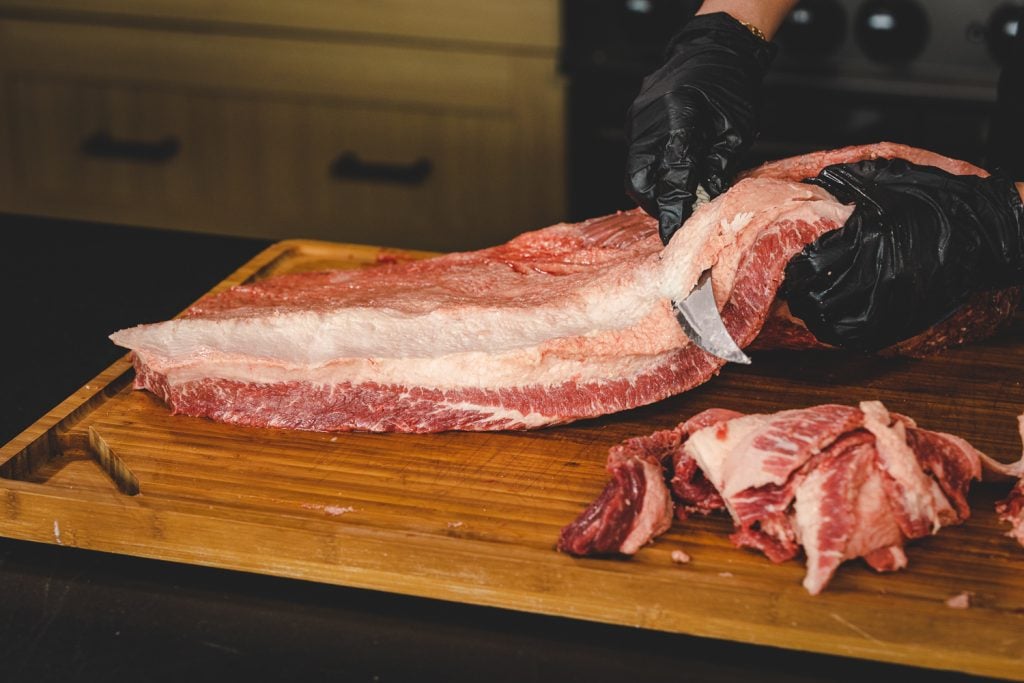
Shape the Brisket and Thin the Fat Cap
Trimming isn’t about removing all fat. It’s about creating a balanced shape so the brisket cooks evenly. Without proper trimming, the thin flat dries out before the thick point finishes cooking.
Goal: Trim the fat cap to ¼ inch (6mm) thick. This protects the meat while allowing smoke to penetrate effectively.
Steps:
1. Place the brisket fat-side up on a large cutting board
2. Use a sharp fillet or boning knife to round off sharp edges and corners
3. Slice away hard fat chunks between the point and flat since this fat won’t render
4. Flip the brisket and remove silver skin from the meat side
5. Trim excess fat from the underside until it looks uniform
Pro Tip: Save your trimmings! Render them into beef tallow for basting or grind them up for burgers and sausages.
Season for Maximum Bark Development
Apply a Texas-Style Salt and Pepper Rub
Bark, the dark, flavorful crust on smoked brisket, starts with proper seasoning. The foundation is a simple Texas-style rub using coarse black pepper and kosher salt in a 2:1 ratio.
Why It Works:
– Lets the beef and smoke flavors shine through
– Creates a robust, spicy-savory crust
– Prevents sweetness from overpowering the meat
Optional Enhancements:
– Add garlic powder, onion powder, or celery seed
– Use a pre-mixed “Brisket Booster” blend, but skip extra salt if it’s already included
Application Steps:
1. Lightly coat the brisket with yellow mustard or water to help the rub stick
2. Apply the rub heavily on top and lightly on the bottom and sides
3. Spray the top with water after seasoning to activate the spices
Rest Before Cooking:
Let the seasoned brisket sit for 30+ minutes at room temperature. For deeper flavor, refrigerate it uncovered overnight. This dries the surface and forms a pellicle, which boosts bark development significantly.
Set Up Your Pellet Grill for Success
Choose Wood Pellets and Dial in Temperature
Pellet grills excel at consistency, but your wood choice and temperature settings shape the final flavor profile.
Pick Strong, Beef-Friendly Pellets
- Hickory: Bold, classic smoke that pairs perfectly with beef
- Oak: Balanced and clean; works great alone or blended
- Pecan: Nutty and mild; pairs beautifully with hickory
- Mesquite: Very strong; use sparingly in blends to avoid bitterness
- Avoid: Fruit woods as primary smoke since they’re too sweet
Best Blend: Oak and Hickory together for depth without bitterness.
Select Your Cooking Method
| Method | Temperature | Time per Pound | Best For |
|---|---|---|---|
| Low and Slow | 200°F–225°F | 30–60 minutes | Maximum tenderness and deep smoke |
| Hot and Fast | 250°F–275°F | 20–30 minutes | Shorter cooks and beginners |
Recommendation: Start at 225°F for reliable, consistent results.
Safety for Overnight Cooks
- Clean the firepot before starting to prevent ash buildup
- Fill the hopper completely with pellets
- Use a Wi-Fi alarm thermometer to alert you if temps drop below 140°F or spike above 260°F
Smoke the Brisket Properly
Position Fat Side Down for Protection
Despite the old saying “fat side up,” on most pellet grills, you should cook fat side down. Here’s why:
– Heat usually comes from the bottom of the grill
– The fat cap shields the meat from direct radiant heat
– It prevents rendered fat from washing off your seasoning
Place the brisket on the middle rack to avoid hot spots.
Phase 1: Unwrapped Smoke Until 160°F–165°F
This is where bark builds and smoke flavor develops.
Process:
– Insert a probe into the thickest part of the flat
– Maintain a steady smoker temperature of 225°F
– Cook until internal temp hits 160°F–165°F, usually 5–8 hours
Optional Spritzing:
After 2–3 hours, spritz every 45–60 minutes with:
– 50/50 apple cider vinegar and water
– Or plain water
Stop spritzing once you wrap the brisket.
Wrap to Beat the Stall
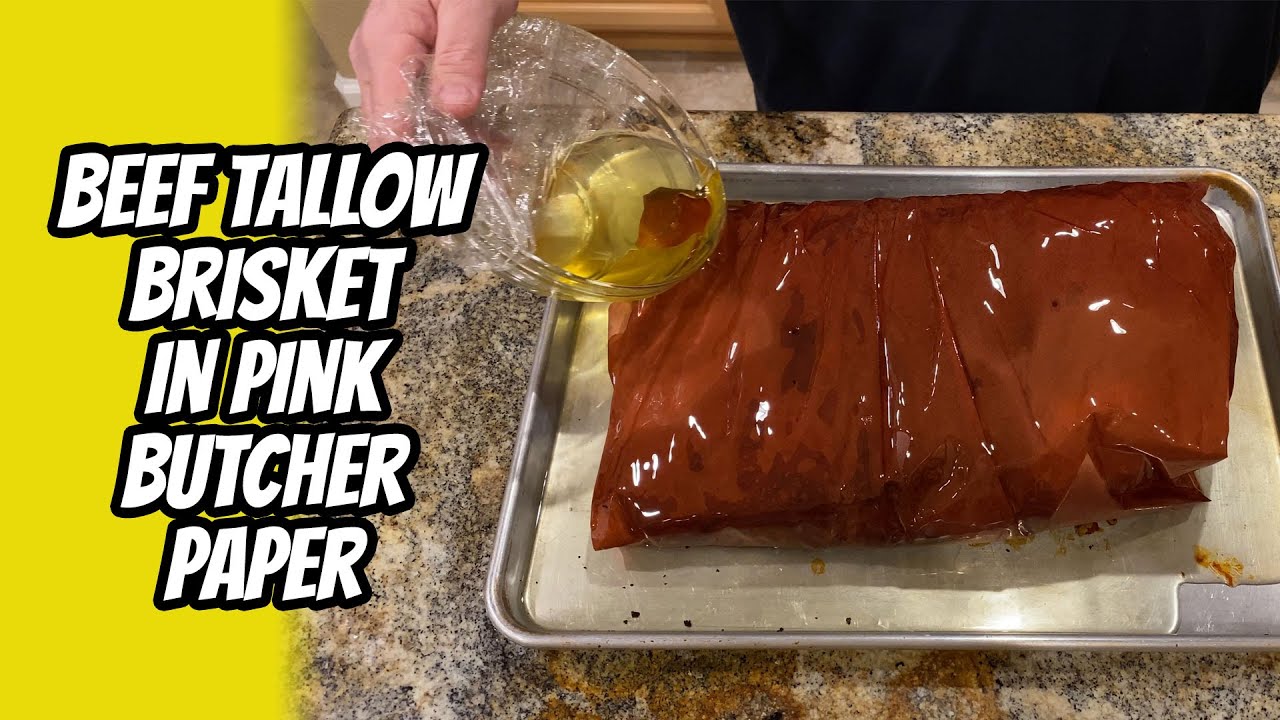
Use Butcher Paper with Beef Tallow
Around 150°F–165°F, the brisket hits “the stall,” where temperature stops rising due to evaporative cooling. This is the perfect time to wrap.
Wrapping Options:
| Method | Pros | Cons |
|---|---|---|
| Butcher Paper | Preserves bark and allows breathability | Slightly slower than foil |
| Aluminum Foil | Faster cook with maximum moisture | Can soften the bark by steaming |
Recommendation: Wrap in pink butcher paper because it’s the pro choice for bark lovers.
Pro Upgrade: Drizzle warm beef tallow over the brisket before wrapping to add moisture and richness.
Technique:
– Wrap tightly in 2–3 layers
– Seal the edges well to prevent steam leaks
Finish Until Probe-Tender
Trust the Feel, Not Just the Temperature
After wrapping, raise the grill temperature to 250°F–275°F to speed things up.
Target Internal Temperature: 200°F–205°F (93°C–96°C)
But don’t pull the brisket just because the thermometer says so.
The Real Test: The Probe Check
– Insert a probe into the thickest part of the flat
– Done: The probe slides in with zero resistance, like pushing into warm butter
– Not Done: If there’s any tug, keep cooking and check every 30–45 minutes
Expect 3–5 more hours after wrapping.
Rest for Juicy, Tender Results
Hold in a Cooler for 6–8 Hours
Resting isn’t optional. It’s essential. Cutting too soon releases juices and leaves the meat dry.
Minimum Rest: 1 hour
Ideal Rest: 2–3 hours
Pro Level: 6–8 hours (overnight)
Best Method: The Faux Cambro (Cooler Rest)
- Wrap the wrapped brisket in plastic wrap to retain juices
- Wrap again in clean towels or blankets
- Place in an empty, dry cooler
- Close the lid; it holds heat safely for 8+ hours
Alternative: Use a warming drawer or oven at 140°F–165°F for up to 8 hours.
Never hold below 140°F for long periods because of bacterial growth risk.
Slice and Serve Like a Pro
Cut Against the Grain Every Time
Two muscles mean two grain directions. Slice wrong, and even perfect brisket feels tough.
Steps:
1. Separate (Optional): Cut the point from the flat at the fat divider
2. Flat: Find the grain (long fibers) and slice perpendicular at ¼-inch thickness
3. Point: Rotate 90 degrees since the grain runs differently here, then slice across the new direction
4. Burnt Ends (Optional):
– Cube the point into 1-inch pieces
– Toss with BBQ sauce
– Return to the smoker at 300°F for 20–30 minutes
Serving Tips:
– Serve warm with grilled onions, coleslaw, or smoked mac and cheese
– Only slice what you’ll serve immediately to keep the rest moist
Troubleshoot Common Brisket Problems
Fix Dry, Tough, or Soggy Bark
Brisket Is Tough?
- Cause: Undercooked. The collagen hasn’t fully converted to gelatin
- Fix: Keep cooking until probe-tender and don’t rush the process
Brisket Is Dry?
- Causes:
- Cooked too hot or too fast
- Over-trimmed with no fat left
- Sliced too soon or sliced with the grain
- Prevention:
- Stick to 225°F
- Leave a ¼-inch fat cap
- Rest for at least 2 hours
Bark Is Soggy?
- Cause: Wrapped in foil too early or over-spritzed
- Fix: Use butcher paper and stop spritzing before wrapping
Temperature Won’t Rise (The Stall)?
- Normal. Evaporation is cooling the meat
- Solution: Wrap the brisket and/or increase heat slightly to push through
Follow the 4-2-10 Rule for Beginner Success

This simplified method helps new pitmasters nail their timing:
- 4 Hours: Smoke unwrapped to build bark
- 2 Hours: Wrapped to push through the stall
- 10 Hours: Rest in a cooler to redistribute juices
But always verify with probe tenderness and internal temperature (~203°F).
Store and Repurpose Leftover Brisket
Keep Brisket Fresh for Days
Refrigerate: Store sliced brisket in an airtight container for up to 4 days.
Freeze: Wrap in butcher paper plus foil for up to 3 months. Thaw in the fridge overnight.
Reheat Smart:
– For slices: Place in a dish with beef broth, cover with foil, and warm at 300°F for 15–20 minutes
– Or use sous vide at 140°F for 1 hour
Creative Leftover Ideas
- Brisket Chili: Add to a tomato base with beans
- Smoked Mac and Cheese: Fold in cubed brisket and bake on the grill
- Brisket Grilled Cheese: Sharp cheddar, BBQ sauce, and crispy edges
- BBQ Pizza: Sauce, cheese, onions, and brisket
Pellet Grill vs. Offset Smoker Comparison
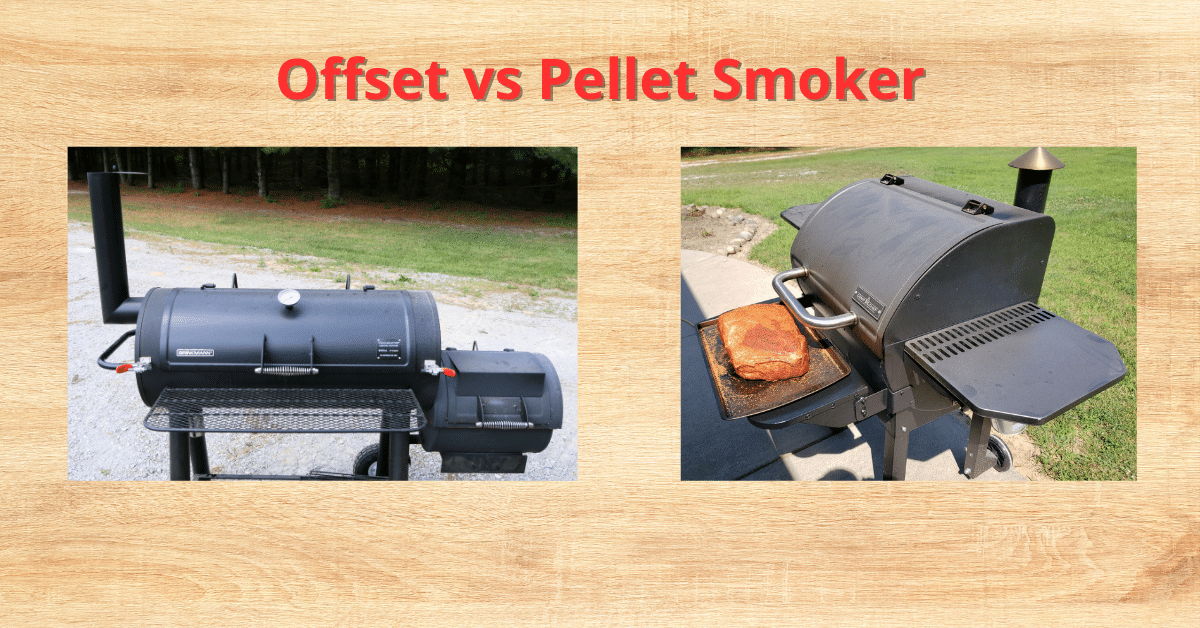
You don’t need an old-school smoker to make incredible brisket.
| Feature | Pellet Grill | Offset Smoker |
|---|---|---|
| Ease of Use | High with digital control | Low with manual fire management |
| Flavor | Clean, consistent smoke | Deep, traditional smoke ring |
| Bark | Good | Often superior |
| Moisture Retention | Excellent due to stable temps | Variable based on fire management |
| Best For | Home cooks and overnight sessions | Purists chasing traditional flavor |
Bottom Line: Pellet grills deliver juicier, more consistent brisket with far less effort, making them perfect for reliable weekend BBQs.
Frequently Asked Questions About Smoking Brisket on a Pellet Grill
What Temperature Should I Smoke Brisket on a Pellet Grill?
Cook at 225°F for traditional low-and-slow results, or 250°F–275°F for a hot-and-fast approach. Low-and-slow produces maximum tenderness and smoke absorption, while hot-and-fast reduces cooking time but requires closer monitoring to prevent drying.
How Long Does It Take to Smoke a Brisket on a Pellet Grill?
Expect 30–60 minutes per pound at 225°F. A typical 12–15 pound brisket takes 10–15 hours total, including unwrapped smoking, wrapping, and resting. Always rely on probe tenderness rather than time alone.
When Should I Wrap My Brisket?
Wrap when the internal temperature reaches 160°F–165°F, which usually coincides with the stall. Use pink butcher paper to preserve bark, or aluminum foil for faster cooking. Drizzle beef tallow before wrapping for added moisture.
How Do I Know When Brisket Is Done?
The internal temperature should read 200°F–205°F, but the real test is the probe check. Insert a probe into the thickest part of the flat. It’s done when the probe slides in with zero resistance, like pushing into warm butter.
How Long Should I Rest Brisket After Smoking?
Rest for a minimum of 1 hour, ideally 2–3 hours, and up to 6–8 hours for pro-level results. Use the faux cambro method (wrapped brisket in a towel-lined cooler) to hold heat safely for extended periods.
Can I Leave My Pellet Grill Unattended Overnight?
Yes, pellet grills are designed for overnight cooking. Clean the firepot beforehand, fill the hopper completely, and use a Wi-Fi alarm thermometer to monitor temperatures remotely. Ensure the grill stays away from combustible materials.
Final Thoughts on Smoking Brisket on a Pellet Grill
Mastering brisket on a pellet grill comes down to a few non-negotiable principles. Choose a Prime-grade whole packer cut, trim to a ¼-inch fat cap, and season generously with a simple salt-and-pepper rub. Smoke at 225°F until you hit 165°F, wrap in butcher paper with beef tallow, and cook until probe-tender around 203°F. Then rest for at least 2 hours (longer if you can wait) and slice against the grain.
The beauty of pellet grilling is consistency. Once you dial in your routine, you can replicate mouthwatering results every time without babysitting a fire all night. Fire up your grill, trust the process, and get ready for the best brisket you’ve ever made at home.


