How to Light a Charcoal Grill with Lighter Fluid
Few things rival the smoky taste of food cooked over real charcoal. But getting that fire going with lighter fluid can feel like a gamble. Too much fluid and your burgers taste like a gas station. Too little and the coals never catch. The good news is that lighting a charcoal grill with lighter fluid is straightforward once you know the exact steps, timing, and safety rules.
This guide breaks down the entire process from pile to plate. You’ll learn how to stack your coals, apply fluid without flare-ups, recognize when the coals are truly ready, and avoid the mistakes that ruin flavor or cause dangerous flash fires.
Build a Stable Charcoal Pyramid
Before any fluid touches the coals, the foundation has to be right. The shape of your charcoal pile determines how evenly and quickly the fire spreads.
Maximize Coal-to-Coal Contact
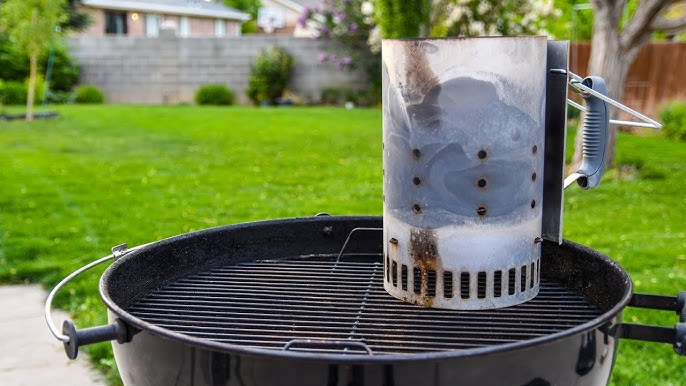
Stack your briquets into a tight pyramid or mound in the center of the grill basin. This shape creates more contact points between coals, allowing flames to jump from one briquet to the next. A loose pile won’t sustain a chain reaction, and you’ll end up with uneven ignition or a fire that fizzles out.
Use long-handled tongs to shape the pile so it holds together. Don’t pack it too tightly though. Airflow still needs to circulate. Aim for stability without suffocating the fire.
Match Charcoal Amount to Your Cook
The volume of charcoal should match what you’re cooking. Use less for quick meals and more for long, slow cooks. Here’s a simple guide:
• Small cook (2–4 people): Fill a chimney starter halfway.
• Large cook (5+ people or slow grilling): Use a full chimney or double batch.
Too little charcoal means low heat. Too much means wasted fuel and excessive temperatures.
Apply Lighter Fluid Safely and Evenly
With the pile ready, it’s time to add the accelerant. But this step only works on cold, unlit coals. Skipping this rule is the fastest path to a flash fire.
Use Charcoal-Specific Lighter Fluid Only
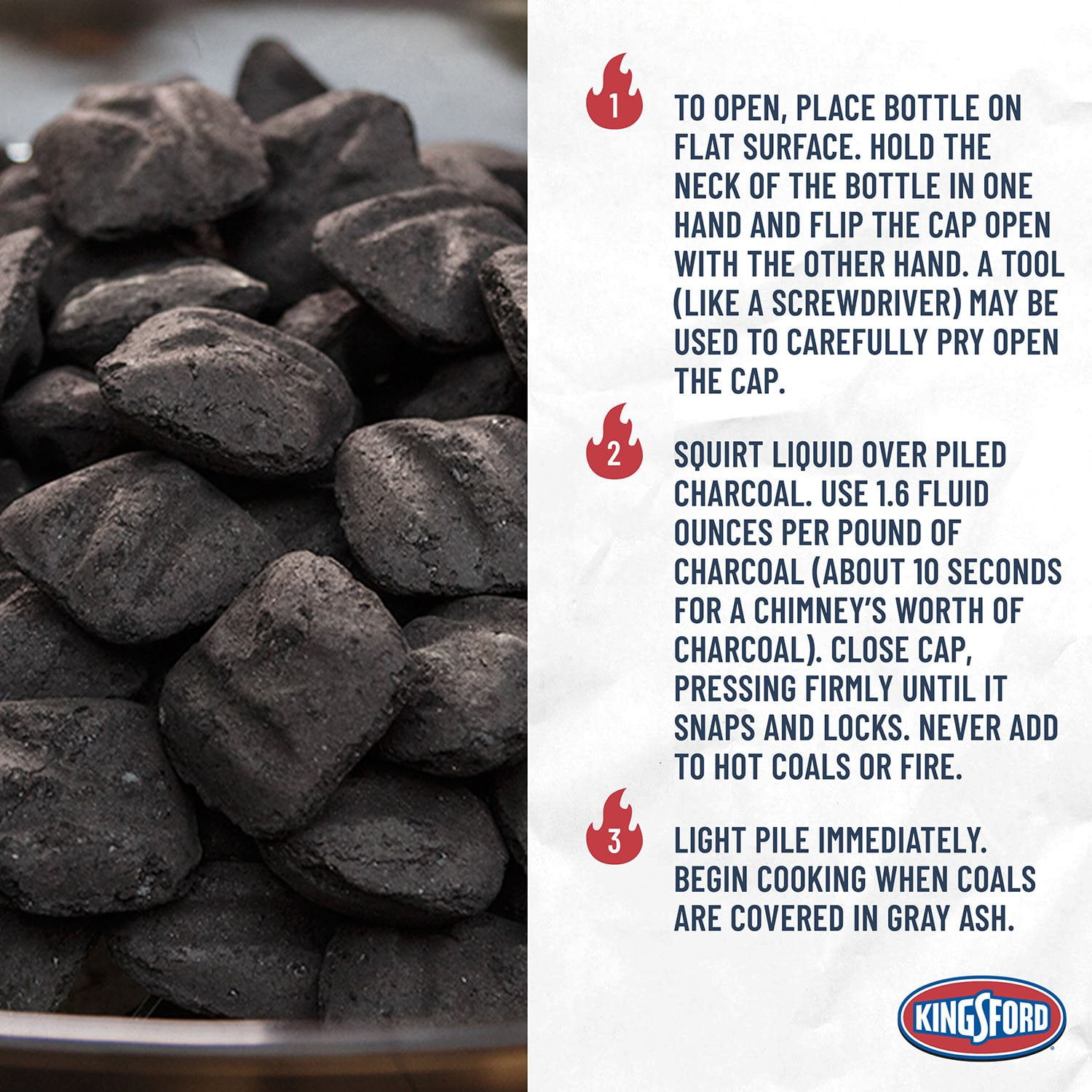
Never substitute gasoline, alcohol, or any other flammable liquid. Use a dedicated charcoal lighter fluid like Kingsford™ or Royal Oak®. These products are formulated to burn cleanly and minimize chemical residue on your food.
Squirt, Don’t Drown
Hold the bottle nozzle over the top and sides of the charcoal pyramid. Apply fluid in a slow, circular motion to coat the surface evenly.
Follow these dosage guidelines:
• 1.6 fluid ounces per pound of charcoal (most accurate method)
• About 10 seconds of continuous squirt for a standard chimney load
Always check the directions on your specific bottle. When in doubt, use less rather than more. You can always add more coals later, but excess fluid causes flare-ups and chemical taste.
Never Spray Hot or Burning Coals
This rule cannot be overstated: never add lighter fluid to hot, glowing, or flaming coals. The vapors can ignite instantly and flash back up the stream, causing severe burns to your hands or face.
If you need to restart, wait until the coals are completely cool before applying more fluid.
Ignite Immediately After Application
Timing is everything. Once fluid is on the coals, light them right away.
Use Long-Handled Lighters or Matches
Reach the base of the pile with a long grill lighter or wooden match. Ignite multiple spots around the edge of the pyramid where fluid has pooled. The flame will spread inward as the fluid burns.
Stand back slightly after lighting. Expect a brief burst of flame as the volatile compounds ignite.
Avoid Re-Lighting Attempts
If the fire doesn’t catch, do not add more fluid. Wait for the coals to cool completely (30 minutes or more), then restart the process. Adding fluid to a failed attempt risks an explosion.
Wait for Full Ash Coverage
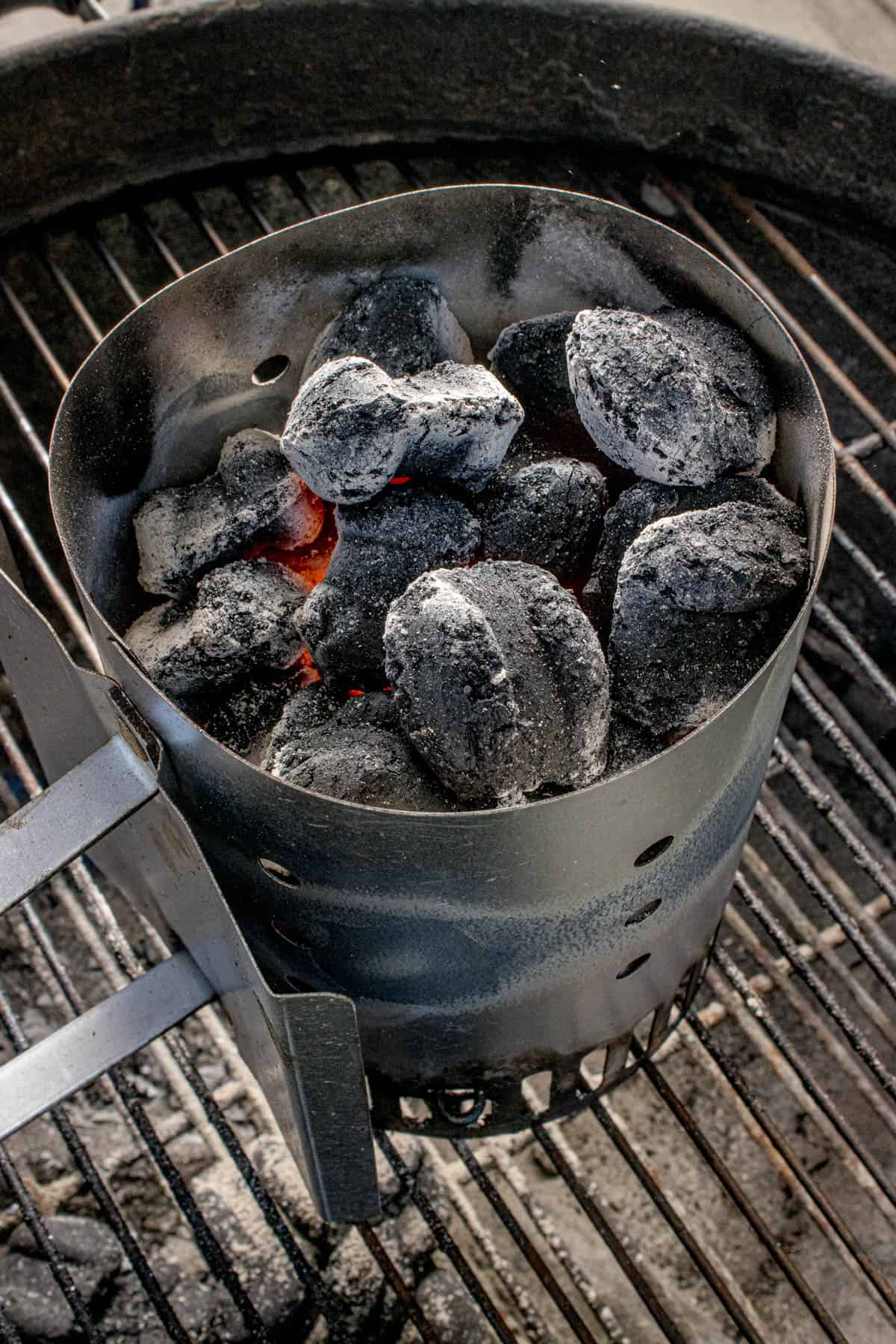
After ignition, the lighter fluid burns off in just a few minutes. But you’re not ready to cook yet.
Watch for Gray Ash Formation
As the charcoal heats, the edges will begin to turn gray. This is the primary visual cue that the coals are ready. The ash forms as the volatile gases burn off, leaving behind pure carbon that delivers steady, high heat.
Your coals are ready when:
• 75–100% covered in gray ash
• Flames have mostly died down
• No strong smell of lighter fluid remains
Time Your Burn-Off Phase
From ignition to readiness takes about 10 to 15 minutes. Set a timer if you’re new to this. Rushing to cook too soon is the number one cause of chemical-tasting food.
Spread Coals for Even Cooking

Once coals are ashed over, use long-handled tongs or a metal spatula to distribute them.
Create Heat Zones
You have two main options for coal arrangement:
• Even layer: Best for direct grilling like burgers, steaks, and vegetables.
• Two-zone setup: Pile coals on one side for direct and indirect cooking. Sear over hot coals, then move food to the cooler side to finish.
Wear heat-resistant gloves and keep your face clear. Hot embers can pop when you move them.
Allow 5 Minutes to Stabilize
After spreading, wait about 5 minutes for the heat to even out across the grill grate. This step prevents hot spots and ensures consistent cooking.
Gauge Heat Without a Thermometer
Not every grill has a built-in thermometer. Here’s how to estimate heat level by sight and feel.
Read the Glow
• High heat: Dense layer of bright orange coals under a thin gray ash. Intense radiant heat.
• Medium heat: Duller red glow with thicker ash. Hold your hand 5 inches above the grate for 4–5 seconds to feel moderate warmth.
• Low heat: Faint red glow, mostly covered in ash. Hand test reads 6 seconds or more.
Match the heat to your recipe. Searing needs high heat. Slow cooking uses medium or low.
Follow Critical Safety Rules
Lighter fluid is powerful, but only when used responsibly.
Never Add Fluid to Active Fire
Repeat this rule until it’s burned into your brain: no fluid on hot coals. It’s the most dangerous mistake you can make. If your fire dies, let the coals cool to room temperature before trying again.
Keep a Fire Extinguisher Nearby
Have a bucket of sand, a garden hose, or a Class B fire extinguisher within reach. Most grill fires are small, but quick action prevents escalation.
Store Fluid Safely
Keep lighter fluid in its original container, away from heat sources and direct sunlight. Never store it near the grill or in a garage where temperatures fluctuate.
Troubleshoot Common Problems
Even with care, things can go wrong. Here’s how to fix them.
Fire Dies Out Quickly
Cause: Poor coal contact or too little fluid.
Fix: Rebuild a tighter pyramid. Apply fluid at the correct ratio of 1.6 ounces per pound. Ignite immediately.
Excessive Flare-Ups
Cause: Too much lighter fluid or cooking before burn-off.
Fix: Use less fluid next time. Wait until coals are fully ashed and flames are low before placing food.
Uneven Heat or Cold Spots
Cause: Coals not spread evenly.
Fix: Use tongs to redistribute. Create a uniform bed or a proper two-zone layout.
Food Tastes Like Chemicals
Cause: Lighter fluid didn’t burn off completely.
Fix: Wait until coals are mostly gray and no fluid odor remains. Never cook over visible flames from fluid.
Frequently Asked Questions About Lighting a Charcoal Grill with Lighter Fluid
How long does it take for charcoal to be ready after using lighter fluid?
It typically takes 10 to 15 minutes from ignition until the coals are mostly covered in gray ash and ready for cooking. Add another 5 minutes after spreading the coals for heat to stabilize.
Can you add more lighter fluid if the charcoal stops burning?
No. Never add lighter fluid to hot or burning coals. The vapors can flash back and cause severe burns. Let the coals cool completely, then restart the process with fresh fluid.
How much lighter fluid should I use per pound of charcoal?
The recommended ratio is 1.6 fluid ounces of lighter fluid per pound of charcoal. For a standard chimney load, this works out to about 10 seconds of continuous squirt.
Why does my food taste like lighter fluid?
Your coals weren’t ready when you started cooking. Wait until 75–100% of the coals are covered in gray ash and no chemical smell remains before placing food on the grate.
Is lighter fluid safe for grilling?
Charcoal-specific lighter fluid is safe when used correctly. Always apply it to cold coals, ignite immediately, and wait for complete burn-off before cooking. Never use gasoline, alcohol, or other substitutes.
What’s the difference between lighter fluid and a chimney starter?
Lighter fluid is a liquid accelerant that burns off quickly. A chimney starter uses newspaper and hot coals to ignite charcoal without any chemicals. Chimney starters are a fluid-free alternative, but lighter fluid works well when used properly.
Key Takeaways for Lighting a Charcoal Grill with Lighter Fluid
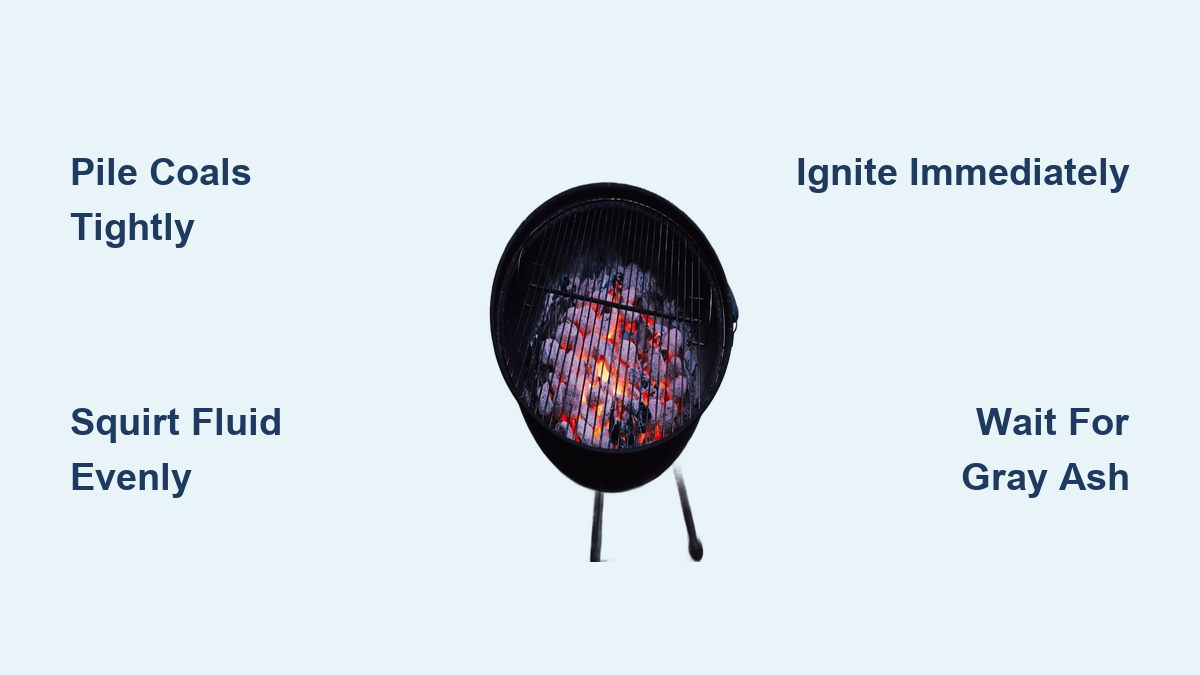
Lighting a charcoal grill with lighter fluid boils down to a simple sequence: pile, squirt, ignite, wait, spread. The most important factor is patience. Don’t rush the burn-off phase, because cooking too early means chemical-tasting food.
Stick to the correct dosage of 1.6 ounces per pound, apply fluid only to cold coals, and wait for full gray ash coverage before you start grilling. Follow these rules and you’ll get clean, hot coals and great flavor every time.
For your next cook, consider trying a chimney starter as a fluid-free alternative. But when you reach for the bottle, you now know exactly how to do it right. Grill safe and grill smart.


